Feeling cramped in your small living space? You’re not alone. Many of us want to make the most of our limited square footage without losing style. Living in a small home can be tough, but it’s also a chance to get creative with your space-saving design.
With a few simple changes, you can make your small home cozy and functional. In this article, we’ll share 8 practical tips to help you use your space better and enjoy your small home more.
Key Takeaways
- Discover how to create the illusion of more space
- Learn how to choose multi-functional furniture
- Find out how to use vertical space to your advantage
- Get tips on how to declutter and organize your small home
- Explore ways to add style and personality to your compact living space
Making the Most of Limited Square Footage
Living in a small home is all about understanding its limits and finding the good in them. It’s not about giving up on style or usefulness. It’s about making smart choices to create a space that’s both beautiful and practical.
The Challenges and Opportunities of Small Space Living
People living in small spaces often struggle with storage, clutter, and feeling cramped. But these issues also open doors to creativity and simplicity. By choosing minimalist decor, you can turn your small home into a peaceful and welcoming place.
“The art of creating a beautiful and functional space is not about having more, but about making the most of what you have.”
Storage is a big challenge in small spaces. Without smart solutions, clutter can quickly take over, making the space feel tight and chaotic. Good small space design means finding clever ways to store things and paying attention to the little details.
Setting Realistic Goals for Your Compact Home
To get the most out of your small space, you need to set achievable goals. Begin by figuring out what you really need and what you can do without. Knowing your lifestyle and preferences helps you create a plan that fits your home perfectly.
| Goal | Strategy | Benefit |
|---|---|---|
| Maximize Storage | Utilize vertical space with wall-mounted shelves | Increased storage capacity |
| Enhance Natural Light | Use mirrors to reflect natural light | Brighter, more spacious feel |
| Optimize Furniture | Invest in multifunctional, space-saving furniture | More functional living area |
By setting clear goals and using smart strategies, you can make your small home a cozy and stylish retreat.
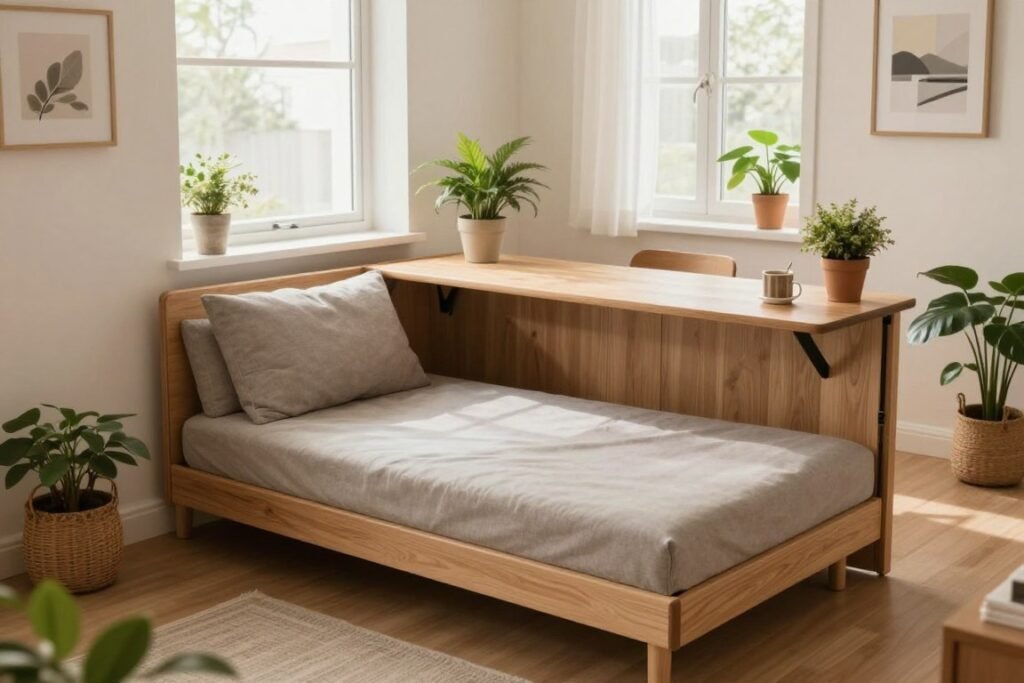
1. Multifunctional Furniture: The Small Space Savior
Multifunctional furniture is a game-changer for small spaces. It lets you use your space in many ways. You don’t have to give up comfort or style.
Convertible Pieces That Transform Your Space
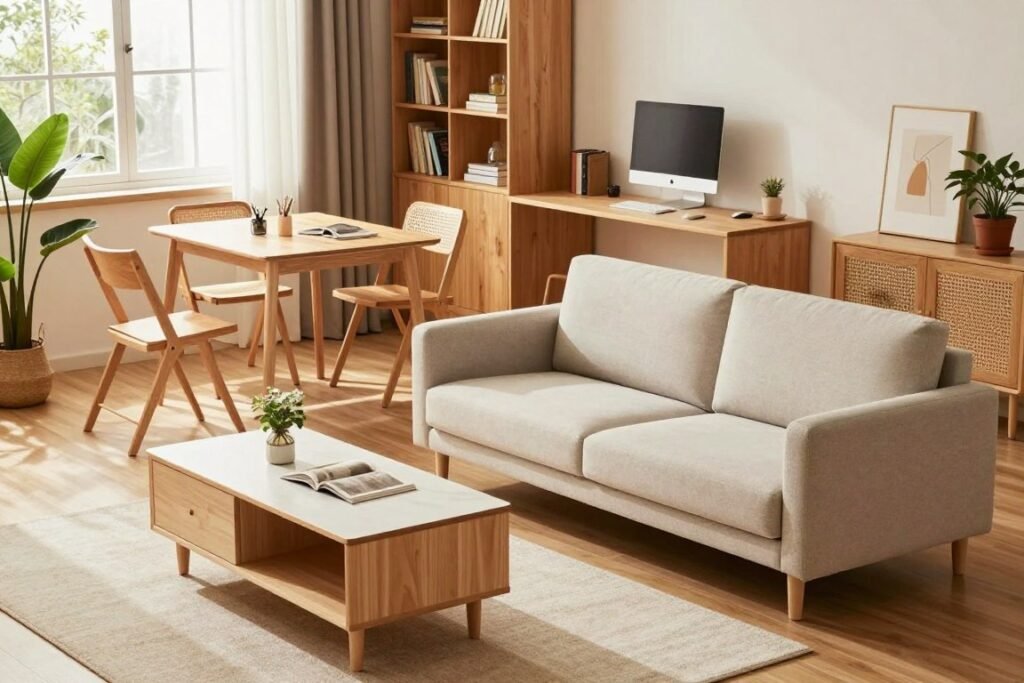
Convertible furniture changes with your needs. For example, sofa beds and Murphy beds are great for small places. They let you switch functions easily, making your home more flexible.
Sofa Beds, Murphy Beds, and Daybeds
Sofa beds and Murphy beds are perfect for guests. They save space without needing a whole room. Daybeds are great for small bedrooms or home offices, serving as both a seat and a bed.
Storage-Integrated Furniture Worth Investing In
Furniture with built-in storage keeps small spaces tidy. Nesting tables and extendable dining solutions are examples. They adjust to your needs, saving space.
Nesting Tables and Extendable Dining Solutions
Nesting tables are flexible, working alone or together. Extendable dining tables fit small kitchens. They let you host dinner parties without feeling cramped.
| Furniture Type | Benefits | Ideal For |
|---|---|---|
| Sofa Beds | Space-saving, versatile | Studio apartments, guest rooms |
| Nesting Tables | Flexible, storage-efficient | Living rooms, dining areas |
| Murphy Beds | Space-maximizing, convenient | Small bedrooms, home offices |
Adding multifunctional furniture to your tiny apartment makes it cozy and functional. It meets your needs perfectly.
2. Vertical Storage Solutions: Think Up, Not Out
Vertical storage solutions are key for keeping your studio apartment tidy. They help make your space feel open and organized. By using your walls and ceiling, you can make your tiny home more functional.
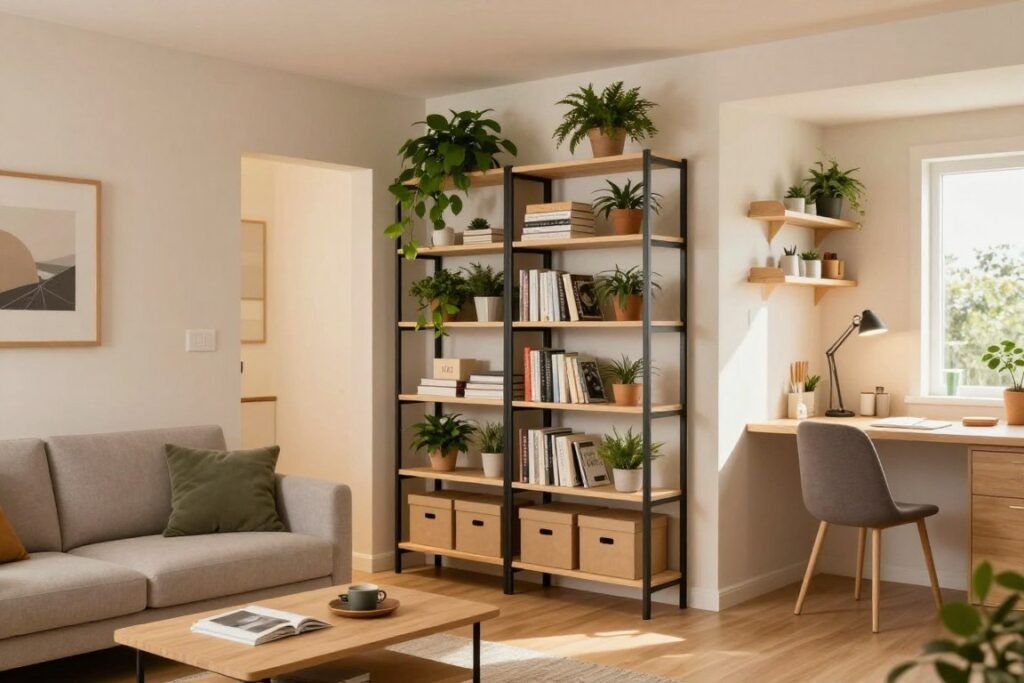
Wall-Mounted Shelving Systems That Maximize Height
Wall-mounted shelving systems are great for using vertical space. They can be simple floating shelves or more complex designs. The goal is to use height without making the space feel cramped.
Floating Shelves and Decorative Wall Cubbies
Floating shelves add storage without clutter. They’re perfect for different rooms, like displaying items in the living room or storing essentials in the bathroom. Decorative wall cubbies also offer storage and enhance your tiny home’s look.
Ceiling-to-Floor Organization Strategies
For the most storage, try ceiling-to-floor systems. This includes tall shelves or storage that uses the space above standard furniture. It’s a smart way to use often-wasted ceiling space.
Over-Door Organizers and Hanging Storage Hacks
Over-door organizers are smart for vertical space. They can hold clothes, cleaning supplies, or even shoes. Hanging storage hacks, like baskets or hooks, also add storage without taking up floor space.
Adding these vertical storage solutions to your tiny home design makes it more organized. Your living space will feel larger and clutter-free.
3. Hidden Storage Opportunities: Finding Space Where You Least Expect It
Tiny apartments can hide lots of storage if you know where to look. It’s key to use every inch to keep your space tidy and organized.
Under-Bed and Under-Sofa Storage Containers
The space under beds and sofas is often wasted. Using containers here can add a lot of storage. You can stash away clothes, bedding, or linens that you don’t use often.
Behind-Door and Between-Furniture Spaces
Don’t forget the space behind doors and between furniture. Over-the-door racks can hold jackets, bags, or cleaning stuff. Narrow shelves or units can fit between furniture, storing books, decorations, or kitchen tools.
Vacuum Bags and Compression Solutions for Seasonal Items
For items you only use in certain seasons, vacuum bags or compression bags are great. They shrink your clothes or decorations, making them easier to store in tight spots.
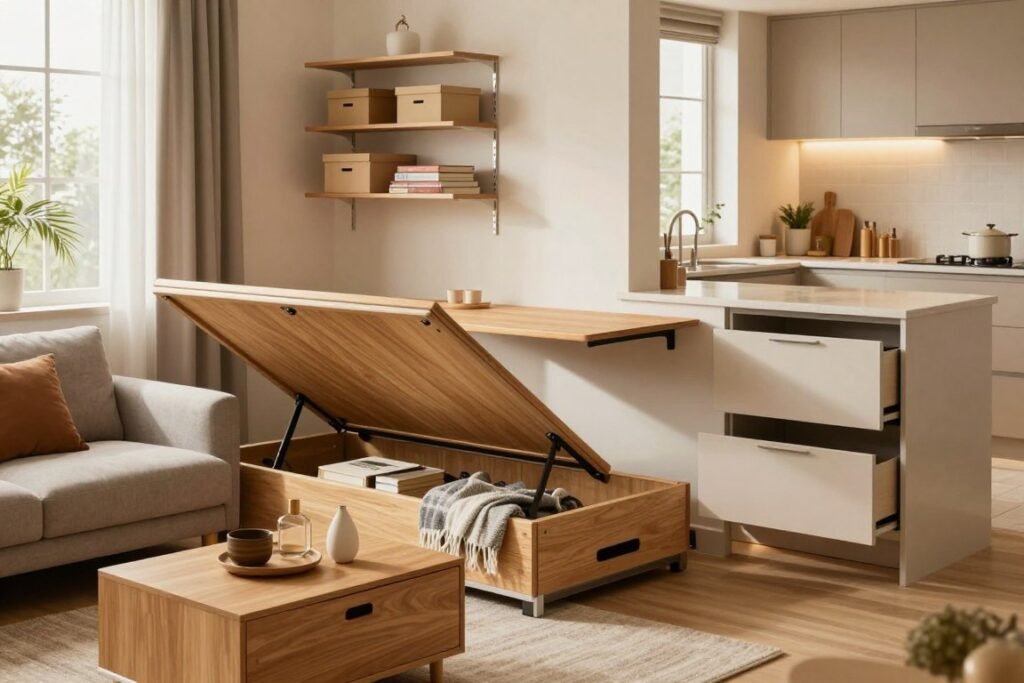
Furniture with Secret Compartments and Dual Functions
Choosing furniture with hidden spots or double uses is smart. For instance, an ottoman with a hidden compartment or a coffee table with a hidden storage area can be super handy.
| Storage Solution | Benefits |
|---|---|
| Under-bed storage | Increases storage capacity, keeps items out of the way |
| Behind-door organizers | Utilizes dead space, easy to install |
| Vacuum storage bags | Compresses items, saves space |
4. Strategic Mirror Placement: Create the Illusion of Space
Mirrors are key in making small apartments look bigger. They reflect light and images, making rooms seem larger. This trick is super helpful in tiny apartments where every little bit counts.
Reflecting Natural Light to Brighten and Expand Rooms
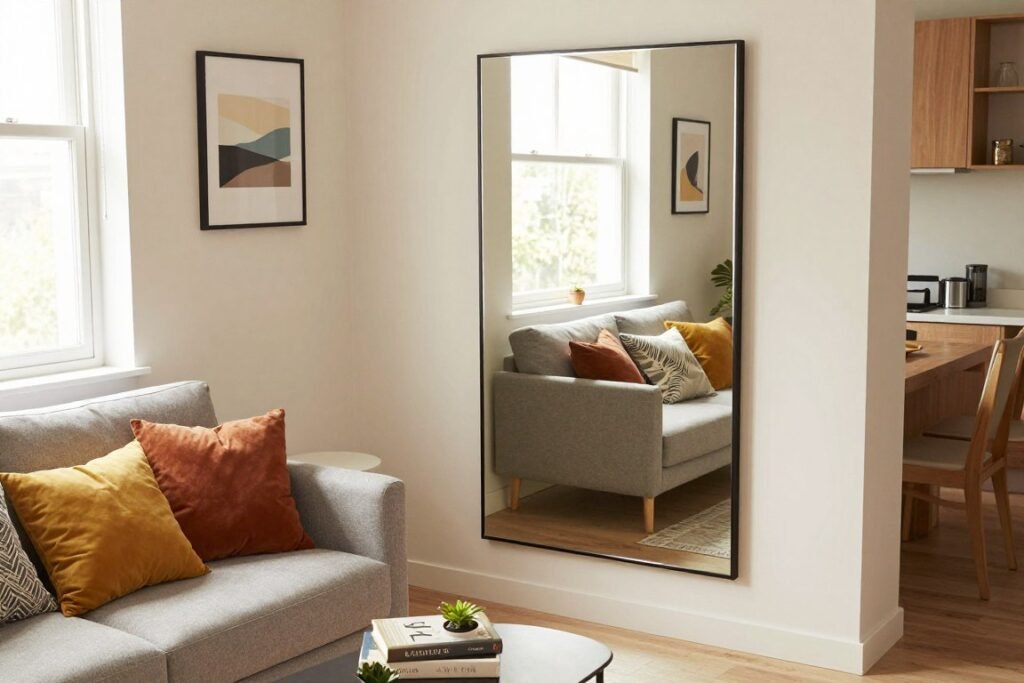
Using mirrors opposite windows is a smart move. It brightens the room and makes it feel bigger. Choose a mirror that can reflect a lot of light to get the best effect.
Mirror Styles and Arrangements That Enhance Small Spaces
The style and where you put mirrors can change how a room looks. For a minimalist decor look, go for a simple, frameless mirror. It will fit right in with your decor.
Full-Length Mirrors for Visual Room Expansion
Full-length mirrors are great for making rooms look bigger. They reflect the whole room, making it seem larger. Put a full-length mirror on a wall opposite a window for the best light and space.
Mirrored Furniture Pieces That Disappear Visually
Mirrored furniture, like dressers or nightstands, also make rooms look bigger. They reflect what’s around them, making them seem to vanish. This works well in small bedrooms or living areas where space is tight.
5. Smart Color Schemes for Tiny Apartment Decorating
Choosing the right color scheme can make your small apartment look bigger. The right colors can make your space feel airy and open. The wrong colors can make it feel tight and small.
Light and Neutral Palettes That Visually Expand Space
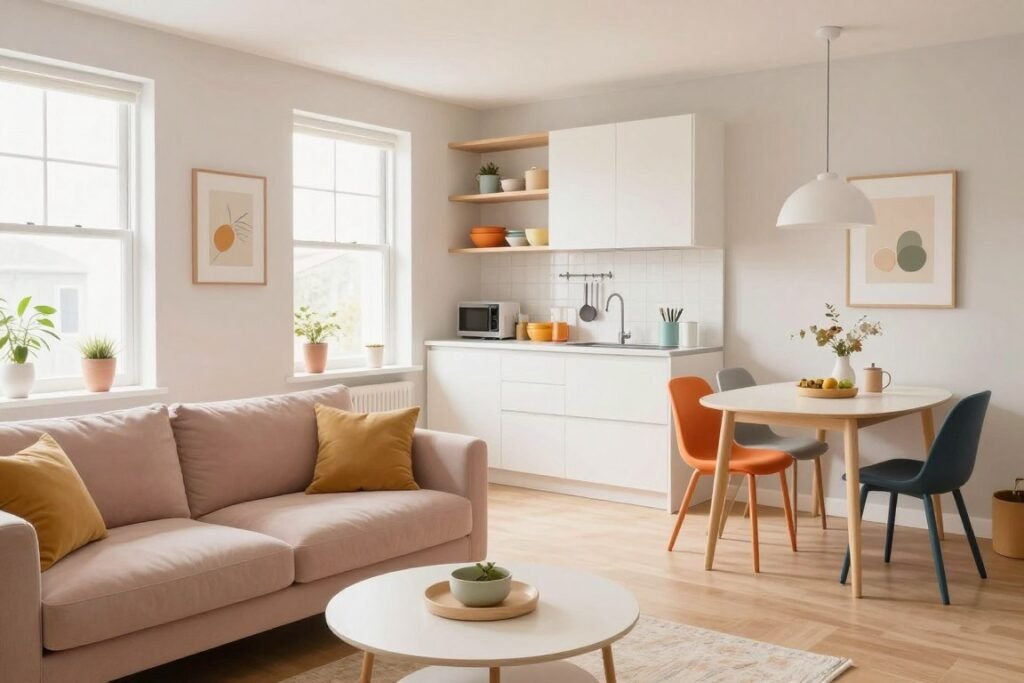
Light and neutral colors are perfect for small spaces. They reflect light and make your apartment look bigger. Colors like white, beige, and soft gray are great for this.
These colors also provide a clean background for your furniture and decor.
Strategic Accent Colors and Pattern Placement
Even with light and neutral colors, you can add personality with accent colors and patterns. Use bold colors to create focal points. Patterns like stripes or geometric shapes add visual interest.
Monochromatic Schemes for Visual Cohesion
A monochromatic color scheme uses different shades of the same color. It creates a sense of harmony in your apartment. This makes your space feel more cohesive and flowing.
Color Zoning Techniques in Open-Concept Layouts
In open-concept apartments, color zoning defines different areas. Using different colors or shades creates a visual separation. This works well for dividing the living area from the dining area without walls.
| Color Scheme | Effect on Space | Best Used For |
|---|---|---|
| Light and Neutral | Makes space feel larger | Small rooms, apartments |
| Monochromatic | Creates visual cohesion | Open-concept layouts |
| Accent Colors | Adds personality, creates focal points | Adding visual interest |
By using these smart color schemes, you can make your tiny apartment feel more spacious. This creates a more comfortable and welcoming living space.
6. Minimalist Decor Approach: Quality Over Quantity
To make your tiny apartment feel calm and open, try a minimalist decor style. This method values the quality of items over how many you have. It makes sure every piece in your home has a purpose and adds to the look.
Curating Meaningful Items and Eliminating Excess
Begin by choosing your belongings wisely, keeping only what brings you joy or is useful. Decluttering is essential for a minimalist space. Go through each room, getting rid of anything you don’t need.
The One-In-One-Out Rule for Maintaining Order
To keep your space tidy, follow the one-in-one-out rule. For every new item, get rid of an old one. This rule helps keep your space balanced and free of clutter.
Weekly Decluttering Routines for Tiny Homes
Make time each week to keep your space clean. Simple tasks like cleaning your kitchen counters or organizing your closet can help a lot. Consistency is key to keeping your tiny home feeling open and calm.
Displaying Personal Collections Without Creating Visual Clutter
When showing off personal collections, pick a few special items to display. Use creative display methods like shadow boxes or curated shelves. This adds interest without making your space feel cluttered.
| Decluttering Tips | Benefits |
|---|---|
| Sort items into keep, donate, and discard piles | Reduces decision fatigue |
| Use storage solutions effectively | Keeps items out of sight, maintaining a clean look |
| Implement the one-in-one-out rule | Maintains a balanced amount of possessions |
7. Room Dividers and Partitions: Creating Zones in Studio Spaces
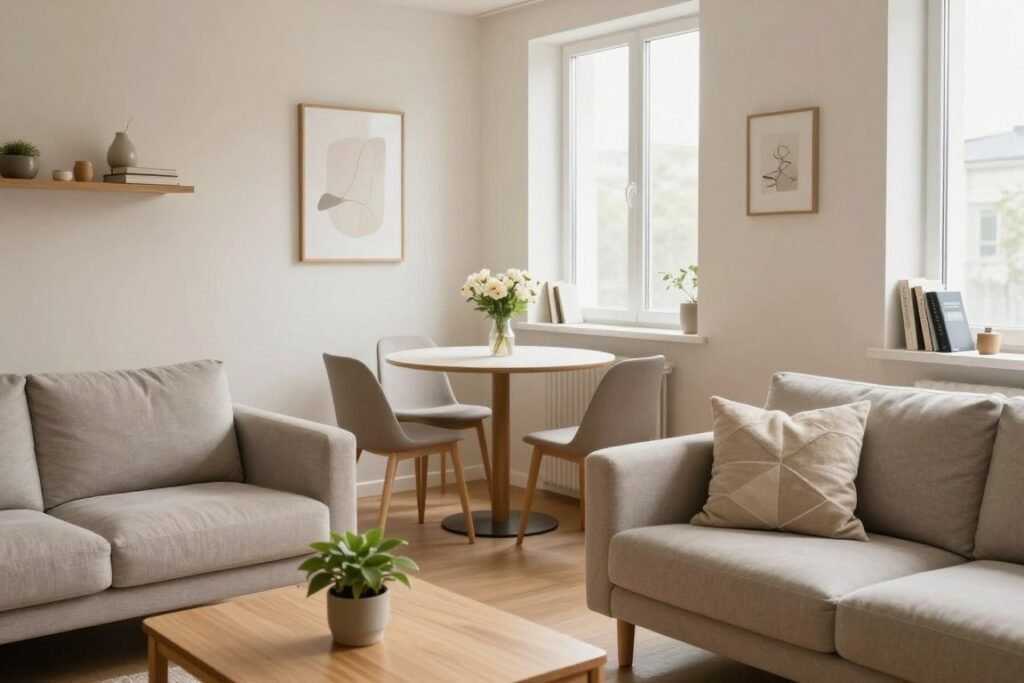
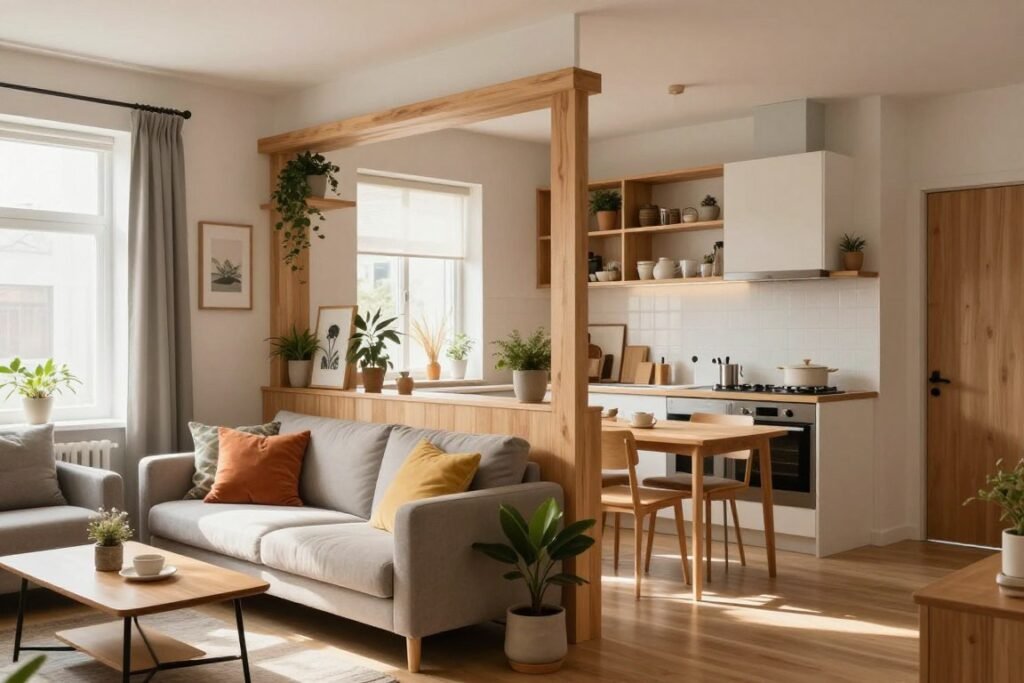
To make the most of your studio apartment, think about using room dividers. These can help separate different areas in your open-plan space. With the right dividers, you can turn your studio into a cozy and organized home.
Flexible Divider Options for Different Lifestyle Needs
Everyone’s lifestyle is different, so you need different dividers. If you work from home, a quiet workspace is key. Sliding panels or folding screens are perfect because they’re easy to move. For bigger spaces, glass partitions or bookshelf dividers might be better.
Double-Duty Dividers with Storage or Display Functions
Using dividers that do more than separate spaces is smart. They can also store or display things, making your apartment more organized.
Bookcase Dividers and Open Shelving Units
Bookcase dividers are great for studio apartments. They hold books, decorations, and more. Plus, they help divide your space visually.
Curtain, Screen, and Sliding Door Solutions
For something more flexible, try curtains, screens, or sliding doors. They’re affordable, easy to set up, and stylish. They keep your space open while adding beauty.
Adding room dividers and partitions to your studio can make it more organized and stylish. It’s a smart way to improve your living space.
8. Space-Enhancing Lighting Techniques
The right lighting can make your small living area feel bigger and more inviting. Good lighting changes the feel of your tiny apartment, making it seem larger and cozier.
Layered Lighting Strategies for Small Apartments
Layered lighting uses different light sources to make your space look good and work well. You can mix overhead lights, table lamps, and floor lamps. This trick makes your room seem bigger.
For example, a bright overhead light with softer table lamps creates a cozy feel. It also makes the room seem more open. Think about what you’ll do in the room and light it up right.
Space-Saving Fixture Options and Placement
Choosing the right lighting for small apartments is key. Look for space-saving options like wall sconces, clip-on lights, and pendant alternatives.
Wall Sconces, Clip-On Lights, and Pendant Alternatives
Wall sconces save space and provide good lighting. Clip-on lights can be put on furniture or shelves for focused light. Pendant alternatives like flush-mount fixtures offer overall light without taking up much space.
LED Strip Lighting for Ambiance and Visual Expansion
LED strip lighting is a smart choice for adding ambiance and making spaces look bigger. You can put it under furniture, behind appliances, or along baseboards. It adds depth and interest.
| Lighting Technique | Description | Benefits |
|---|---|---|
| Layered Lighting | Combining different light sources | Creates a sense of space, improves ambiance |
| Wall Sconces | Mounted on walls | Saves table and counter space, provides focused light |
| LED Strip Lighting | Flexible LED lights for ambient lighting | Energy-efficient, creates visual interest, enhances ambiance |
Using these lighting tricks can make your tiny apartment feel bigger and more stylish. Think about what you need and want in your lighting to create a welcoming space.
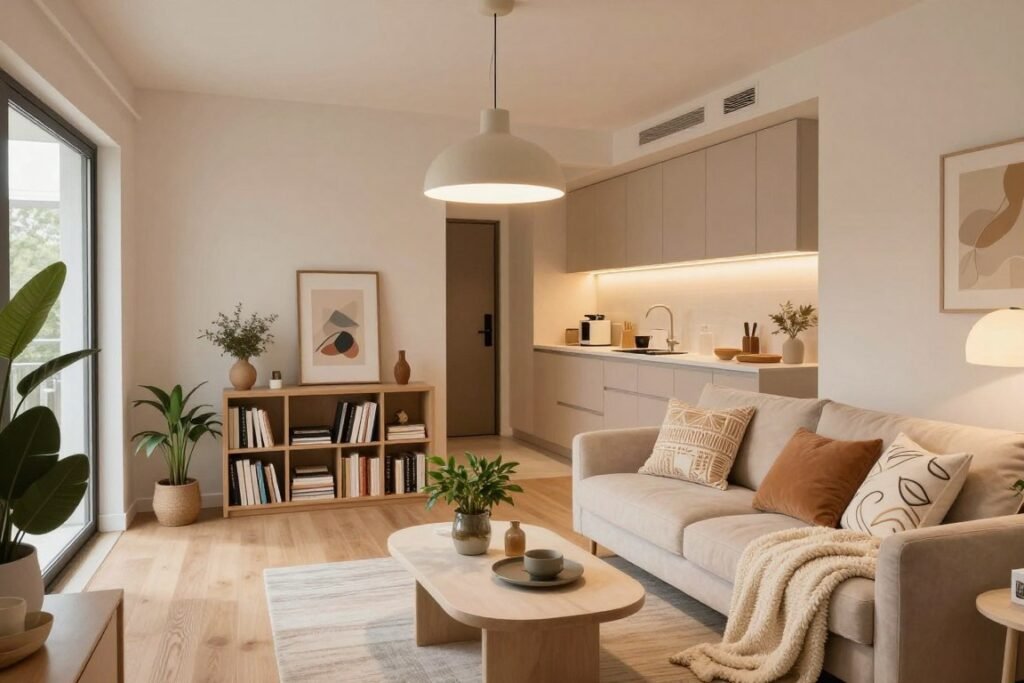
Tiny Apartment Decorating: Creating a Cohesive Design Plan
To make the most of your tiny apartment, you need a cohesive design plan. It should balance functionality with personal style. A well-designed small space looks great and improves your living experience.
Balancing Functionality and Personal Style
Achieving a balance between functionality and personal style is key in tiny apartment decorating. Your space should be both beautiful and useful. Start by figuring out what you need and what’s important to you.
Think about furniture that does more than one thing. For example, a storage ottoman can be a place to sit and store items like linens or out-of-season clothes.
Integrating Multiple Space-Saving Solutions Seamlessly
When using multiple space-saving solutions, think about how they work together. View your apartment as a cohesive system where each part supports the others. For instance, wall-mounted shelving can free up floor space for a compact sofa or multifunctional furniture.
Seasonal Rotation Strategies for Decor and Essentials
Seasonal rotation strategies can keep your decor fresh. Store out-of-season items in labeled containers or under-bed storage. This declutters your space and makes it easy to change your decor with the seasons.
Digital Planning Tools and Apps for Small Space Design
Digital planning tools and apps can make designing easier. Apps like Homestyler or Planner 5D let you create 2D and 3D floor plans. You can try out different layouts and see how furniture and decor will look before buying.
By using these strategies, you can create a small space design that’s both functional and beautiful. The secret to successful tiny apartment decorating is in the details and how well you integrate space-saving solutions.
Small Space, Big Living: Embracing Your Cozy Home
Small spaces can be stylish and functional, just like bigger homes. By using cozy apartment ideas and stylish decor, you can make your small living area warm and inviting.
Seeing your small apartment as charming is key. Instead of feeling limited, view it as a chance to create a cozy atmosphere. With the right furniture and storage, your home can feel spacious and comfy.
Remember, a home’s true value isn’t its size. It’s the memories and moments you make there. By embracing your cozy home, even the smallest spaces can greatly impact your life and well-being.
0 Comments