Living in a small space doesn’t mean you have to sacrifice your work setup or your cozy living room vibes. These genius combos prove you can actually make both spaces work harder and look better when you combine them the right way. Ready to fall in love with your tiny space all over again?
1. The Floating Desk That Disappears When You Need It To
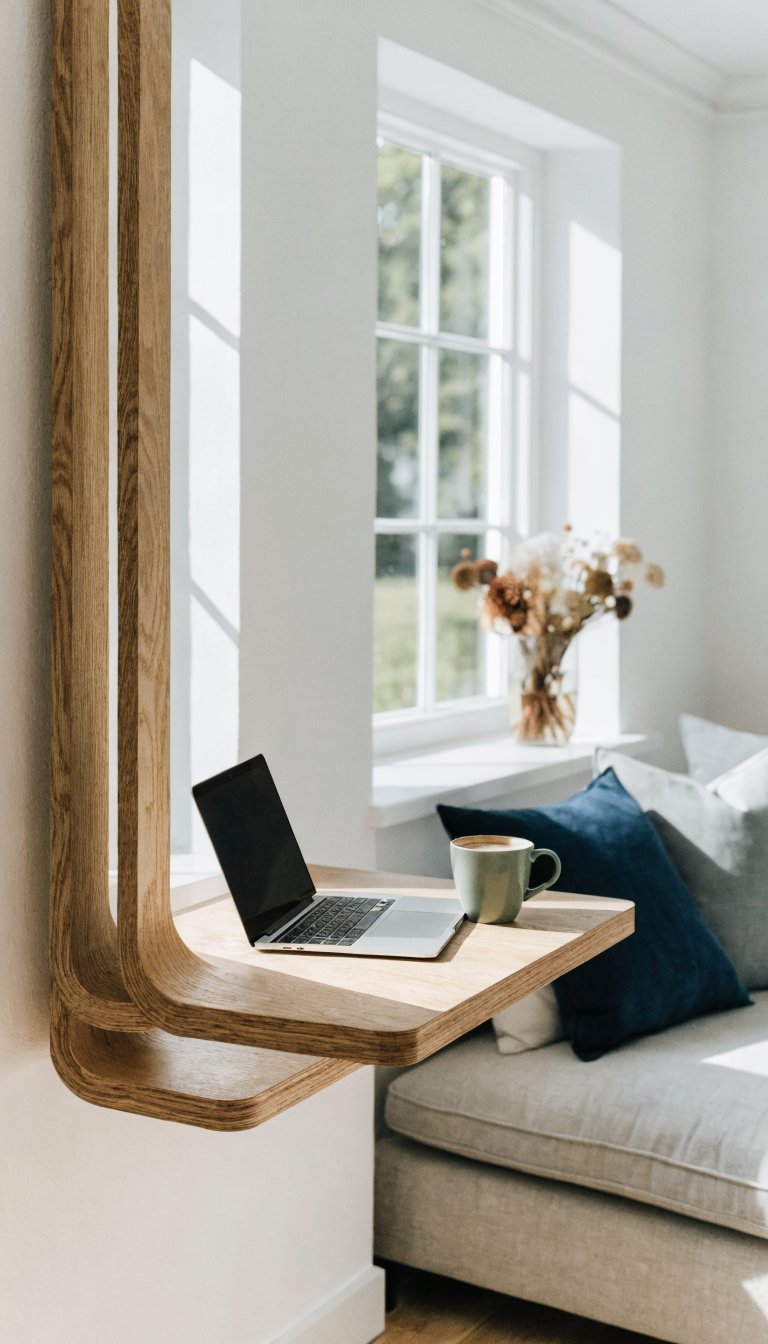
Here’s the thing about wall-mounted desks: they’re absolute game-changers for small spaces. When you mount a slim desk directly to the wall, you create a workspace that doesn’t eat up precious floor space or make your living room feel like a cramped office cubicle.
The secret sauce? Pick a desk that’s 12 to 18 inches deep instead of the standard 24-inch monsters. You’ll have plenty of room for your laptop and a coffee mug, but the shallow depth keeps your living room from feeling overwhelmed by work stuff.
What Makes This Work:
- Wall-mounted shelves above the desk for storage without taking floor space
- A sleek desk lamp that clamps onto the surface
- Cable management boxes to hide all those charging cords
- A stylish chair that doubles as extra seating when friends come over
Position your floating desk perpendicular to your sofa or in a corner that doesn’t block traffic flow. When you’re done working, the slim profile practically vanishes into the wall, and your living room comes back to life.
The best part? You can paint the desk the same color as your wall for an even more seamless look, or go bold with a contrasting shade to make it a design feature. Either way, this setup makes both your work zone and living space feel intentional instead of cramped.
2. The Sofa Table That Pulls Double Duty as Your Command Center
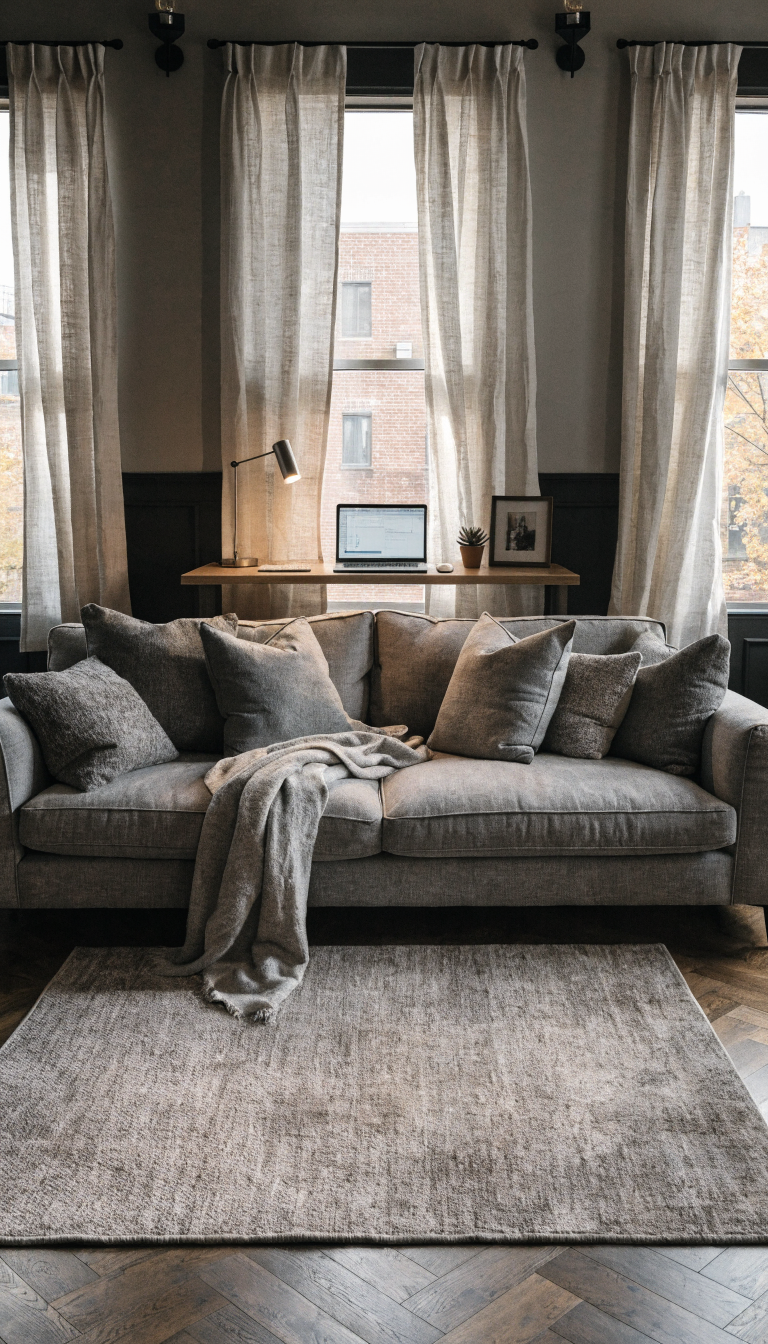
Who says that narrow table behind your couch has to just hold picture frames and a sad little succulent? Turn that console table into a standing desk that lets you work while still being part of the living room action.
Most console tables sit at the perfect height (around 30 inches) for standing work sessions. Pop a laptop on there, add a wireless keyboard and mouse, and suddenly you’ve got an office setup that doesn’t scream “I live at my desk.”
The Setup:
- A sleek console table (30-36 inches tall works best)
- Decorative boxes or baskets underneath for hiding office supplies
- A small tray on top to corral your work essentials
- An anti-fatigue mat that you can roll up when guests arrive
The genius of this arrangement? When you’re not working, the console table still looks like regular living room furniture. Toss your laptop in a basket, arrange a few books or candles on the surface, and boom—instant living room upgrade.
Plus, working behind the sofa means you’re not staring at a wall all day. You get to face into the room, which somehow makes video calls feel less soul-crushing. Trust me on this one.
3. The Corner Nook That Wasn’t Doing Anything Anyway
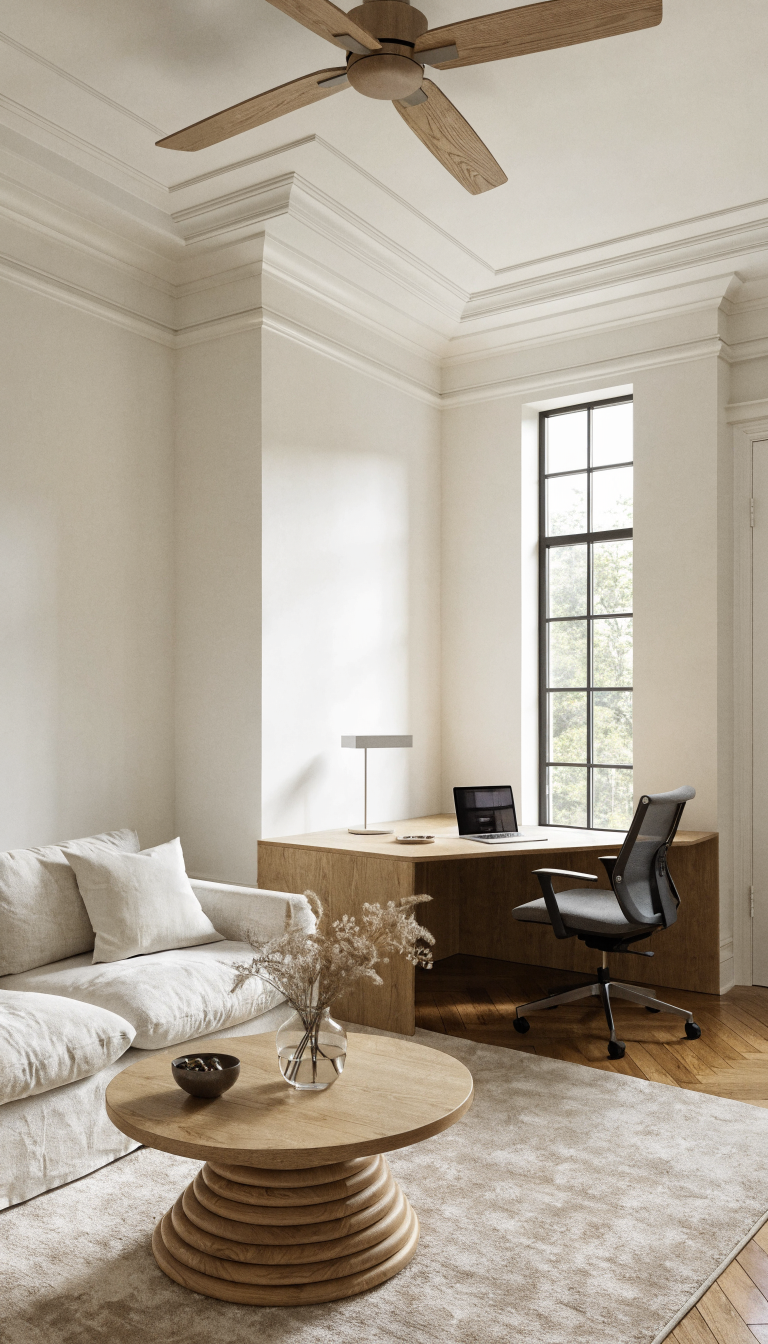
Let’s talk about that awkward corner in your living room that’s currently hosting a lonely floor lamp or becoming a dumping ground for random stuff. That forgotten space is actually prime real estate for a micro-office that won’t interfere with your living room flow.
Corner desks have come a long way from those massive ’90s monstrosities. Modern triangular or L-shaped corner desks can fit into tight spaces while giving you surprisingly generous work surfaces.
Corner Office Essentials:
- A compact corner desk (many are specifically designed for small spaces)
- Floating shelves on both walls meeting at the corner
- A swivel chair with a small footprint
- A floor lamp that arcs over from behind (saves desk space)
- Wall-mounted organizers to keep supplies vertical
The beauty of the corner setup is that it creates a defined work zone without building walls or using bulky furniture to section off space. Your eye naturally separates the corner workspace from the main living area, so both spaces feel distinct even though they share the same room.
Seriously, this layout works especially well if you position the corner desk so you’re facing into the room rather than staring at walls. You maintain that open, airy feeling while still having a legit place to get work done. It’s the best of both worlds.
4. The Murphy Desk That Actually Looks Good When It’s Up
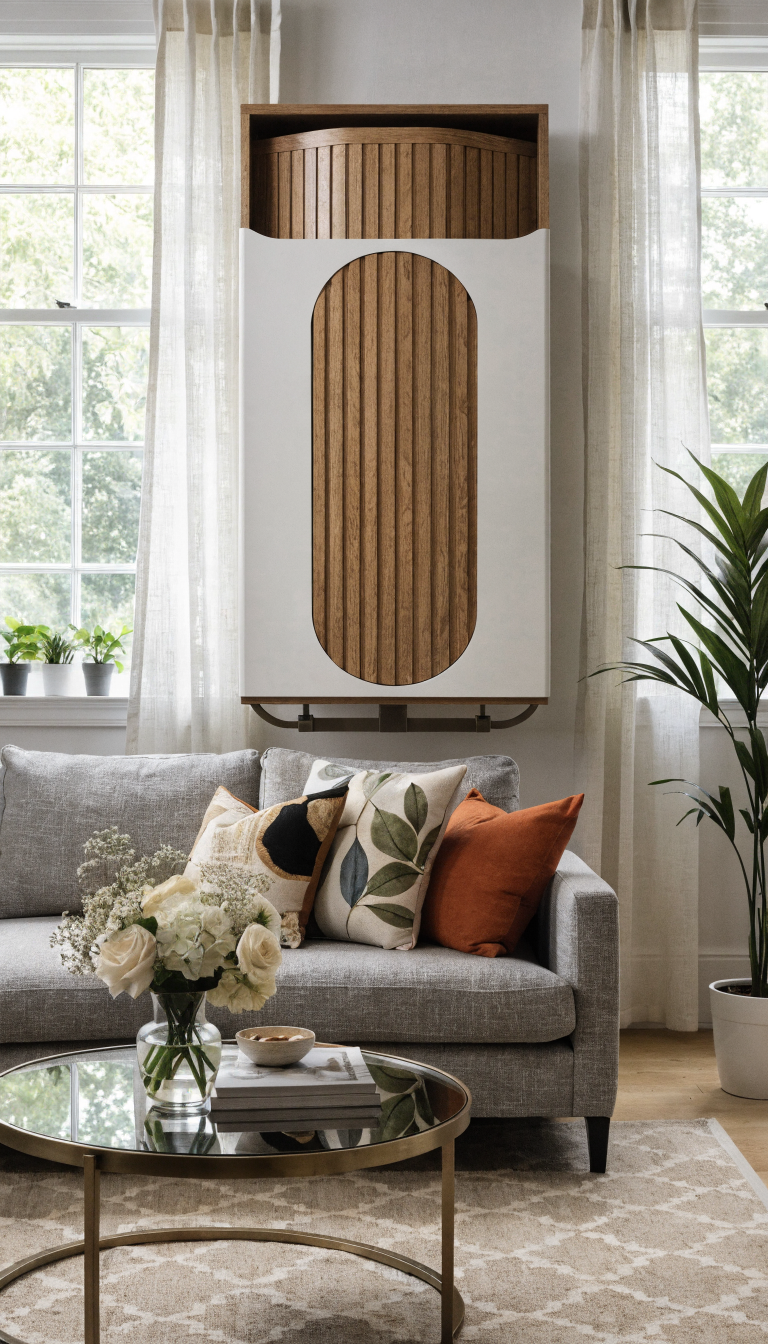
Okay, hear me out on this one. Murphy desks (the ones that fold up against the wall) used to be clunky eyesores, but the new generation is actually stunning. We’re talking pieces that look like modern art or sleek wall cabinets when they’re closed.
When you need to work, you fold down the desk surface. When you’re done, everything folds back up, and your living room gets a full reset. It’s like having two completely different rooms in one space.
What to Look For:
- Built-in storage inside for hiding office supplies
- A design that matches your living room aesthetic (they come in every style now)
- Soft-close hinges so you’re not slamming it shut
- A depth of at least 16 inches when open for comfortable working
Here’s the thing that makes Murphy desks perfect for small living rooms: they give you complete spatial flexibility. Need the living room for yoga or movie night? Close the desk. Time to tackle some spreadsheets? Open it up. You’re not committed to either configuration all the time.
The mental benefit is huge too. When that desk folds up, work literally disappears from view. No more staring at your laptop during dinner or feeling guilty about unfinished tasks while you’re trying to relax. Out of sight, out of mind actually works here.
FYI, many Murphy desks come with corkboards or whiteboards on the inside of the door, so you get bonus organization features that stay hidden when the desk is closed. It’s like a secret command center for your life.
5. The Bookshelf Room Divider That Creates Two Zones Without Walls
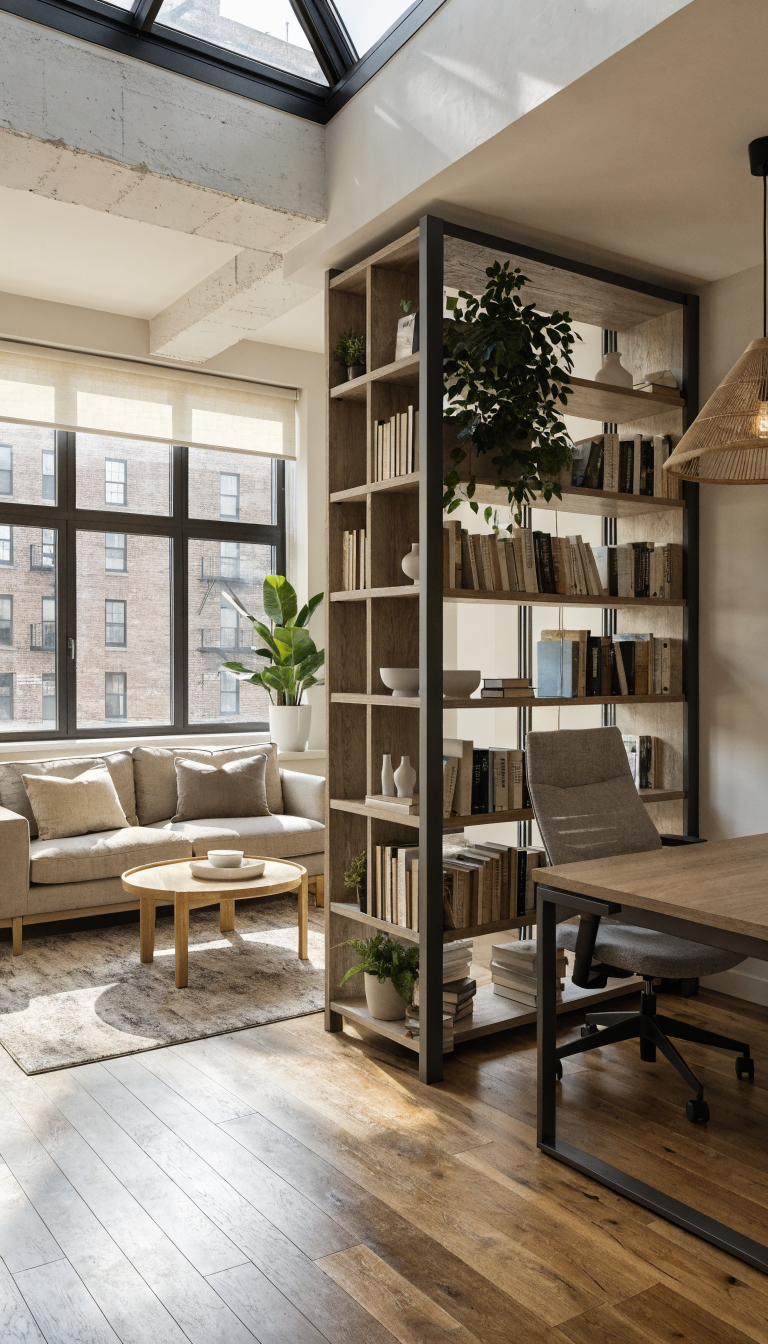
Want to know the ultimate hack for making a combo space feel like two distinct areas? Place a tall, open bookshelf perpendicular to the wall to create a gentle division between your living room and office zones.
This isn’t your grandma’s room divider. We’re talking about a sleek bookshelf (ideally one that’s open on both sides) that you can see through, so it defines space without making either side feel cramped or closed off.
How to Nail This Layout:
- Choose a bookshelf that’s at least 5 feet tall for visual impact
- Go for open-back designs so light flows through
- Style both sides thoughtfully (the office side sees one face, the living room sees the other)
- Leave the bottom shelves more open to maintain sightlines
- Use the top shelves for plants or decorative items that look good from both sides
Position your desk on one side of the bookshelf and your sofa on the other. Suddenly, you’ve created two rooms where there was only one. The bookshelf acts as a psychological boundary that helps your brain switch between work mode and relaxation mode.
The storage bonus is massive too. One side of the shelf can hold your work books, office supplies, and printer paper. The other side displays your living room books, plants, and decorative objects. It’s functional furniture that earns its keep twice over.
What really makes this setup shine is that it doesn’t block natural light the way a solid divider would. If you have windows on one side of the room, that precious daylight still reaches the other side. Your whole space feels brighter and more open, even though you’ve technically divided it.
Plus, you can completely customize which side feels like “work” and which feels like “home” based on how you style the shelves. Use matching boxes or baskets to hide ugly office stuff on the work side, and go full interior designer with your favorite objects on the living room side.
Conclusion
Your small living room doesn’t have to choose between being a productive workspace and a comfortable hangout spot. With these five setups, you can create a home that works as hard as you do while still feeling like a place you actually want to relax in. Pick the combo that fits your space and lifestyle, and get ready to love both your office and living room more than you thought possible in a small footprint.
0 Comments