Living in a small space doesn’t mean you need to sacrifice comfort, style, or personality. With the right small space living hacks, your studio apartment, tiny home, or compact condo can feel cozy, functional, and surprisingly spacious.
Many people ask:
“How can I make a small space feel larger without renovating?”
The truth is, you don’t need a big budget or a construction project to achieve a more open and stylish feel. With some smart organization, creative furniture choices, and a few design tricks, you can maximize every inch. Below are 11 practical hacks that blend style with functionality — so your home feels both beautiful and livable.
1. Multi-Functional Furniture: One Piece, Many Uses
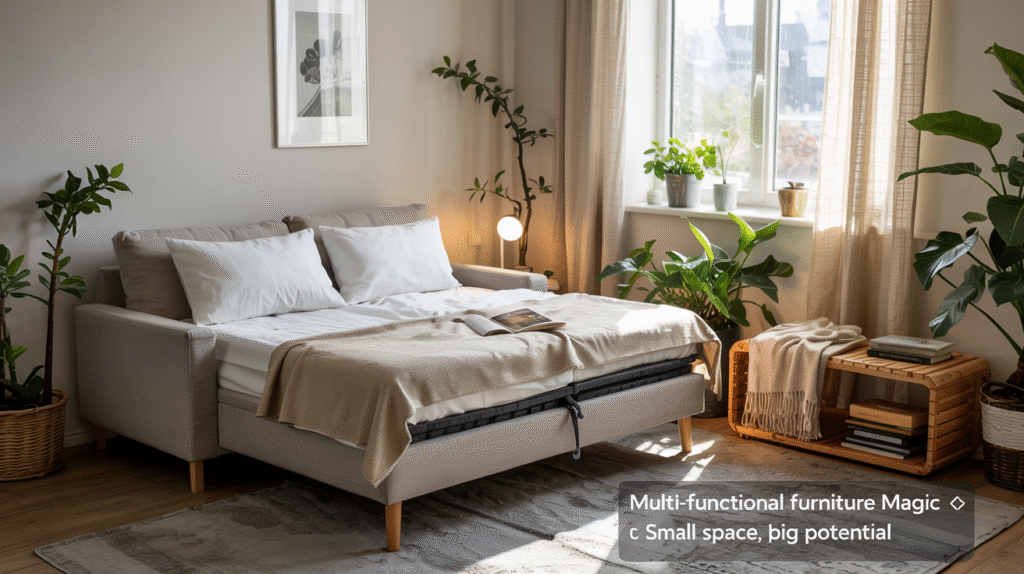
In a small space, every piece of furniture needs to pull its weight. Instead of choosing items that serve only one purpose, go for multi-functional furniture.
Think of a sofa bed that transforms your living room into a guest room in seconds, or an ottoman with hidden storage that doubles as extra seating. Dining tables that extend or fold into the wall can adapt depending on whether you’re hosting friends or having a quiet meal for two.
These clever furniture choices free up valuable square footage while reducing clutter. They also keep your space feeling dynamic — one room can seamlessly shift between living, working, and entertaining.
2. Vertical Storage Saves the Day
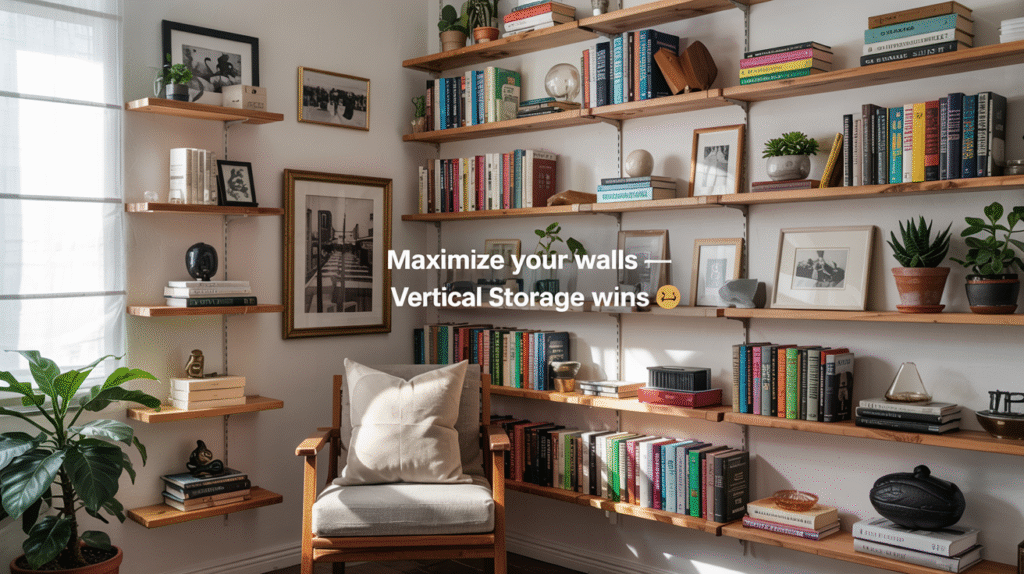
When floor space is limited, the smartest thing you can do is look up. Your walls are an untapped storage solution just waiting to be used.
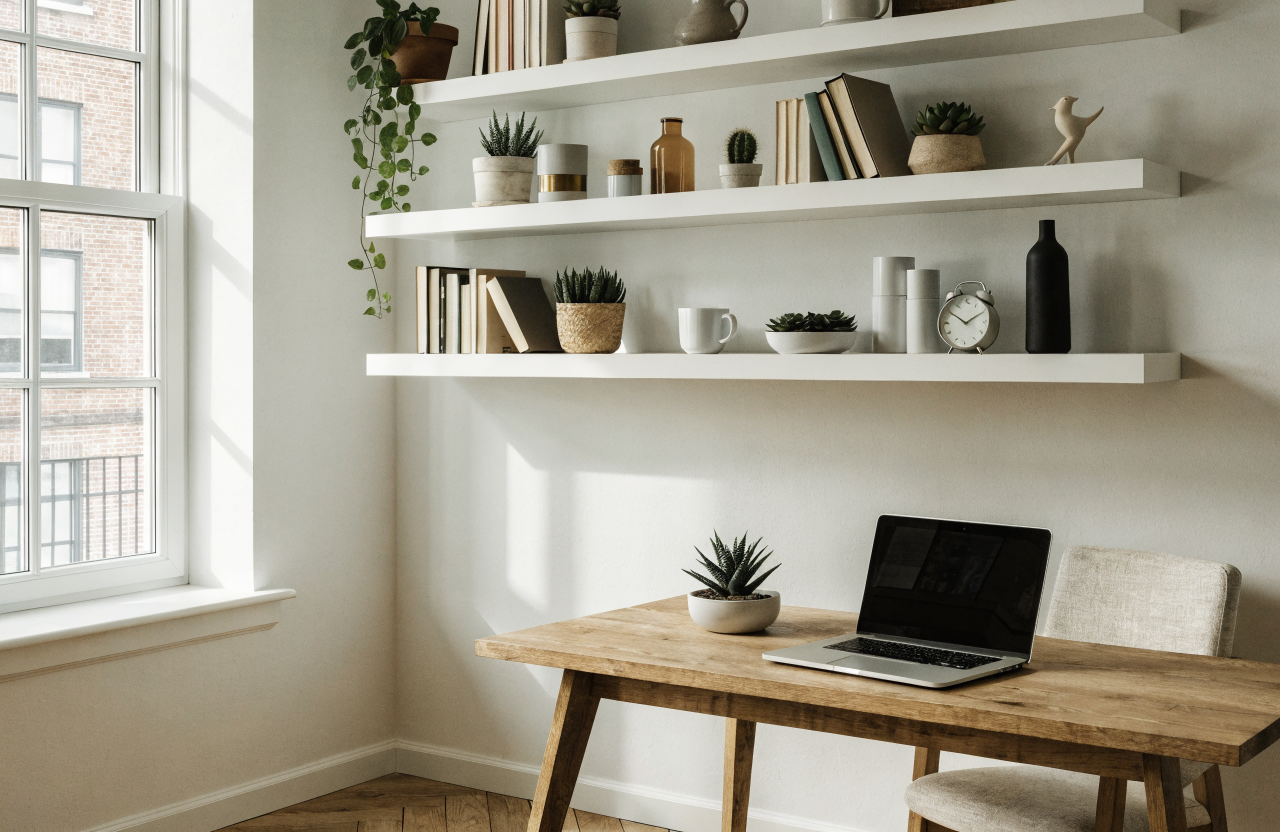
Install floating shelves to display books, plants, or decorative pieces. Opt for tall, slim bookcases that hug the walls and draw the eye upward, making your ceilings feel higher. Even the space above doors can be fitted with shelving for baskets or bins.
Vertical storage isn’t just about adding capacity — it’s also about balance. By distributing visual weight upward, your room feels taller and airier, which is exactly what you need in small space living.
3. Use Light Colors to Open Up the Space
Color plays a huge role in how big or small a room feels. Light shades like white, cream, soft gray, or pastels make spaces appear larger and brighter by reflecting natural light.
Pair these colors with mirrors to bounce light around the room. For example, a pale gray wall with a large mirror framed in black creates a sleek, modern look that feels spacious and stylish.
This doesn’t mean you need to give up bold colors completely. Use darker shades as accents — perhaps on throw pillows, rugs, or a single feature wall. This contrast adds depth while still maintaining the overall open feel of your space.
4. Sliding Doors Instead of Swinging Ones
Traditional swinging doors eat up precious floor space. When every square foot counts, switching to sliding doors or pocket doors can be a game changer.
Sliding doors glide along the wall, freeing up the floor for furniture placement. Pocket doors disappear completely into the wall, creating an ultra-streamlined effect.
These doors not only save space but also add a touch of sophistication. Frosted glass sliding doors, for example, let light flow through while still creating separation between rooms — perfect for open studio apartments.
5. Foldable & Collapsible Items
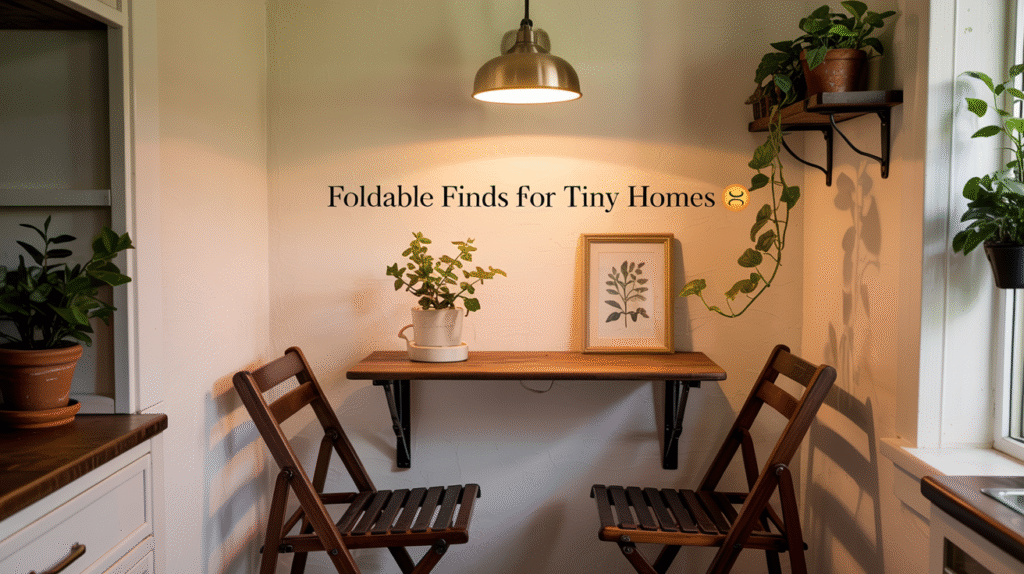
A hallmark of smart small space living is flexibility, and nothing provides flexibility like foldable furniture.
Foldable chairs can be stored under the bed or hung on a wall rack when not in use. Nesting tables tuck neatly together until you need extra surfaces for entertaining. Collapsible drying racks can be hidden away when laundry is done.
These items give you control over how your space functions day-to-day. You’re never forced to give up room permanently — instead, you gain the freedom to expand and contract your layout as needed.
6. Mirrors as Space Illusions
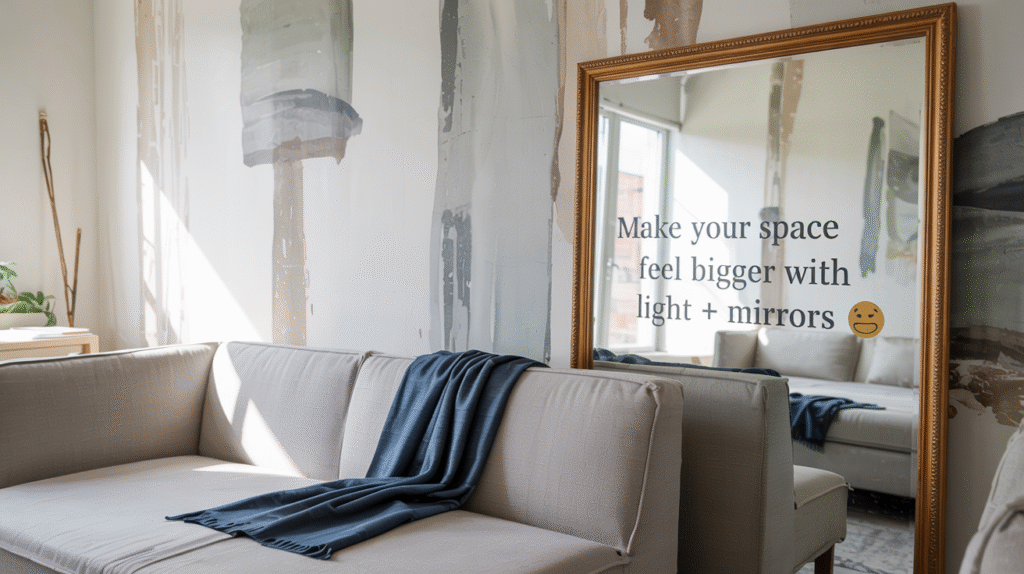
Mirrors are the oldest trick in the book for a reason: they work. By strategically placing mirrors across from windows or in narrow hallways, you instantly make your home feel twice the size.
Mirrored closet doors not only save wall space but also brighten your bedroom. A floor-to-ceiling mirror leaning against the wall can become a statement piece while visually doubling the depth of the room.
The key is placement. Position mirrors where they can catch natural light or reflect a focal point like a plant or piece of artwork. This creates the illusion of openness while adding elegance.
7. Create Defined Zones with Rugs
One of the biggest challenges in small space living is that everything can feel like it’s happening in the same spot. A rug is a simple yet powerful tool for creating defined zones.
Place a rug under your bed to separate the sleeping area from the rest of the room. Use a small rug in front of your desk to carve out a workspace. A patterned rug in the living area sets the tone for entertaining and relaxing.
By visually dividing your room into “zones,” you create order and function. Even if your apartment is one open rectangle, rugs can give it the structure of a larger home.
8. Invest in Smart Storage Solutions
Storage is the backbone of successful small space living hacks. Without it, clutter builds up fast. Luckily, there are countless ways to sneak storage into your home.
Look under the bed — drawers or rolling bins are perfect for seasonal clothes or extra bedding. Inside closets, add hanging organizers or slim shoe racks to maximize every inch. Use baskets under coffee tables or benches to tuck away remotes, cords, or magazines.
The best storage doesn’t just hide clutter; it makes retrieval easy. Transparent bins or labeled baskets ensure you always know where things are, cutting down on wasted time.
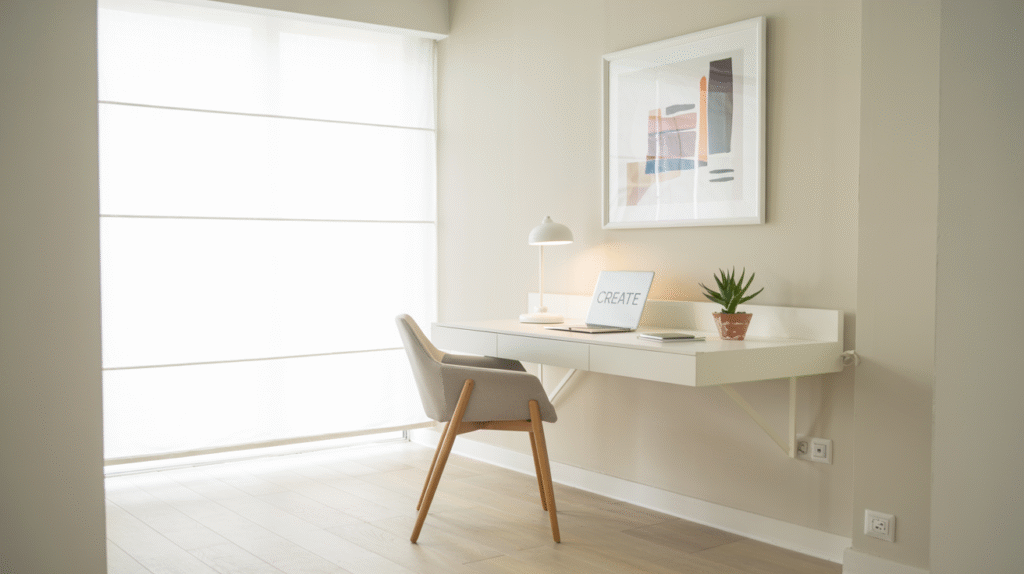
9. Floating Desks & Wall-Mounted Tables
If you’re working from home or need a dedicated study corner, avoid bulky desks that overwhelm your space. Instead, opt for floating desks or wall-mounted fold-out tables.
A floating desk mounted directly to the wall creates a minimalist look and keeps the floor clear. Wall-mounted fold-out tables can serve as both a desk and dining area, depending on your needs.
Pair these setups with a sleek chair that tucks neatly underneath, and you’ve created a compact workstation that doesn’t intrude on your living space.
10. Lighting Layers for Depth
Relying on one overhead light can make small rooms feel flat and lifeless. The solution? Layered lighting.
Start with ambient lighting like ceiling fixtures or recessed lights. Add task lighting through table lamps or wall sconces. Finally, bring in accent lighting — perhaps string lights, LED strips, or a statement floor lamp.
This layered approach creates depth and makes your space feel more dynamic. Plus, the ability to control light levels helps set the mood — bright and energetic for working, soft and cozy for relaxing.
11. Maximize Corners and Odd Spaces
Awkward corners, alcoves, or tiny nooks often get overlooked, but they’re prime real estate in small space living.
Install corner shelves to display books, plants, or collectibles. Transform an alcove into a reading nook with a cushioned bench and wall sconce. Even a sliver of space between the bed and wall can fit a narrow rolling cart for storage.
These micro-transformations add functionality without crowding your main living areas. Every little corner becomes part of your home’s design strategy.
Conclusion
Small doesn’t have to mean cramped. With these small space living hacks, you can transform any home into a stylish, functional retreat. From vertical storage and smart furniture to lighting and layout tricks, each idea makes your space feel bigger, brighter, and better.
Remember: small space living is about creativity, not compromise. With the right mindset and a little ingenuity, your home can be every bit as comfortable and inspiring as a larger one.
Meta Description
Discover the best small space living hacks to transform your home. From multi-functional furniture to vertical storage, these 11 tips make small spaces stylish and functional.
0 Comments