Think your tiny office space is holding you back? Think again. These seven brilliant ideas will transform your cramped workspace into a productivity powerhouse that looks like it belongs in a design magazine.
1. Go Vertical with Wall-Mounted Everything
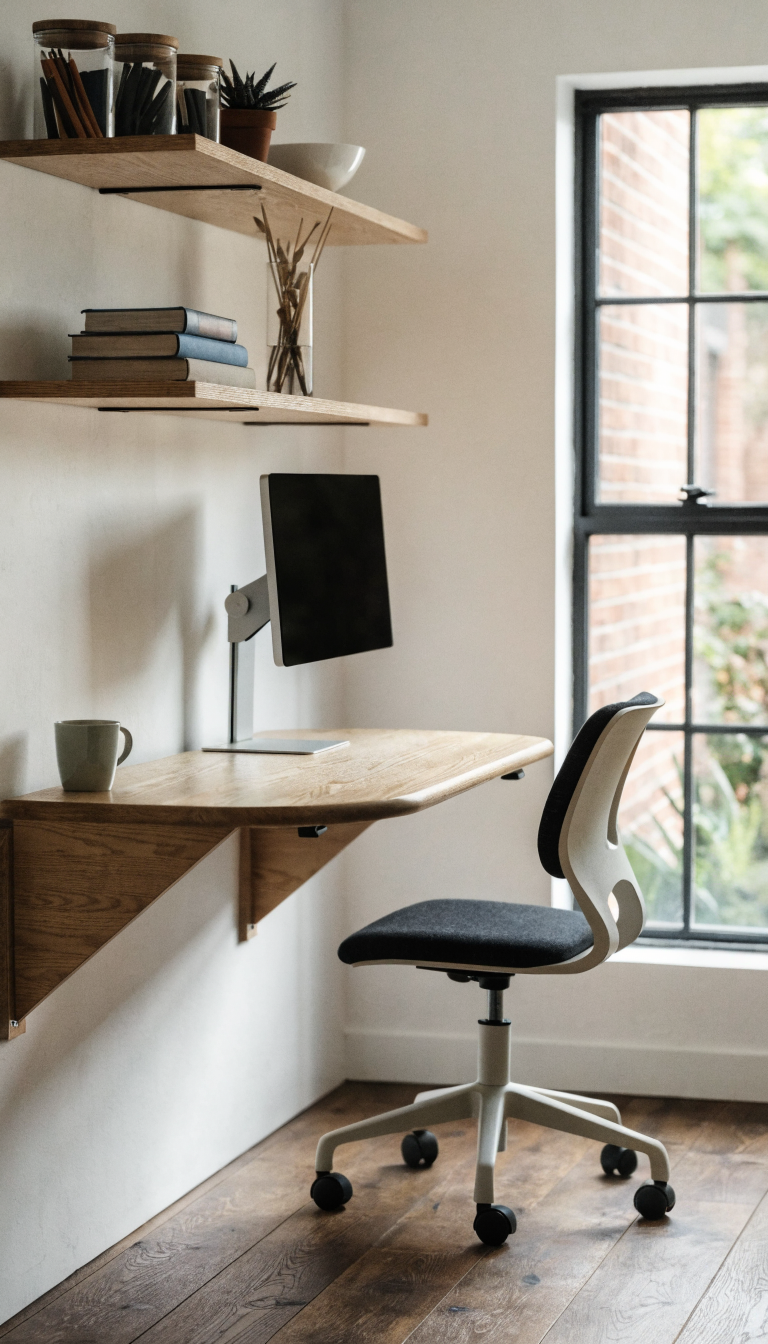
When floor space is basically nonexistent, your walls become your best friend. Seriously, look up and realize you’ve been ignoring about 70% of your usable space this whole time.
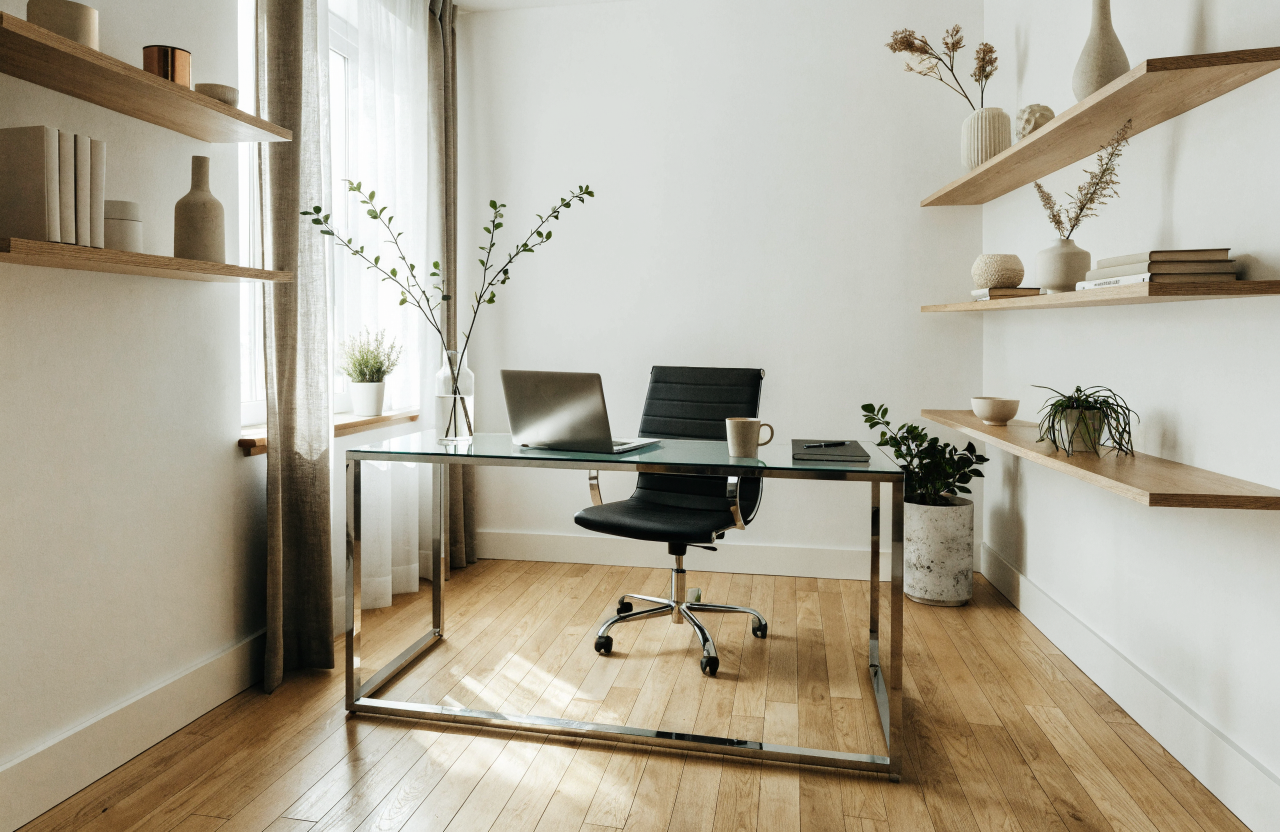
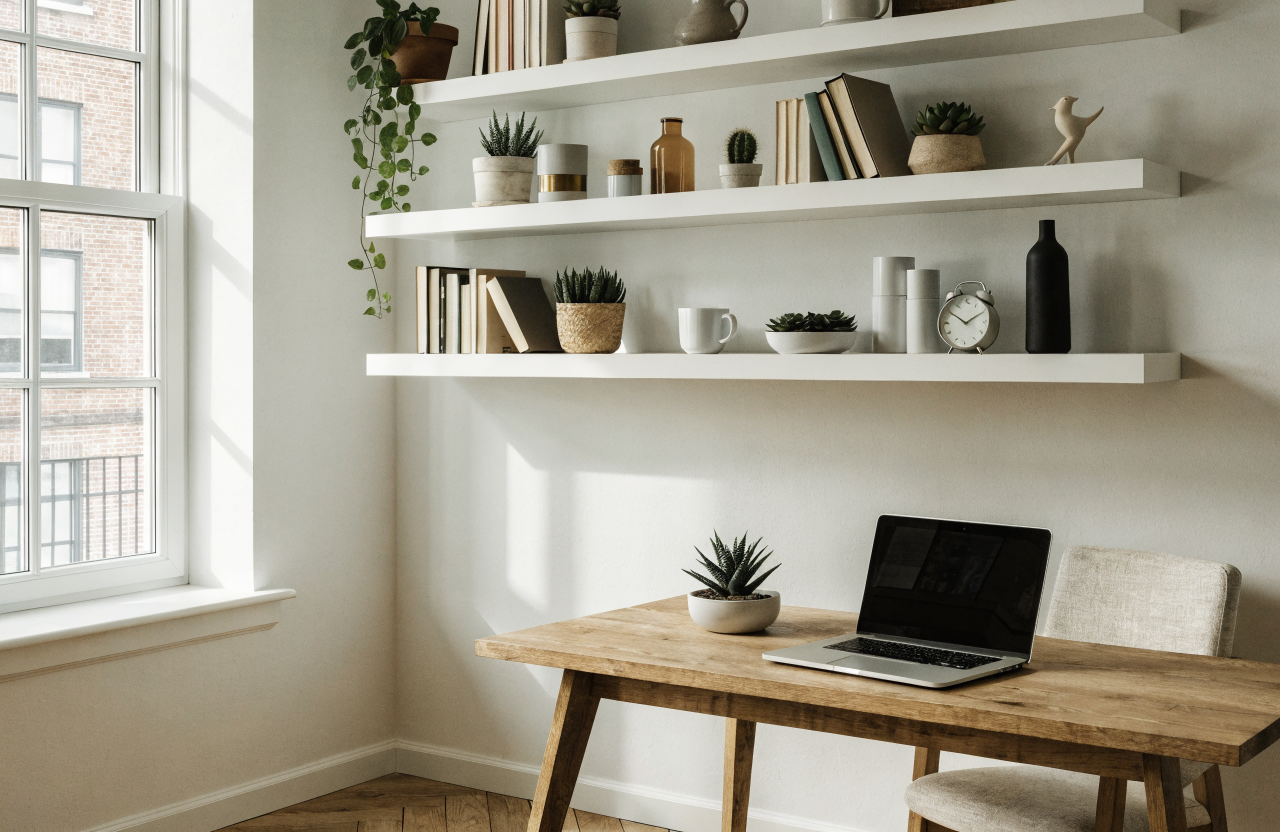
Wall-mounted desks fold up when you’re done working, giving you your room back at the end of the day. Floating shelves store your supplies without eating up precious square footage. Even your monitor can mount to the wall, freeing up valuable desk real estate.
Essential Wall-Mounted Elements:
- Fold-down desk with integrated storage
- Floating shelves in varying depths
- Wall-mounted task lighting
- Pegboard organizers for supplies
- Cable management boxes mounted high
The beauty of this approach? You can customize the height of everything to your exact preferences. No more hunching over a desk that’s too low or reaching for shelves placed by someone else’s logic.
This setup works perfectly for multi-purpose rooms where your office needs to disappear when guests arrive. Just fold everything up and nobody’s the wiser about your WFH situation.
2. Embrace the Corner Nobody Wanted
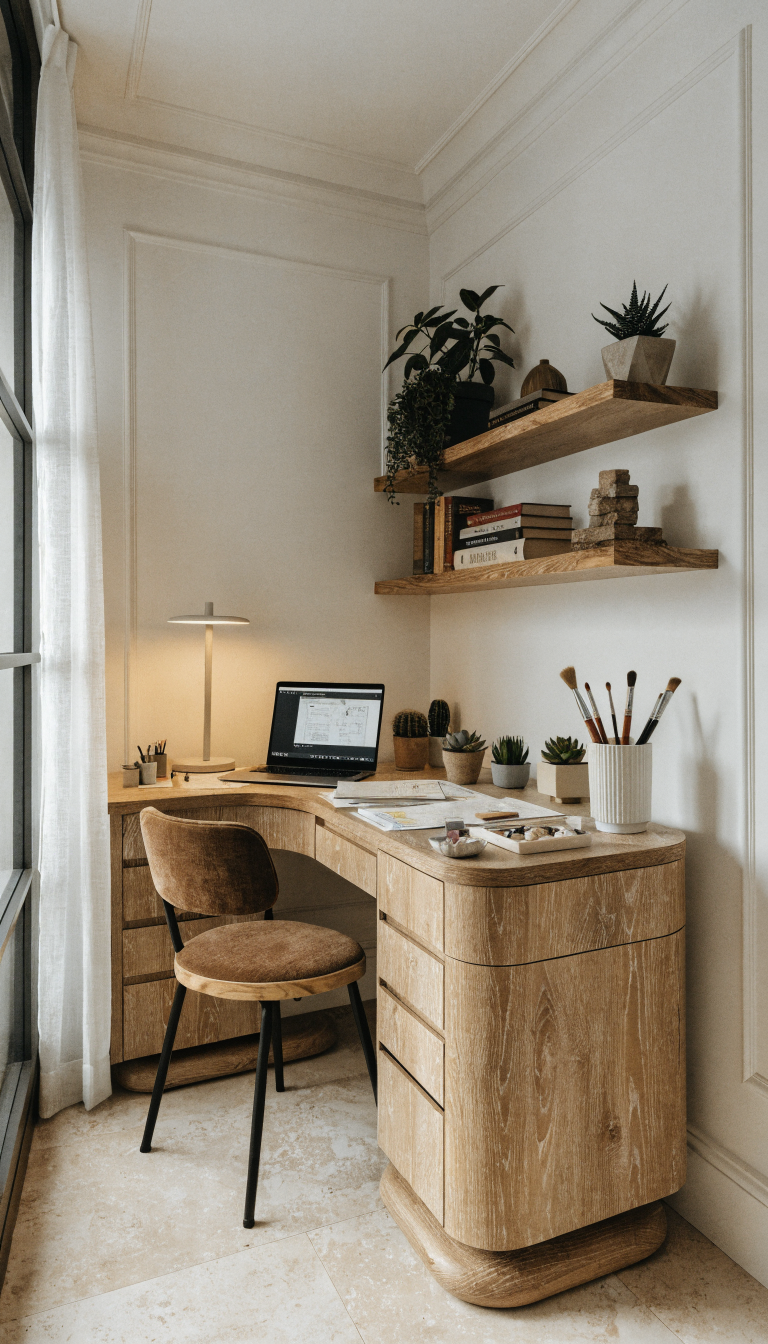
That awkward corner collecting dust? It’s actually a goldmine for small office setups. Corner desks maximize every single inch while creating a cozy, focused workspace that feels intentionally separate from the rest of your room.
L-shaped corner desks give you two work surfaces without dominating the room. You get space for your computer on one side and paperwork or creative projects on the other. Plus, facing a corner naturally minimizes distractions because you’re literally walled in on two sides.
Making Corners Work:
- Choose a corner desk with built-in shelving above
- Add a corner floating shelf system for vertical storage
- Install corner LED lighting to brighten the space
- Use the adjacent walls for motivation boards or art
Don’t forget about the space above your corner desk. Floor-to-ceiling corner shelving units turn dead space into organized storage that actually looks intentional and stylish.
This approach works brilliantly in bedrooms, living rooms, or even large closets. Anywhere you can claim a corner, you can create an office.
3. Choose Furniture That Pulls Double Duty
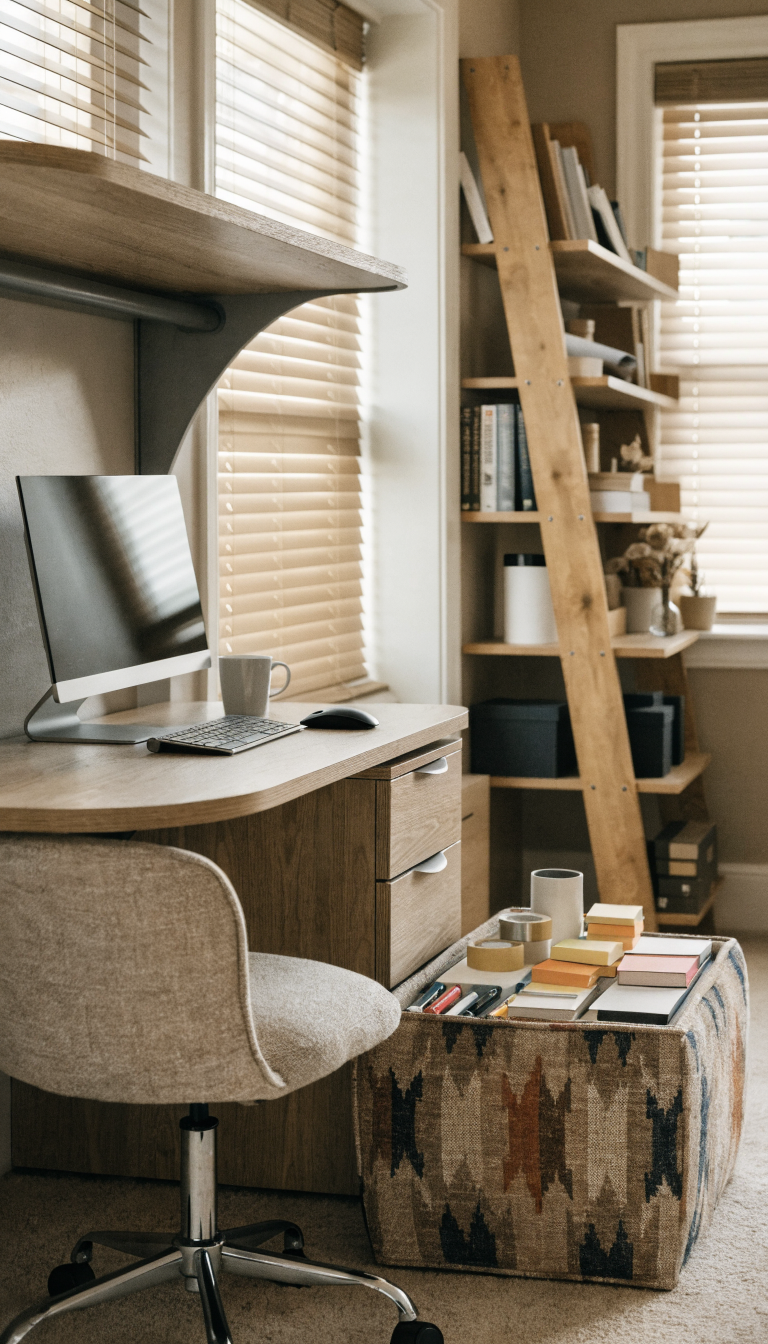
In a small office, every piece of furniture needs to earn its keep. If it only does one thing, it’s taking up space you don’t have to spare.
Storage ottomans hide office supplies while providing seating for clients or a footrest for you. File cabinets with cushions on top become extra seating. Bookshelves with desk extensions give you storage and workspace in one compact footprint.
Multi-Functional Furniture Winners:
- Desk with built-in filing drawers
- Storage ottoman that holds supplies
- Ladder shelf with integrated desk surface
- Rolling cart that serves as side table and storage
- Murphy bed with fold-down desk attachment
IMO, the rolling storage cart is the most underrated piece of small office furniture. You can tuck it under your desk, wheel it out when you need supplies, and even move it to different rooms depending on where you’re working that day.
Look for furniture with clean lines and open designs. Bulky, solid pieces make small spaces feel cramped, while furniture with visible legs and open shelving creates the illusion of more space.
4. Create Zones with Strategic Lighting
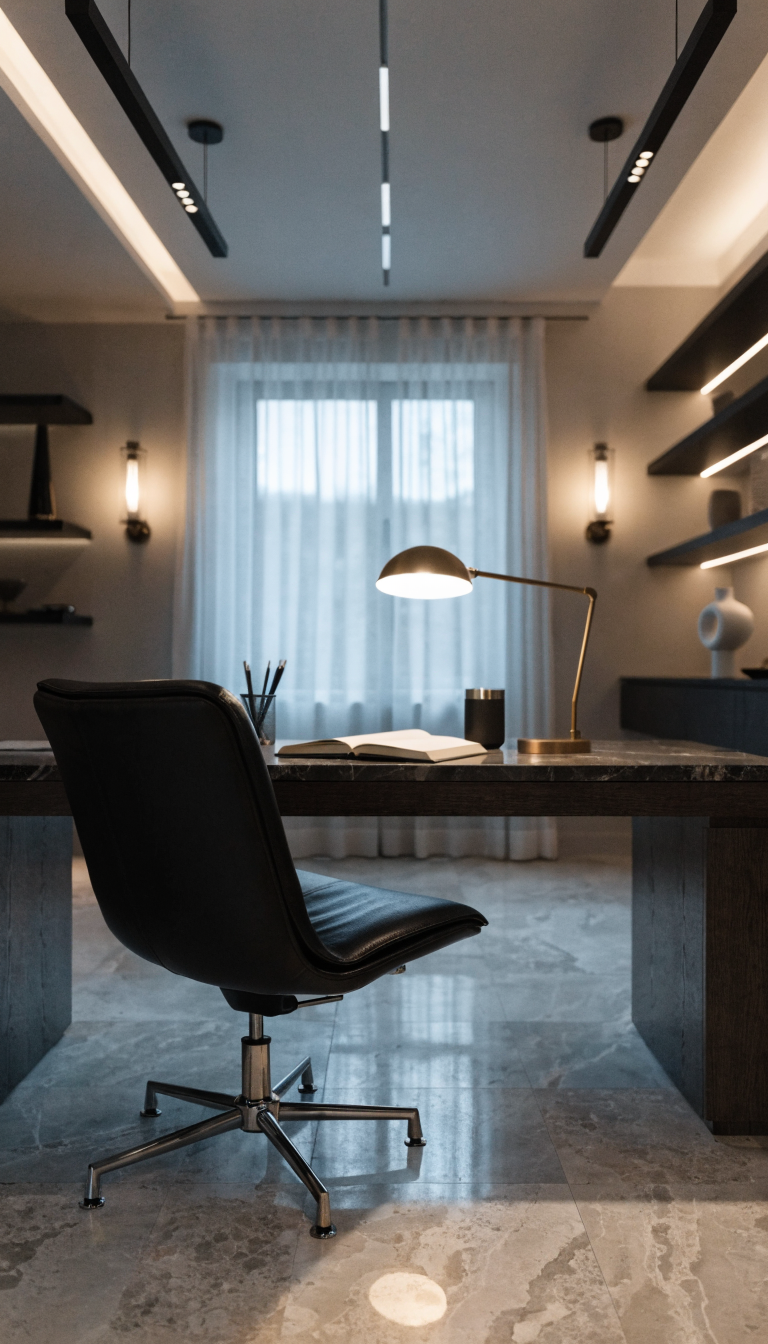
One overhead light just won’t cut it in a small office. You need layered lighting that defines your workspace and makes it feel larger and more purposeful.
Task lighting on your desk creates a focused work zone. Ambient lighting from floor or table lamps softens the space and reduces eye strain. Accent lighting highlights your decor and adds depth to what might otherwise feel like a cramped corner.
Lighting Layer Strategy:
- Adjustable desk lamp with dimming feature
- Wall sconces to save desk space
- LED strip lights under shelves
- Floor lamp in the corner for ambient glow
- Natural light maximized with sheer curtains
Here’s a trick designers use: place a small lamp or LED strip behind your monitor. This backlighting reduces eye strain and creates depth, making your workspace feel less confined.
Warm lighting (2700-3000K) makes the space feel cozy and inviting, while cooler lighting (4000-5000K) boosts focus and productivity. Mix both depending on the time of day and your mood.
5. Use Mirrors to Fake Square Footage
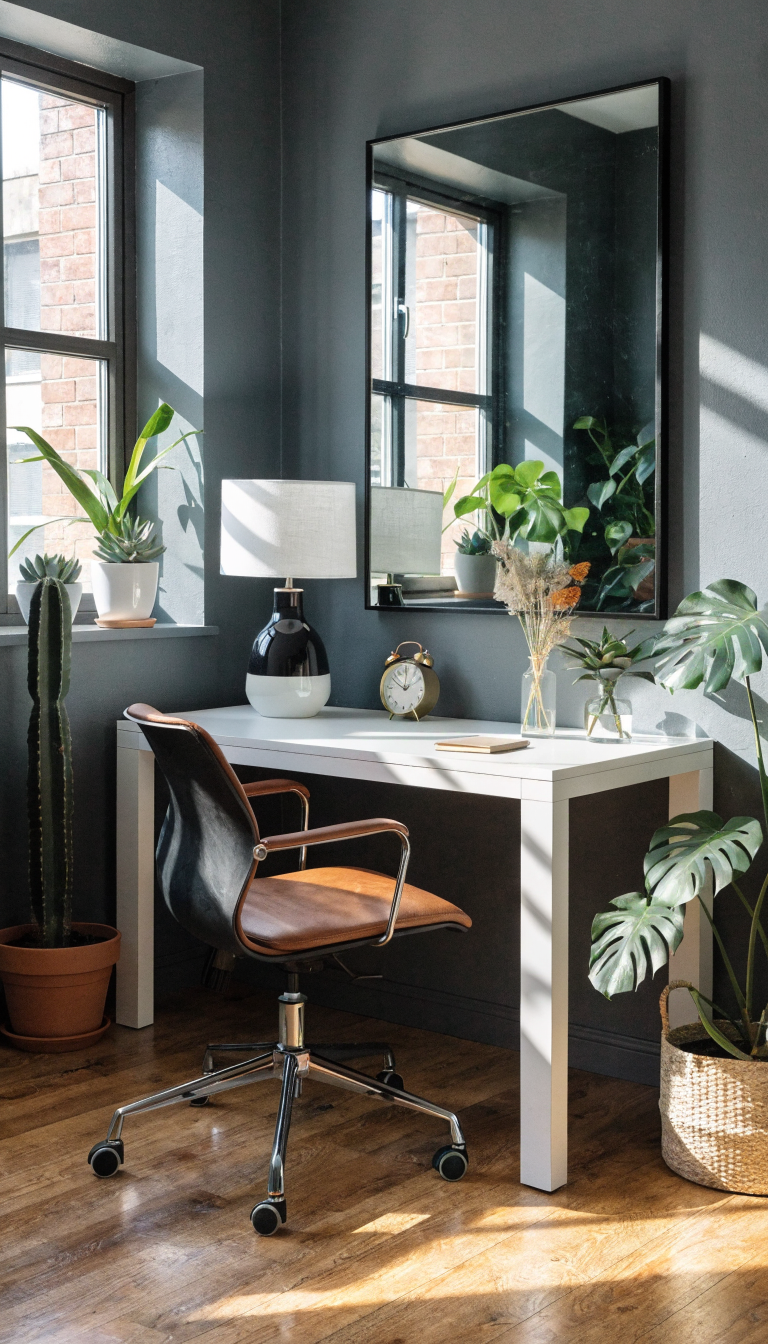
Want to instantly double your office space without knocking down walls? Mirrors are basically magic for small rooms, and they work just as well in offices as they do in tiny apartments.
A large mirror positioned opposite a window reflects natural light throughout the room, making everything brighter and more open. Mirrored furniture surfaces bounce light around without adding visual weight. Even a small decorative mirror creates the perception of depth.
Strategic Mirror Placement:
- Full-length mirror on the door or adjacent wall
- Mirror behind your desk to expand the view
- Small mirrors in gallery wall arrangements
- Mirrored desk accessories or organizers
Trust me on this: position your mirror to reflect something attractive, like a window, artwork, or organized shelving. You don’t want it reflecting clutter or blank walls because that just emphasizes what you’re trying to hide.
Frameless or thin-framed mirrors work best in small offices because they blend into the walls rather than adding more visual clutter. Save the chunky ornate frames for spaces with room to spare.
6. Color Your Way to a Bigger Room
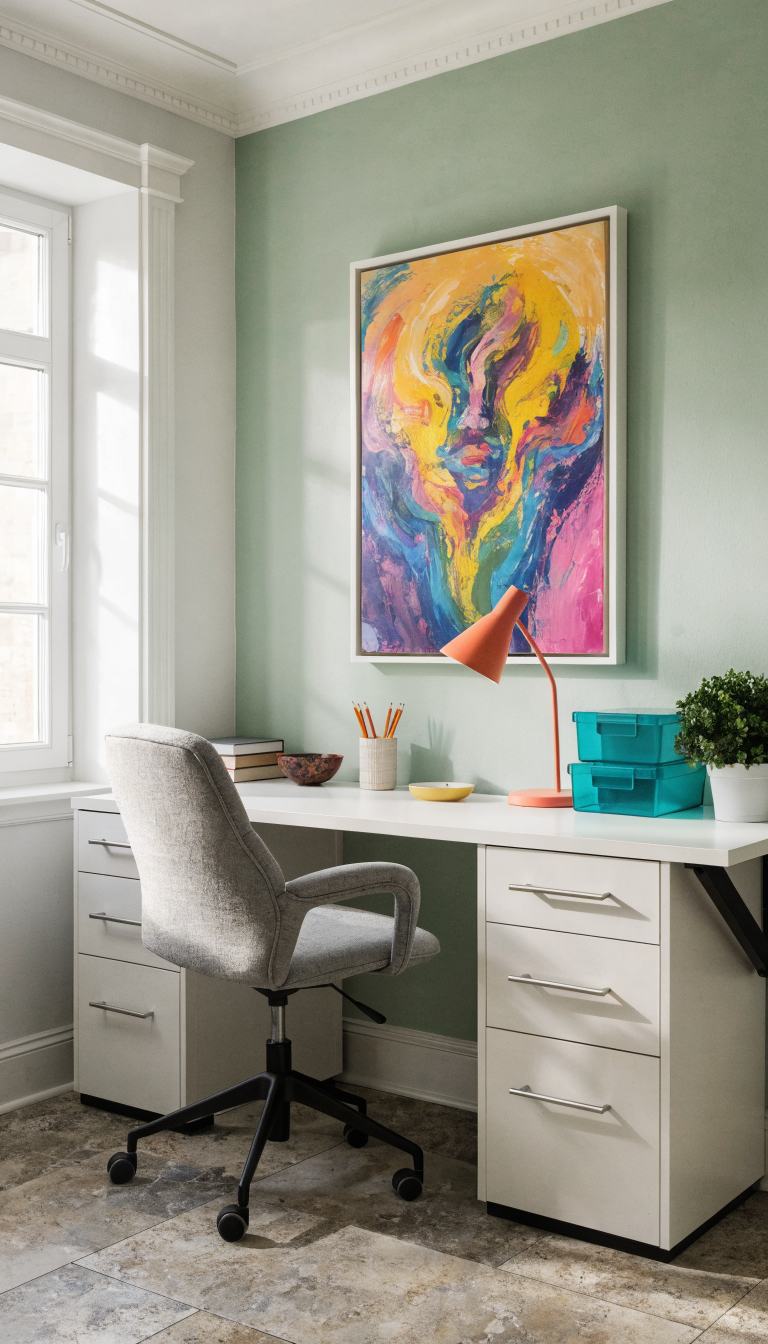
Color psychology isn’t just for fancy interior designers. The right color scheme can make your tiny office feel spacious, energizing, and totally professional.
Light colors reflect light and make walls recede, which is why white, cream, and pale gray are go-to choices for small spaces. But that doesn’t mean you’re stuck with boring. Add pops of color through accessories, artwork, and accent walls to inject personality without overwhelming the space.
Color Strategies That Work:
- Monochromatic scheme in light neutrals for maximum space
- Single accent wall in a bold color for depth
- Pops of energizing color (yellow, orange, teal) in accessories
- Ceiling painted lighter than walls to add height
- Same color walls and trim to blur boundaries
Here’s something cool: painting the wall behind your desk a slightly darker shade creates a natural focal point that defines your workspace without requiring physical dividers. It’s like a visual zone that signals “this is where work happens.”
FYI, glossy finishes reflect more light than matte, so consider a satin or semi-gloss paint on your walls if you really want to maximize brightness. Just know that it’ll also show more imperfections, so prep your walls properly.
7. Get Obsessive About Organization
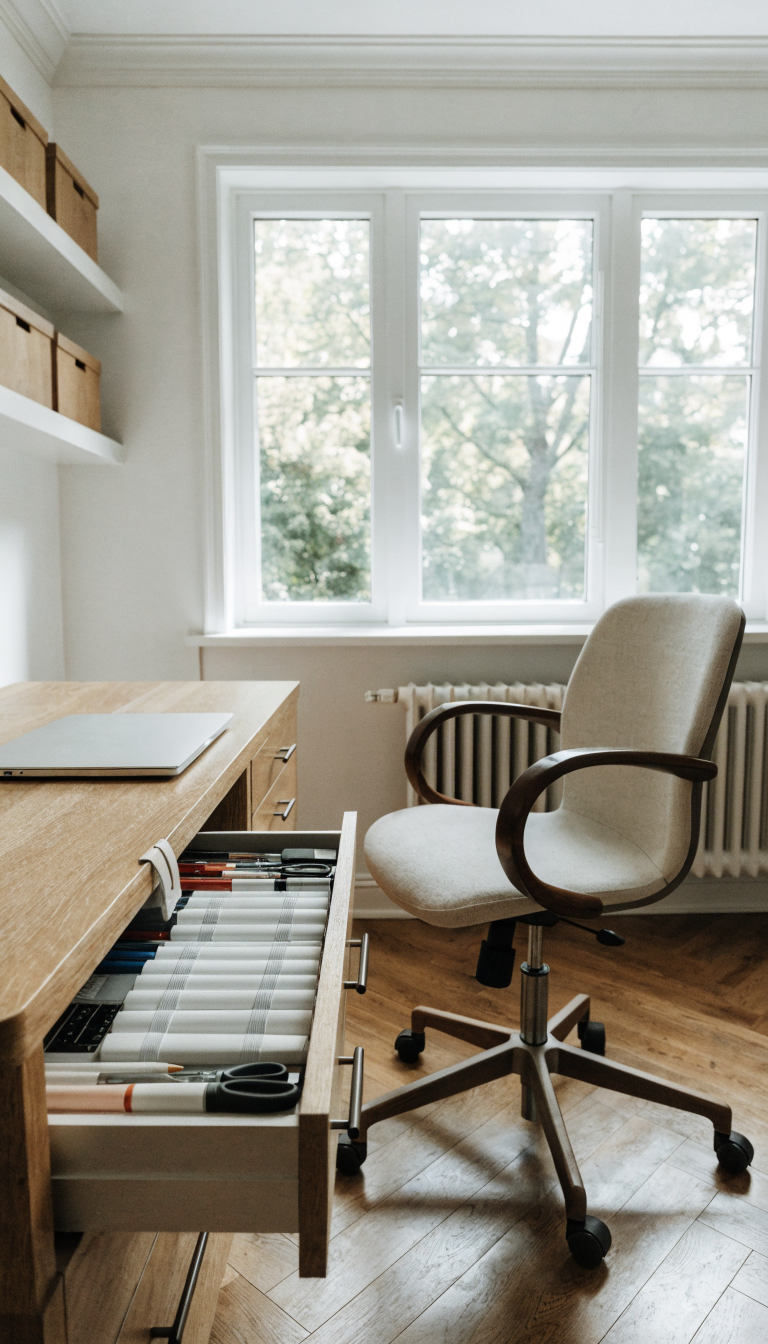
In a small office, clutter doesn’t just look bad—it literally makes your space feel smaller. Every random paper stack and tangled cable chips away at your precious square footage.
The secret? Assign a specific home to everything in your office. When every item has a designated spot, you can keep surfaces clear and maintain the illusion of space. Plus, you’ll actually find stuff when you need it, which is kind of the whole point.
Organization Must-Haves:
- Drawer organizers for small supplies
- Cable management sleeves and clips
- Desktop file organizer (vertical, not horizontal)
- Clear acrylic organizers that disappear visually
- Labels for everything—seriously, everything
- Daily inbox system to prevent paper pile-up
Vertical organizers are your best friend in tight spaces. Wall-mounted magazine holders, hanging file systems, and stacking trays keep things accessible without spreading across your limited desk surface.
Go digital whenever possible. Scan documents, use cloud storage, and embrace electronic billing. The less physical paper you need to store, the more room you have for the things that actually matter—like that inspiring desk plant collection you’ve been eyeing.
Clear containers and organizers create a cohesive look while letting you see exactly what you have. No more buying duplicate supplies because you forgot you had three staplers buried in different drawers.
Conclusion
Your small office isn’t a limitation—it’s an opportunity to get creative and intentional with your space. These seven ideas prove that you can build a functional, stylish workspace regardless of square footage. Now stop making excuses about your tiny room and start designing the office of your dreams.
0 Comments