Your home office deserves better than that folding chair and pile of papers you’ve been ignoring. These seven ideas will transform your tiny workspace into a productivity powerhouse that actually makes you want to clock in. Screenshot away, because you’re going to want to remember every single one of these gems.
1. Turn Your Wall Into a Vertical Productivity Machine
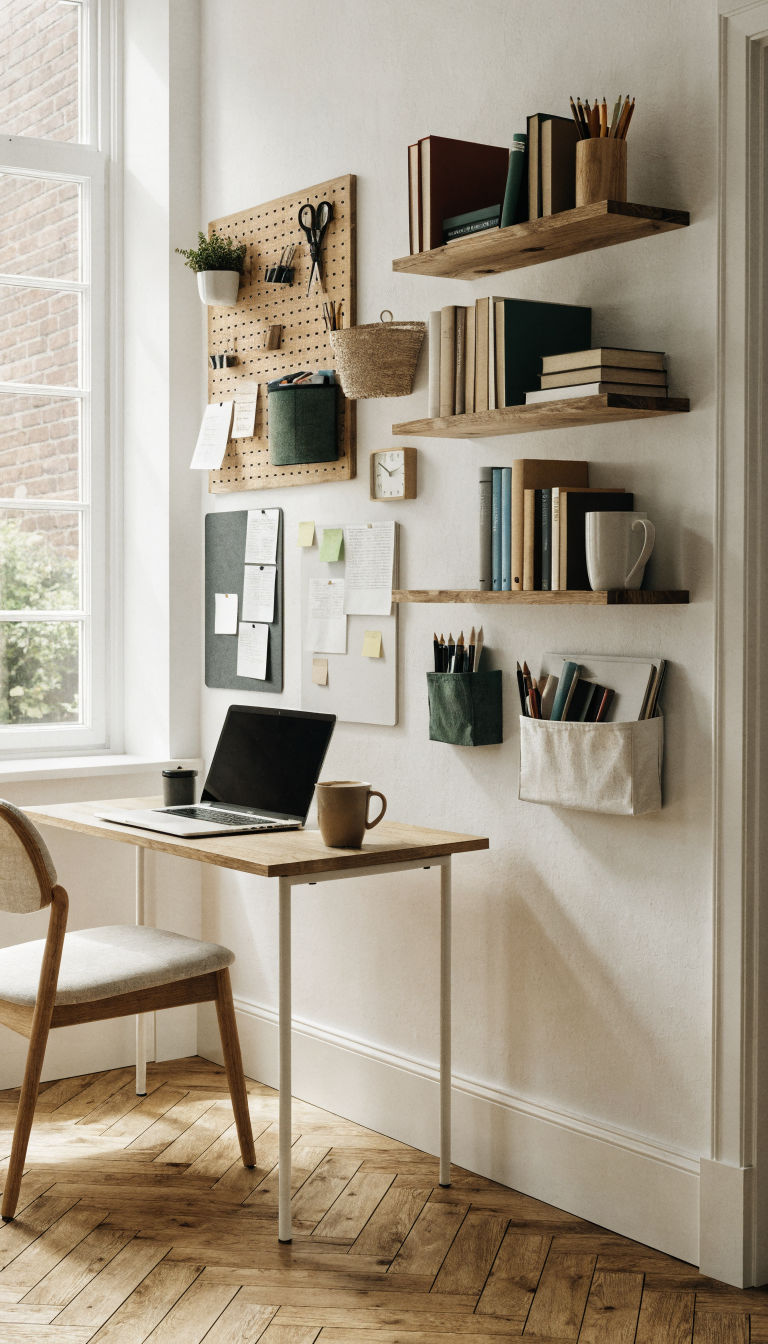
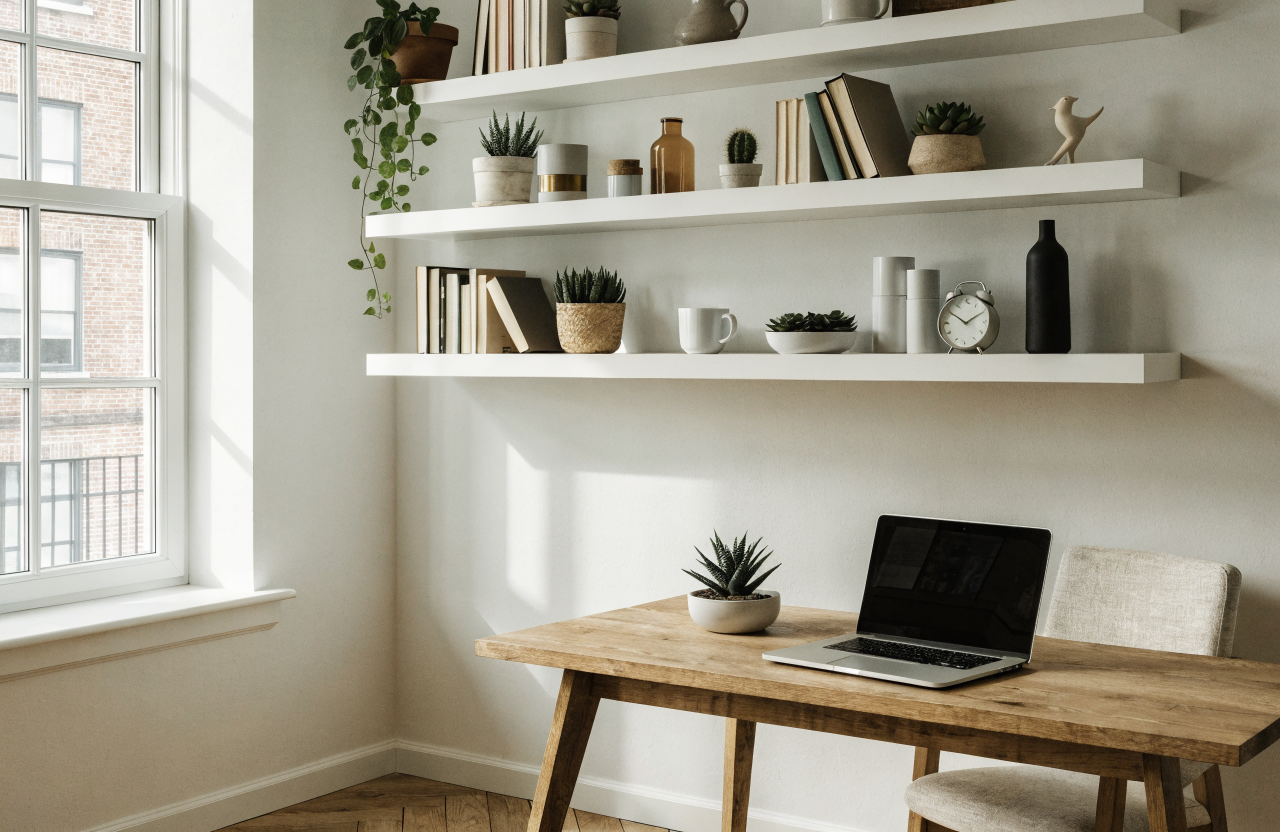
Floor space is precious when you’re working with a small office, so why waste valuable desk real estate? Going vertical is the ultimate space-saving hack that’ll make your tiny office feel three times bigger while keeping everything you need within arm’s reach.
The secret is using every inch of wall space strategically. Install floating shelves at different heights to create visual interest while maximizing storage. Add pegboards for supplies, magnetic boards for important notes, and wall-mounted organizers for files. Seriously, once you go vertical, you’ll wonder why you ever worked any other way.
Essential Wall-Mounted Elements:
- Floating shelves in varying lengths (12-36 inches works best)
- Cork or magnetic boards for quick reference materials
- Wall-mounted file holders to free up desk space
- Hanging planters for greenery without sacrificing surface area
- Cable management clips to keep cords off your desk
The beauty of vertical organization is that you can customize it to your exact workflow. Keep your most-used items at eye level and store occasional supplies higher up. Your desk will stay clear, and you’ll actually be able to find that stapler when you need it.
This setup works perfectly for anyone who feels constantly buried under office supplies. Plus, it looks incredibly polished on video calls when your colleagues see your organized backdrop instead of chaos.
2. Create a Command Center With a Corner Desk Setup
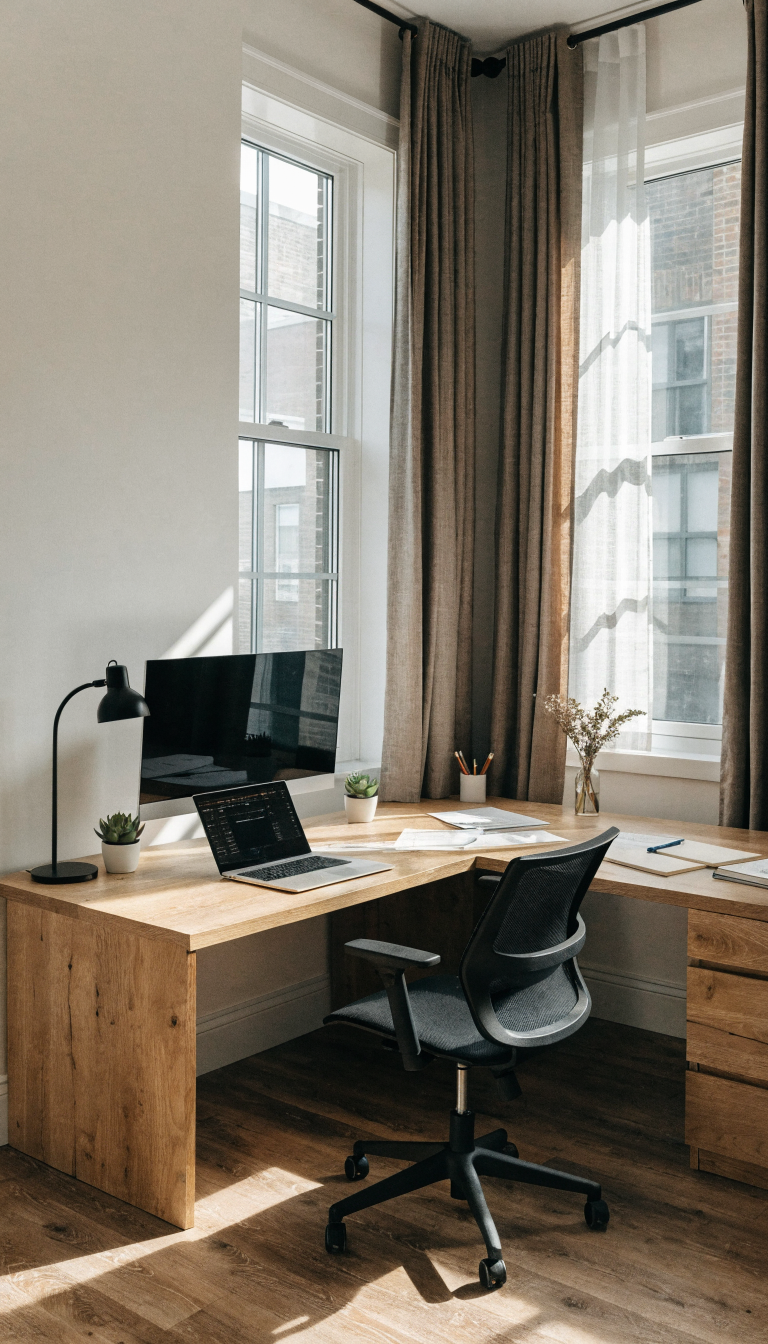
That awkward corner in your room? It’s about to become your favorite spot in the house. Corner desks maximize unused space and give you way more work surface than a traditional rectangular desk crammed against a wall.
Position an L-shaped desk or create your own setup with two smaller desks meeting at a corner. This configuration gives you distinct zones for different tasks—one side for your computer and focused work, the other for spreading out paperwork or creative projects. It’s like having two offices in one.
Add a rolling cart that tucks underneath when not in use, and suddenly you’ve got mobile storage that doesn’t eat up floor space. Install a small shelf above the corner junction point for decorative items or frequently grabbed supplies. The corner setup naturally creates a cocoon effect that helps you focus while making the room feel more spacious overall.
Corner Setup Essentials:
- L-shaped desk or two coordinating desks
- Ergonomic chair that swivels easily between zones
- Task lighting on both sides for even illumination
- Corner shelf for vertical storage
This layout is perfect for multitaskers who need space for multiple projects. You can keep your main work on one side and reference materials on the other without constantly shuffling papers around.
3. Embrace the Floating Desk Illusion
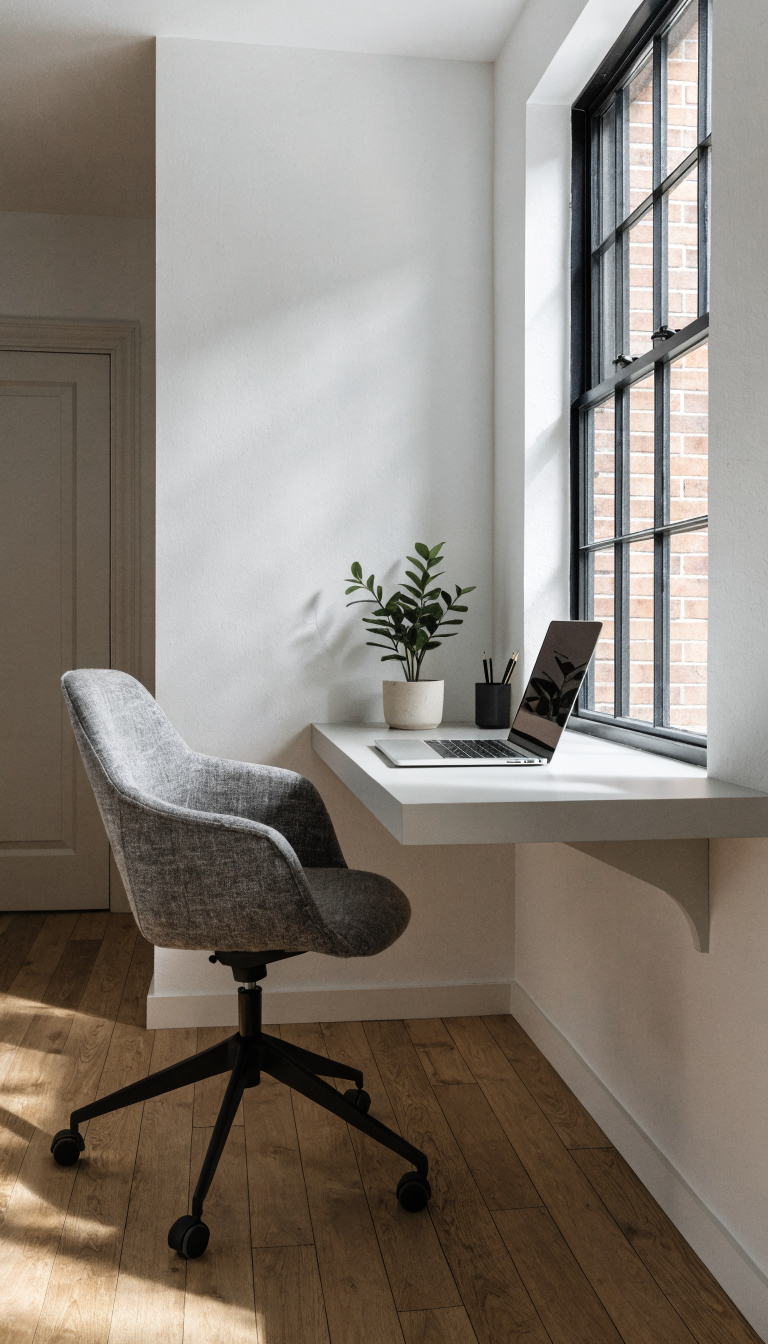
Want to make your small office feel twice as big? A wall-mounted floating desk creates the optical illusion of more floor space while giving you a fully functional workspace. It’s basically magic for cramped quarters.
These minimalist desks attach directly to the wall with heavy-duty brackets, leaving the floor beneath completely clear. Your eyes naturally perceive more space when they can see the floor continuing underneath furniture. Plus, you can position it at the exact height that works best for your ergonomic needs—no more dealing with standard desk heights that make your shoulders ache.
Pair your floating desk with a wall-mounted monitor arm to free up even more surface area. Add a slim drawer unit on wheels that slides underneath, and you’ve got hidden storage that appears and disappears as needed. The minimalist aesthetic keeps the room feeling airy and uncluttered.
Key Benefits:
- Creates visual spaciousness in tight quarters
- Easy to clean underneath (no dust bunnies hiding under desk legs)
- Customizable height for perfect ergonomics
- Modern, streamlined appearance
This setup works brilliantly in multipurpose rooms where you need the office to disappear visually when you’re not working. It keeps the space feeling light and breathable instead of cramped and cave-like.
4. Double Up With a Murphy Desk Solution
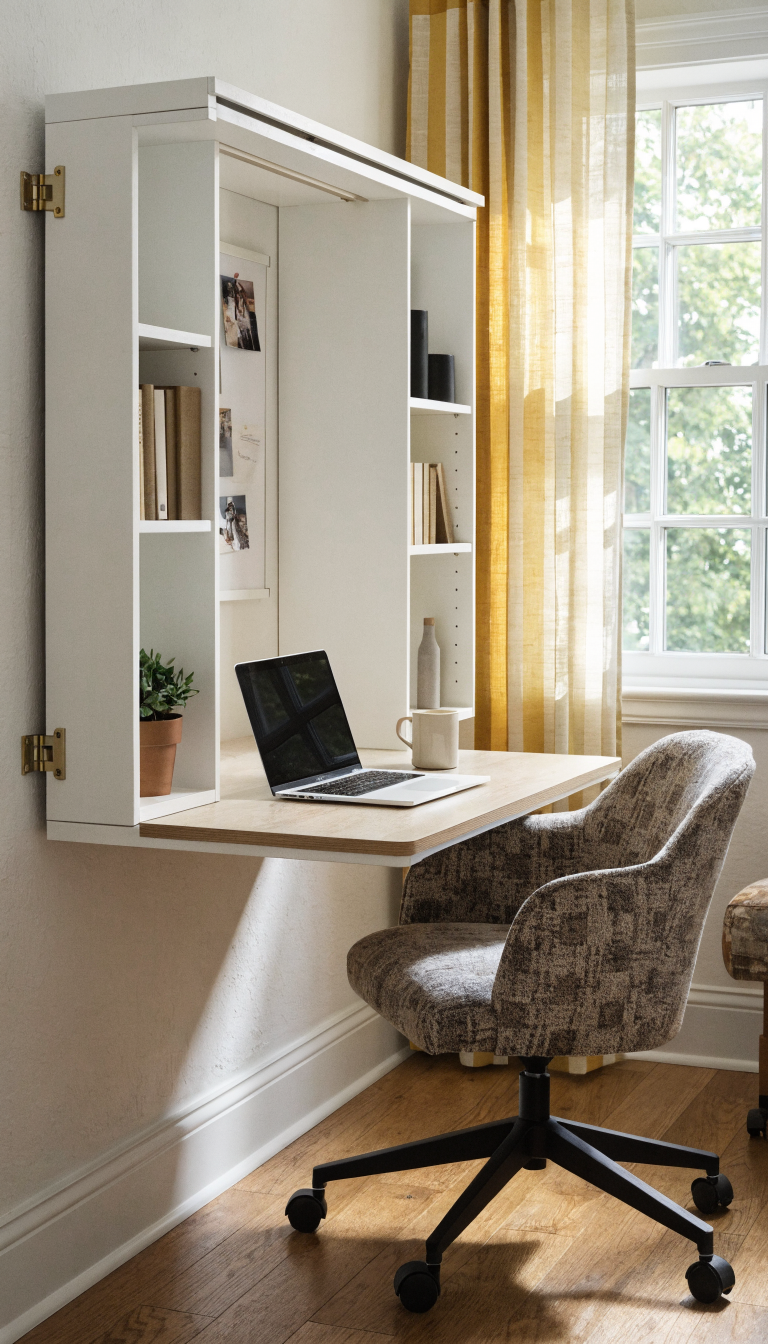
Okay, this one’s a game-changer for anyone who needs their office to completely vanish when the workday ends. A Murphy desk folds up against the wall just like those old Murphy beds, transforming your office into a regular room in seconds flat.
Modern Murphy desks come with built-in storage, shelving, and even bulletin boards that all fold up neatly together. When you’re done working, you literally close up shop—fold the desk against the wall, and boom, your living room or bedroom is back. No evidence of spreadsheets or stress in sight.
The newer models are super easy to operate with smooth hydraulic systems that lift and lower with minimal effort. Some even include chalkboard or whiteboard surfaces on the outside panel, so when it’s closed, it serves as a functional wall decoration. Talk about multitasking furniture.
What to Look For:
- Sturdy locking mechanism to keep desk stable when open
- Integrated storage cubbies for supplies
- Smooth lifting system (hydraulic or counterbalance)
- Decorative exterior panel for when closed
- Depth of at least 18 inches when open for adequate workspace
This solution is absolutely perfect for studio apartments or guest rooms that pull double duty. You get a real office when you need it without sacrificing your living space permanently.
5. Layer Your Lighting Like a Design Pro
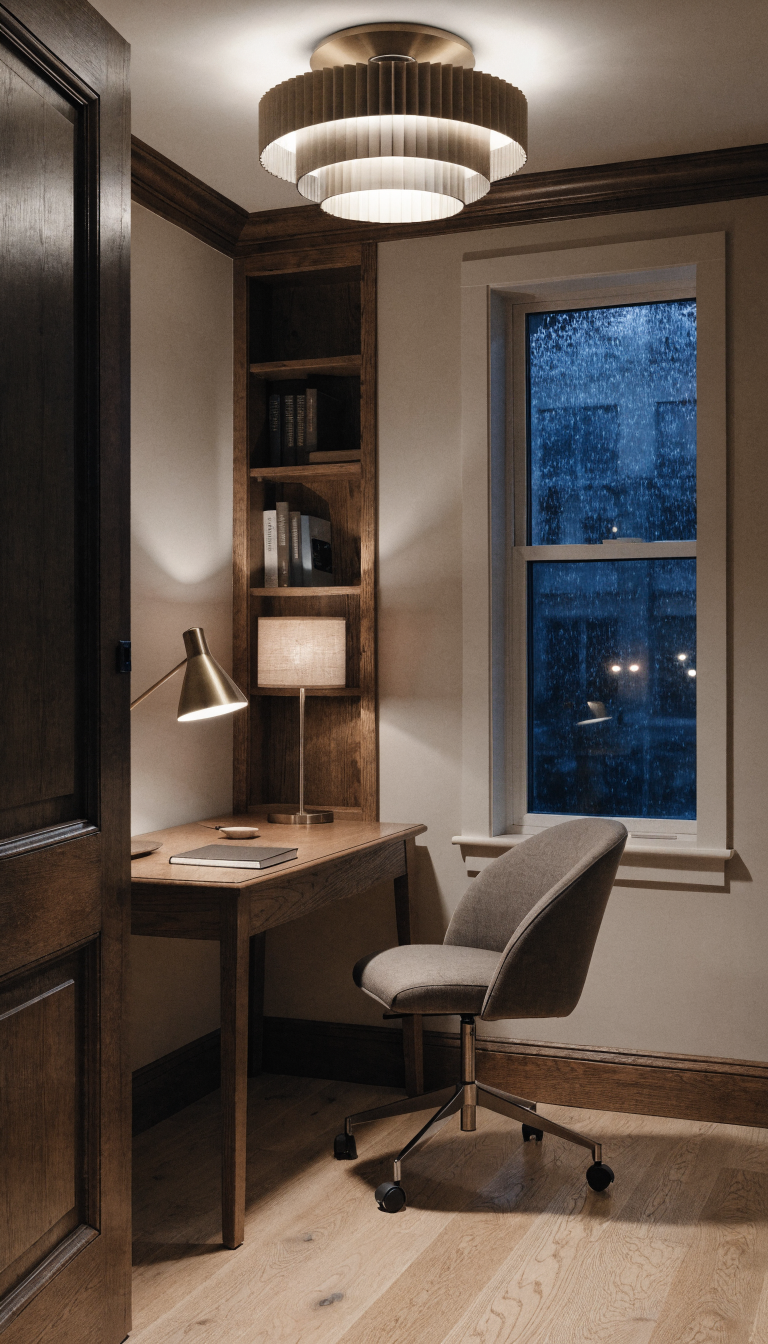
Here’s something nobody tells you about small offices: bad lighting makes them feel even smaller and more depressing. But when you nail the lighting game, even a closet-sized office can feel inviting and energizing.
Forget relying on one sad overhead light. You need three types of lighting working together: ambient (overall room light), task (focused work light), and accent (mood-setting decorative light). Layer these correctly, and your office goes from dungeon to dream workspace.
Start with good ambient lighting from an overhead fixture or floor lamp that bounces light off the ceiling. Add a high-quality desk lamp with adjustable brightness for task lighting—your eyes will thank you after hour five of staring at screens. Finally, throw in some accent lighting like LED strip lights behind your monitor or a small table lamp on a shelf. This creates depth and makes the space feel intentionally designed instead of thrown together.
Lighting Layer Breakdown:
- Ambient: Ceiling fixture with warm LED bulbs (2700-3000K)
- Task: Adjustable desk lamp with dimming capability
- Accent: LED strips, picture lights, or decorative table lamps
- Natural: Sheer curtains to soften window light without blocking it
Position your desk perpendicular to windows when possible to minimize screen glare while still getting natural light benefits. If you’re stuck facing a window, invest in a good anti-glare screen protector.
Proper lighting reduces eye strain, improves your mood, and makes your space look professionally designed. It’s worth investing in quality fixtures that you can adjust throughout the day as natural light changes.
6. Go Monochromatic to Expand Visual Space
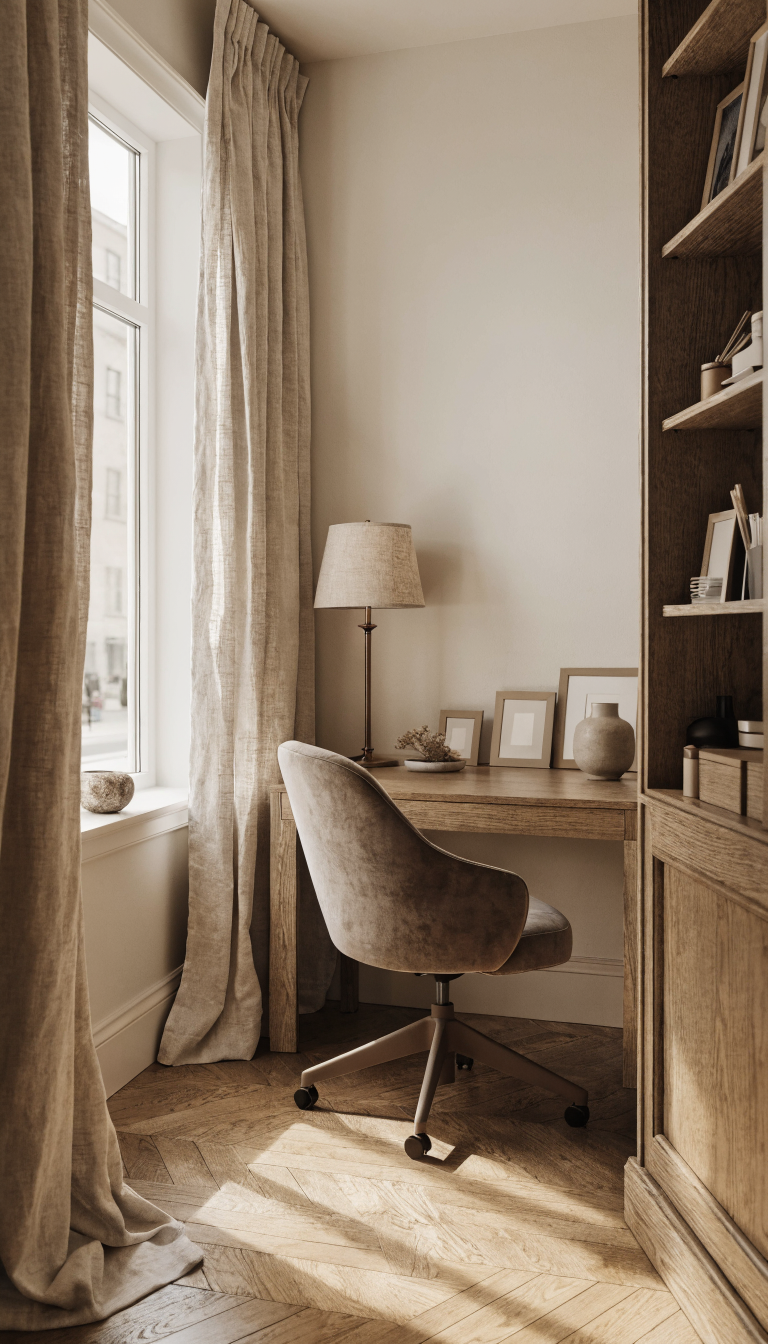
Want to know the secret weapon interior designers use to make tiny spaces feel massive? They stick to a monochromatic color scheme that tricks your brain into seeing more square footage than actually exists. It’s all about visual continuity, baby.
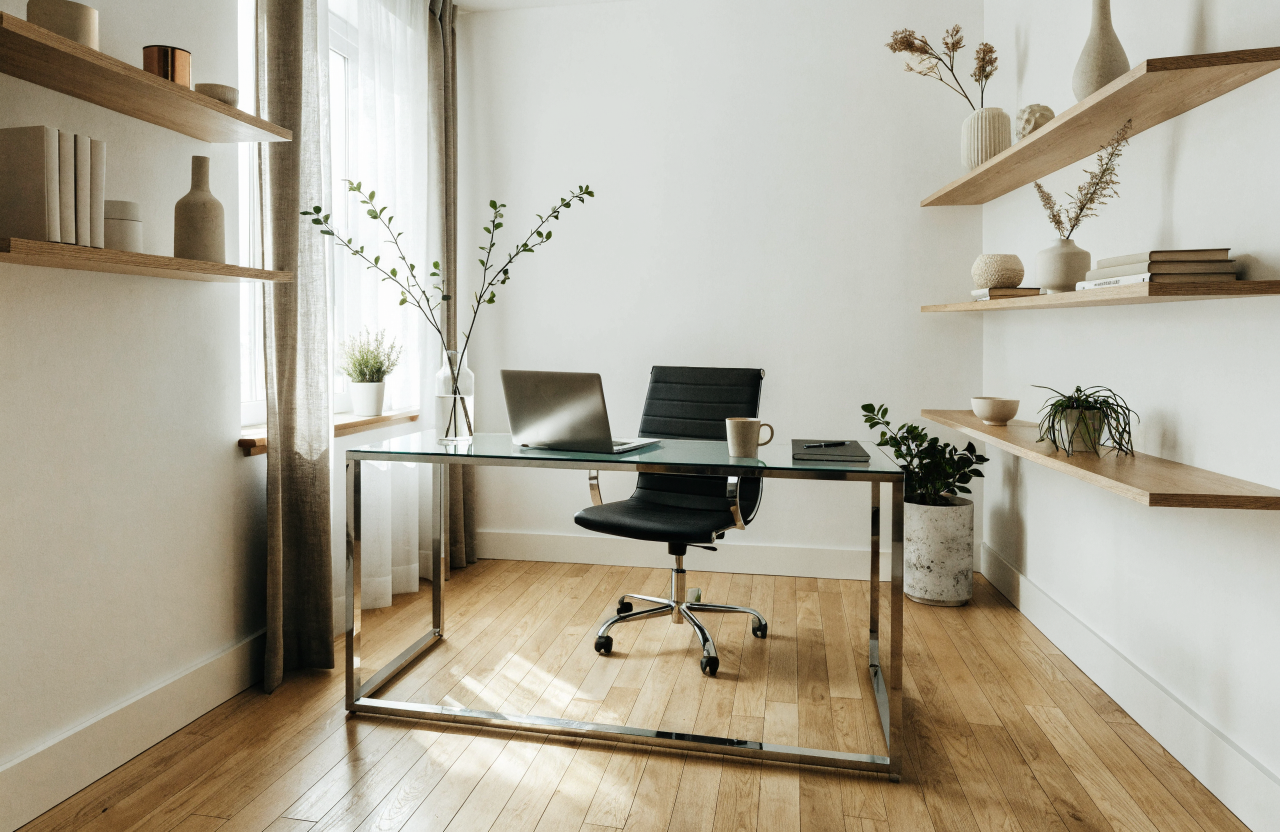
Pick one main color (white, beige, gray, or even navy works great) and use different shades and tones of it throughout your office. Paint the walls a lighter version, choose furniture in medium tones, and add accessories in darker shades. This creates a cohesive flow that your eyes read as one continuous space instead of chopped-up sections.
The magic happens because there are fewer visual breaks for your eye to process. Instead of seeing “desk, different color wall, different color chair, different color shelf,” your brain registers it as one unified environment. Add texture through materials—a wool rug, linen curtains, wood desk—to keep things from looking flat or boring.
Color Scheme Tips:
- Choose 3-5 shades of your main color (light to dark)
- Add warmth with wood tones that complement your base color
- Use texture to create interest without adding competing colors
- Allow one small accent color (10% rule) for personality
This doesn’t mean your office has to look boring or sterile. A monochromatic gray scheme with different textures—think concrete-look desk, soft gray chair, fuzzy charcoal rug—creates tons of visual interest while maintaining that spacious feel.
FYI, this approach also makes your office look more expensive and professionally designed. It’s the difference between “I threw this together” and “I clearly know what I’m doing.”
7. Invest in Furniture That Does Double (or Triple) Duty
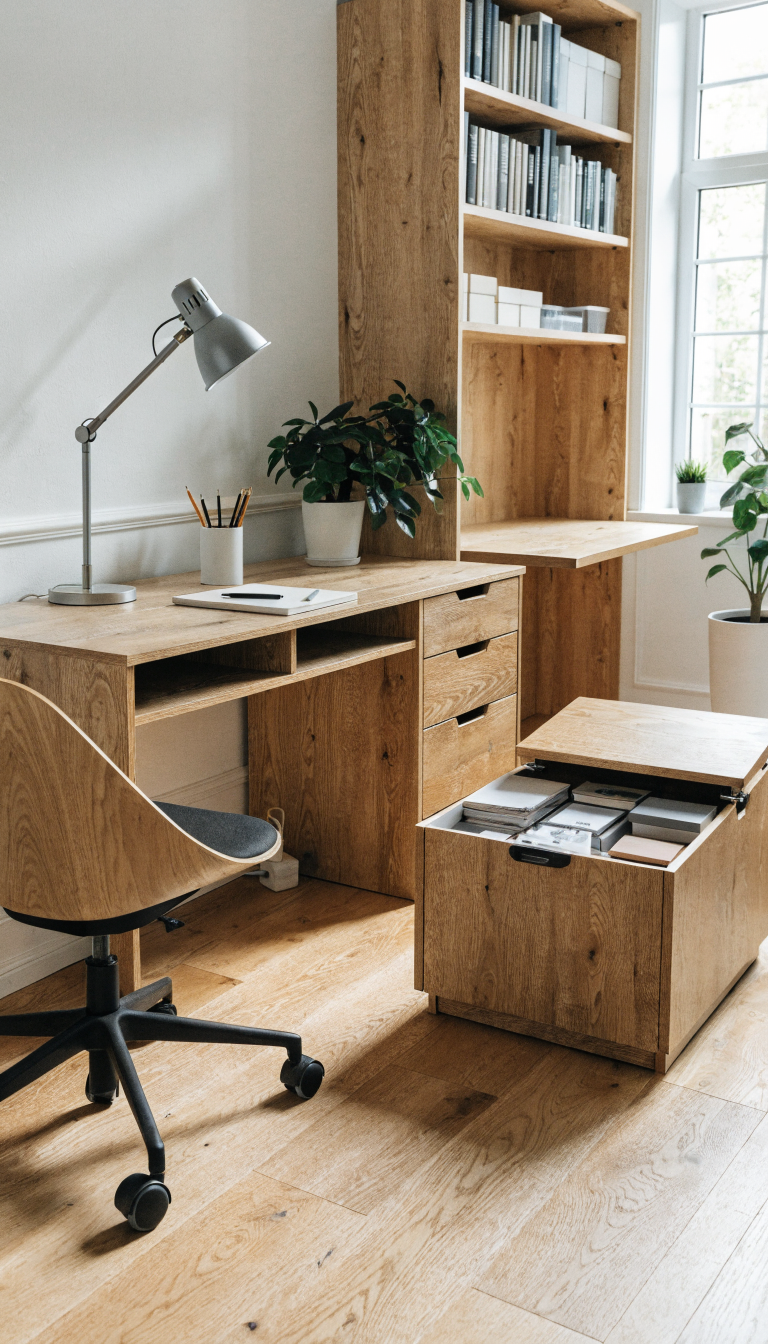
In a small office, every single piece of furniture needs to earn its keep. Multifunctional furniture is your best friend when square footage is tight and you can’t afford to waste an inch on single-purpose items.
Look for a desk with built-in filing drawers instead of needing a separate filing cabinet. Choose an ottoman that opens for storage and doubles as extra seating when someone stops by. Get a bookshelf that includes a fold-down desk panel. The more jobs one piece can handle, the less cluttered your space becomes.
My personal favorite? A storage bench positioned under a window or along a wall. It provides seating when you need to change shoes or take a reading break, hides office supplies inside, and can even serve as a surface for staging projects. That’s three functions for the floor space of one item.
Must-Have Multifunctional Pieces:
- Desk with integrated storage drawers and shelving
- Rolling cart that serves as extra workspace and storage
- Storage ottoman for seating and supply stashing
- Bookshelf with built-in desk or fold-down work surface
- Monitor stand with drawer storage underneath
Think vertically even with furniture—a tall, narrow bookshelf takes up less floor space than a wide, short one while offering similar storage. Choose pieces with legs instead of solid bases when possible; seeing the floor underneath creates that crucial sense of openness.
The key is being ruthless about what makes the cut. Before buying anything, ask yourself: “Does this serve at least two purposes?” If the answer is no, keep shopping. Your small office will stay functional and clutter-free when every item pulls its weight.
There you have it—seven immediately actionable ideas to transform your cramped workspace into a small office that actually sparks joy (and productivity). The best part? You don’t need to implement all seven at once. Start with the one that excites you most, screenshot the rest for later, and watch your tiny office become your favorite room in the house. Now go forth and create that workspace of your dreams!
0 Comments