Drowning in clutter and feeling like your tiny office is closing in on you? Going minimal isn’t just trendy—it’s the secret to creating a workspace that actually helps you focus and get stuff done. These seven design ideas will transform your cramped office into a productivity powerhouse without spending a fortune.
1. The One-Statement Piece Strategy
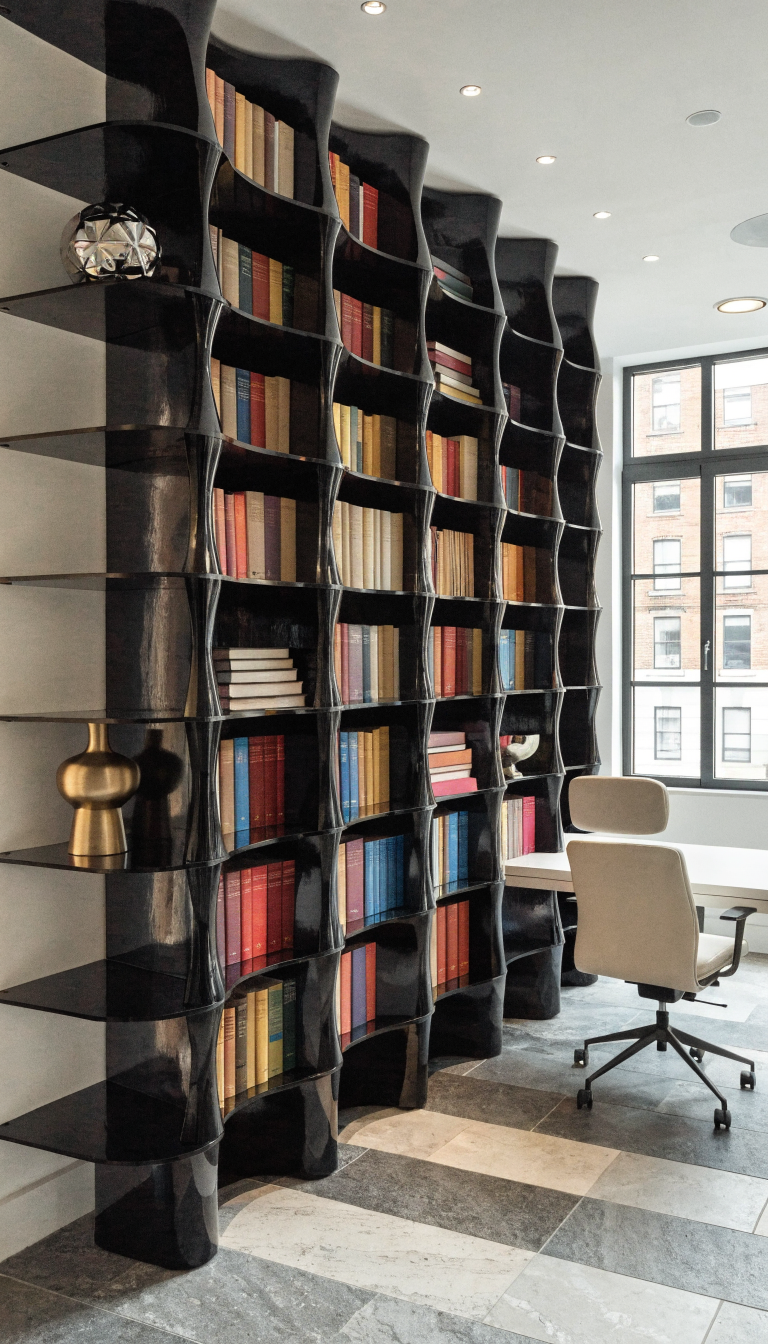
Here’s the thing about small offices: when you cram in tons of decorations, everything screams for attention and nothing actually stands out. Instead, pick one knockout piece that makes people stop in their tracks.
This could be an oversized abstract painting, a vintage credenza, or even a dramatic floor-to-ceiling bookshelf. The key is choosing something that reflects your personality while anchoring the entire room.
What Makes a Great Statement Piece:
- Large enough to command attention (think wall-sized art or substantial furniture)
- Contrasts with your wall color
- Has personal meaning or tells a story
- Doesn’t require a bunch of accessories to look complete
Once you’ve nailed your statement piece, resist the urge to add more. Let it breathe. Everything else in the room should support it, not compete with it.
This approach works beautifully when you’re working with limited square footage because it gives your eye somewhere specific to land instead of bouncing around a chaotic space.
2. Furniture That Floats (Literally)
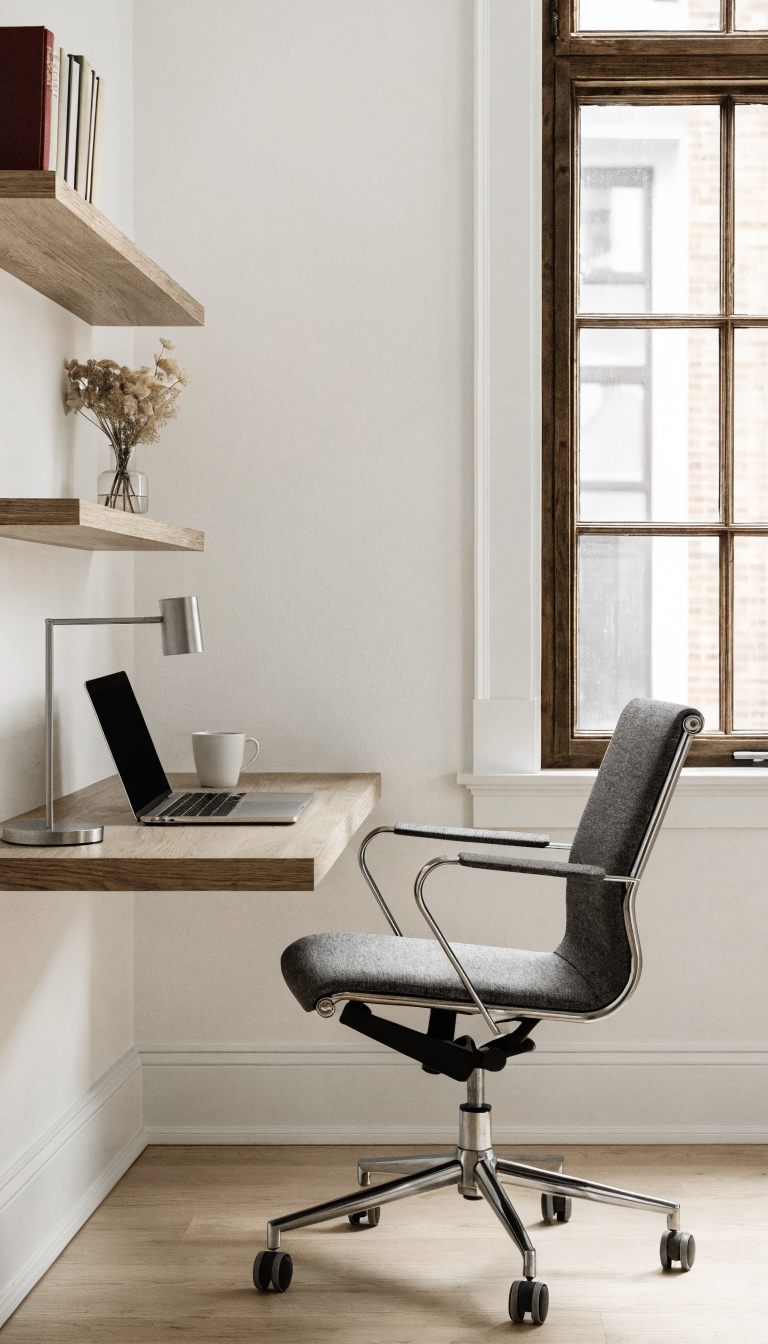
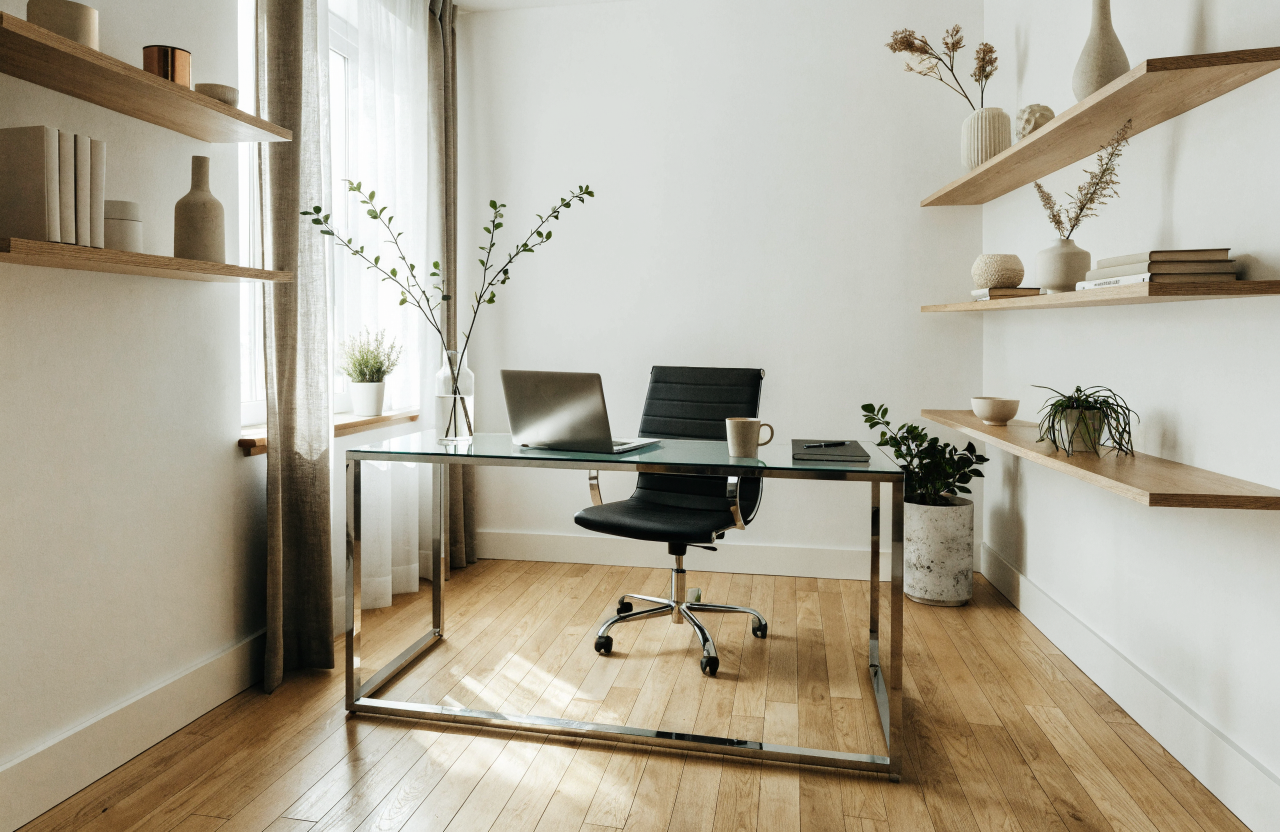
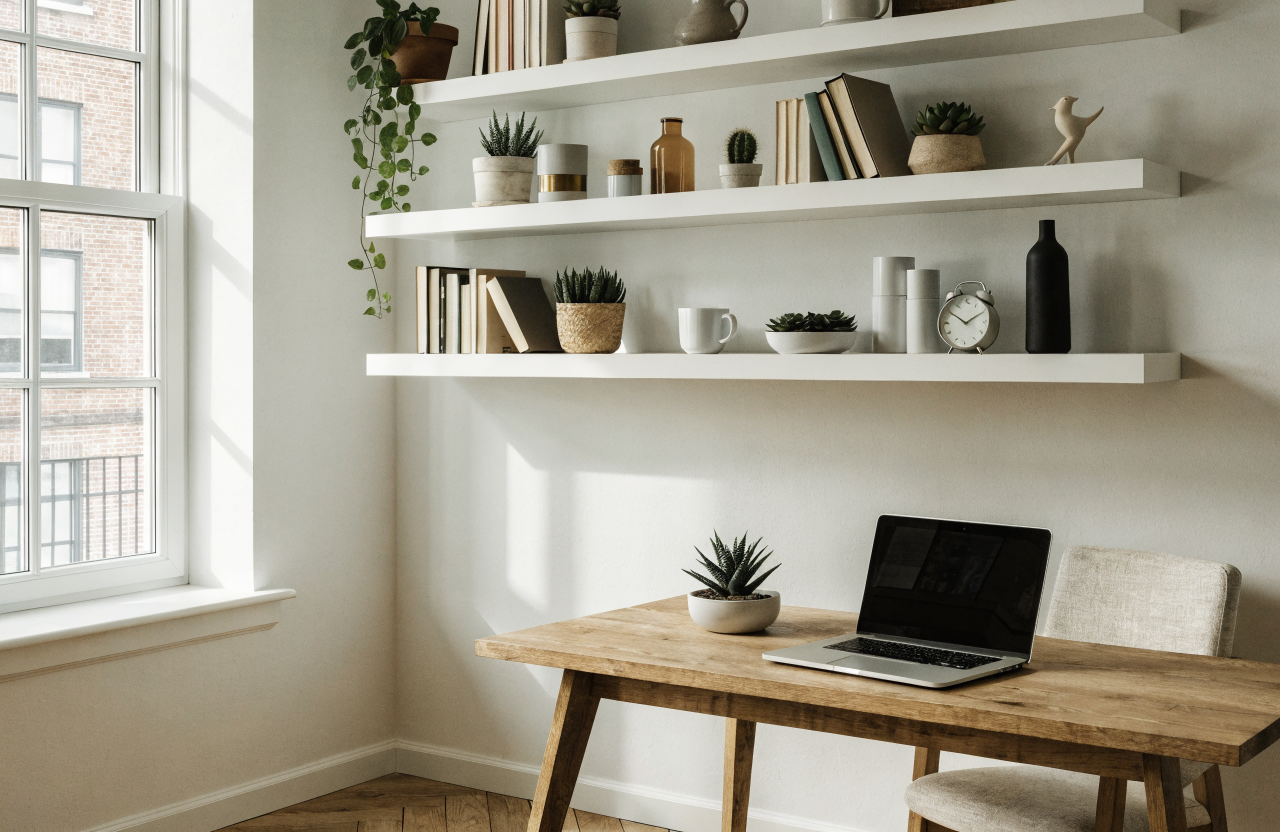
Want to know the fastest way to make a small office feel bigger? Get your furniture off the ground. Wall-mounted desks and floating shelves create visual breathing room that makes your space feel less cramped.
When furniture hugs the walls and hovers above the floor, you see more of the actual floor space. This optical illusion tricks your brain into thinking the room is larger than it actually is. Pretty genius, right?
Best Floating Furniture Options:
- Wall-mounted desks (bonus: most come with built-in storage)
- Floating corner shelves for vertical storage
- Suspended filing cabinets
- Wall-hung credenzas
The practical benefits go beyond aesthetics too. You’ll find cleaning becomes infinitely easier when you can actually sweep or vacuum under everything. No more dust bunny cities forming under your desk.
Just make sure you properly anchor everything to wall studs—trust me, you don’t want your expensive monitor crashing down because you took shortcuts on installation.
3. The Monochrome Magic Trick
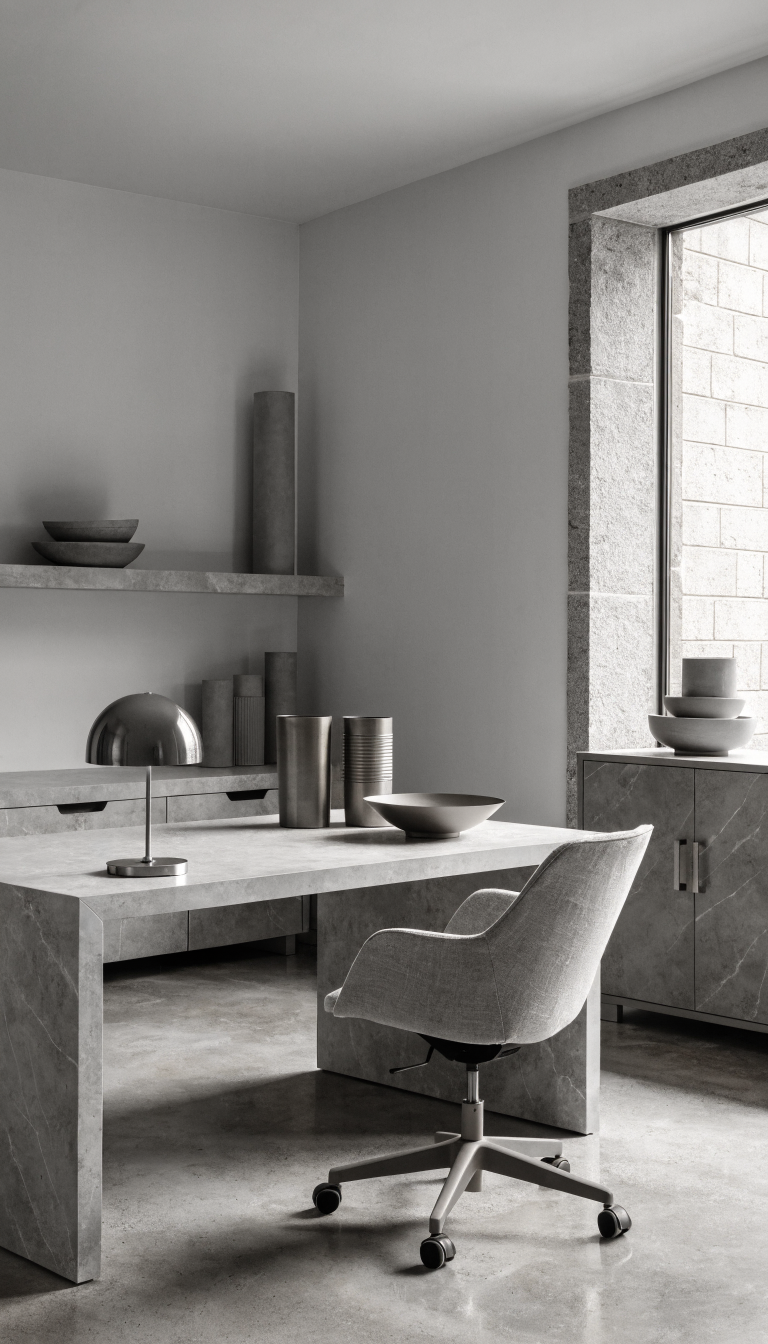
Listen, I know colorful offices look fun on Pinterest, but in a small space, sticking to a monochromatic color scheme is your best friend. This doesn’t mean boring—it means sophisticated.
Pick one base color and work with different shades, tones, and textures of that same color family. The result? A cohesive space that feels intentional and way more expensive than it actually is.
When everything flows in the same color palette, your eye moves smoothly around the room instead of getting stuck on jarring color transitions. This creates a sense of continuity that makes small spaces feel more open.
Popular Monochrome Palettes:
- Shades of gray (from charcoal to dove)
- Warm whites and creams
- Navy blues with lighter blue accents
- Forest green variations
You can still add visual interest through different materials and finishes—matte paint, glossy ceramics, rough wood, smooth metal. See? Not boring at all.
This approach particularly shines in home offices where you want a professional backdrop for video calls without looking like you’re working from a sterile laboratory.
4. The Clear Desk Philosophy
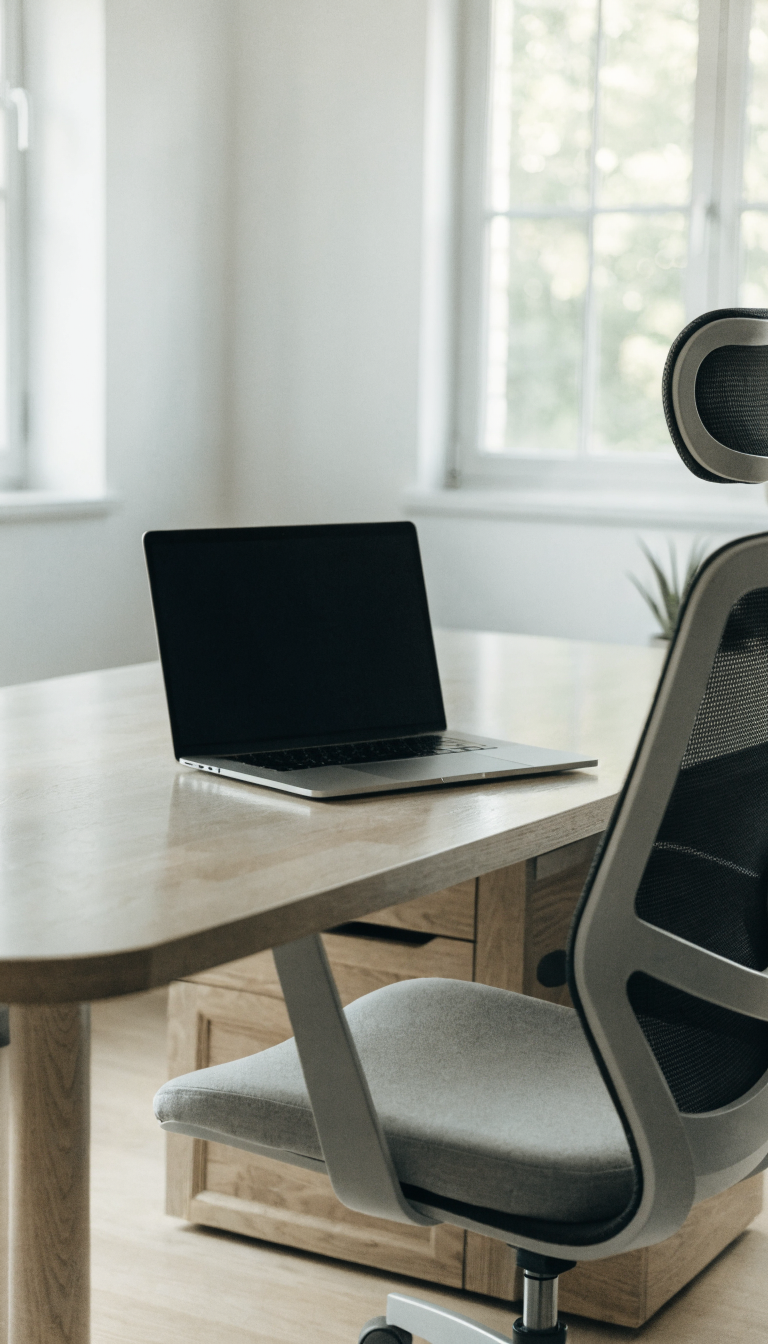
Real talk: a cluttered desk equals a cluttered mind. The clear desk policy isn’t just corporate jargon—it’s a game-changer for small office productivity.
At the end of each workday, put everything away except your computer. Everything. That means pens go in drawers, papers get filed, coffee mugs return to the kitchen, and random sticky notes find actual homes.
Starting each morning with a blank slate does something magical to your brain. You feel more in control, less overwhelmed, and way more ready to tackle whatever’s on your plate.
Creating Systems That Stick:
- Designate specific homes for frequently used items
- Use drawer organizers to prevent junk drawer chaos
- Keep a small basket for items that need daily processing
- Set a timer for 5-minute end-of-day cleanups
The minimalist approach means you only keep items you actually use daily within arm’s reach. If you only use your stapler twice a month, it doesn’t deserve prime desk real estate.
FYI, this strategy works especially well if you share your office space with family members. A clean desk psychologically signals “work mode” when you sit down.
5. Natural Light as Your Main Light Source
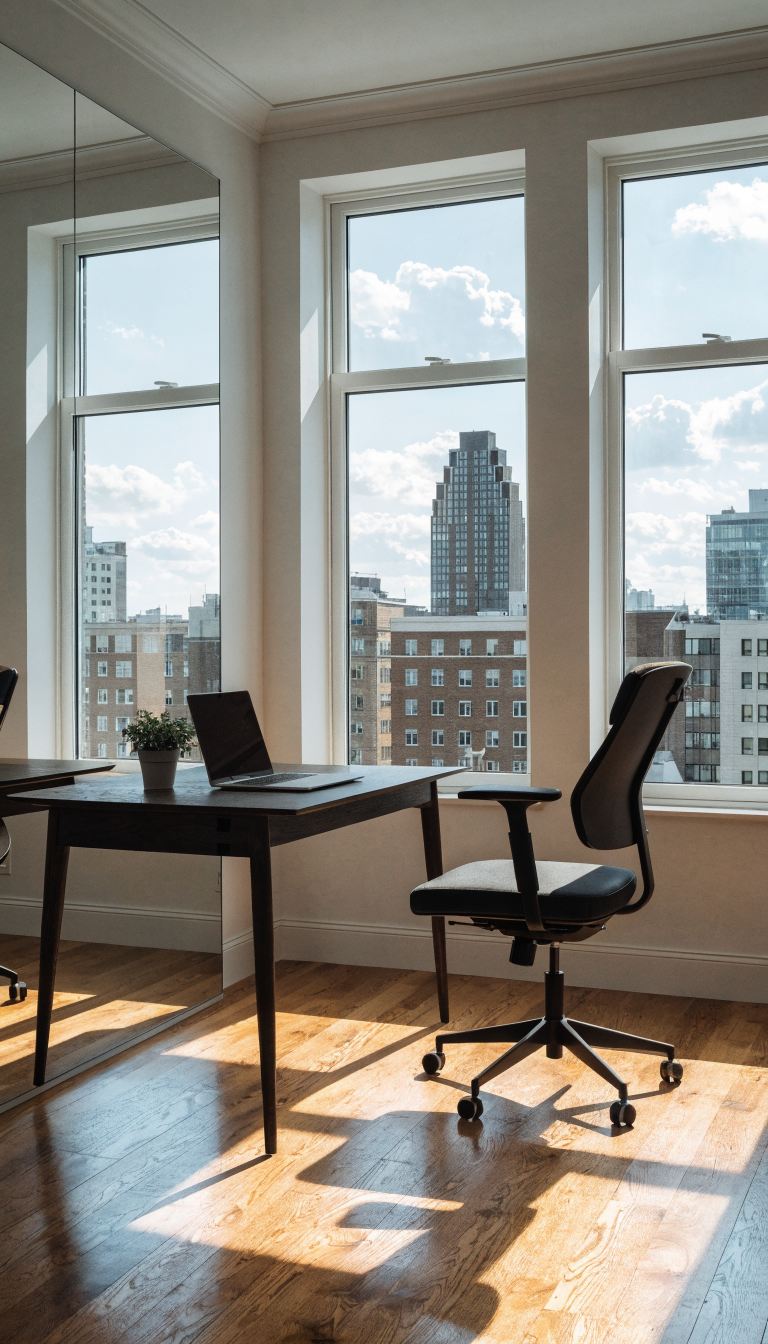
Stop installing a million different light fixtures and instead maximize whatever natural light you’ve got. Position your desk perpendicular to windows (not facing them, which creates glare, or with your back to them, which creates shadows).
Natural light doesn’t just save electricity—it regulates your circadian rhythm, boosts your mood, and makes colors look more accurate. Seriously, there’s actual science backing this up.
If you’re stuck with limited windows, use mirrors strategically placed across from light sources to bounce brightness around the room. You’d be amazed how much difference one well-placed mirror makes.
Light-Maximizing Tactics:
- Ditch heavy curtains for sheer blinds or bare windows
- Paint walls in light, reflective colors
- Position reflective surfaces (glass desk tops, metallic accessories) to catch light
- Trim any outdoor vegetation blocking your windows
For task lighting, stick to one quality desk lamp instead of multiple overhead fixtures. This creates pools of light where you need them without making your small office feel like an operating room.
The less-is-more approach to lighting prevents that chaotic feeling you get from too many competing light sources at different temperatures and brightness levels.
6. Vertical Storage Wins Every Time
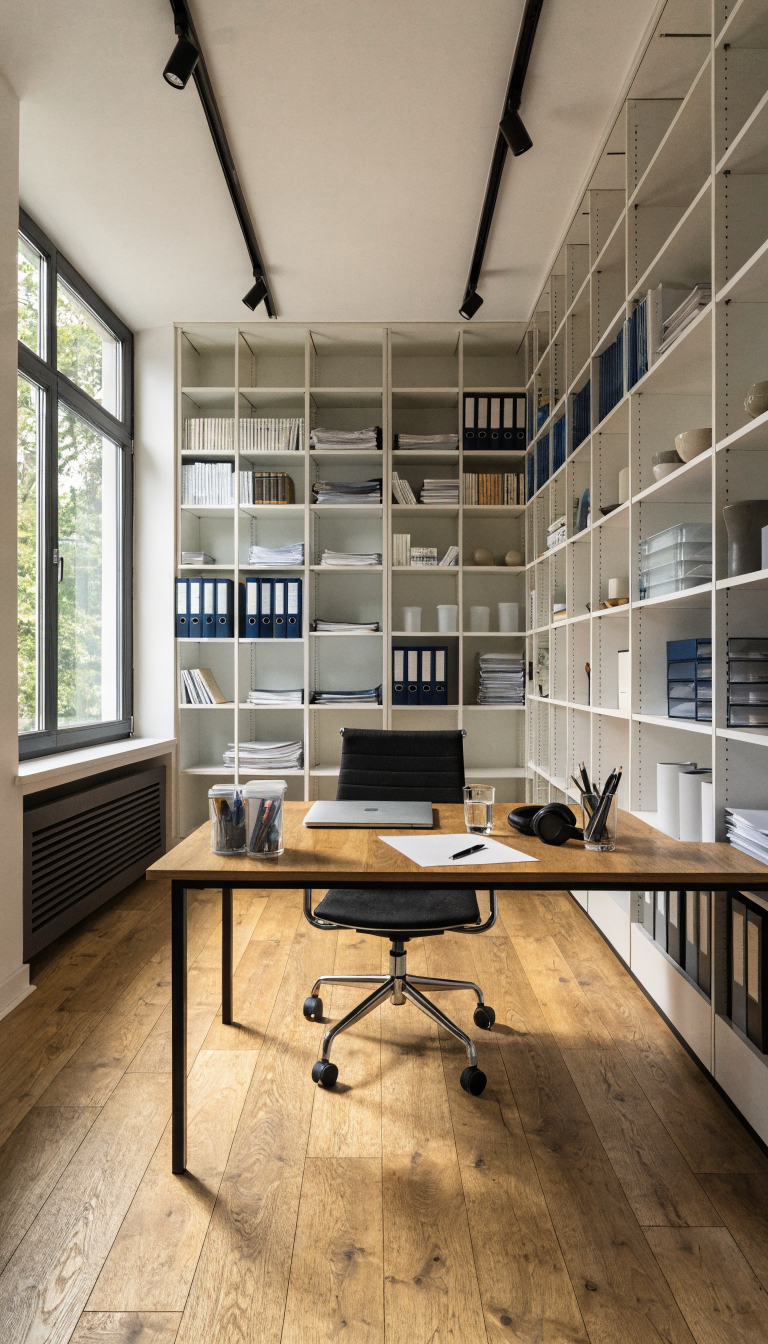
When floor space is precious, the only way to go is up. Vertical storage solutions take advantage of wall space that’s just sitting there doing nothing productive anyway.
Tall, narrow shelving units store just as much stuff as wide, short ones but leave way more usable floor space. They also draw the eye upward, which—you guessed it—makes ceilings feel higher and rooms feel larger.
The beauty of going vertical is that you can create zones at different heights. Frequently used items live at arm level, occasional-use stuff goes higher, and decorative items can sit at eye level to add personality without eating up workspace.
Smart Vertical Storage Ideas:
- Floor-to-ceiling bookshelves (go custom if you can swing it)
- Wall-mounted file organizers
- Pegboards for supplies and tools
- Tall, slim filing cabinets instead of wide ones
One major benefit people overlook? Vertical storage naturally limits what you keep. If you only have so much shelf space, you’re forced to be selective about what makes the cut. This built-in editing keeps clutter from accumulating in the first place.
IMO, combining vertical storage with the clear desk philosophy creates the ultimate minimalist small office setup.
7. The Three-Item Desk Accessory Rule
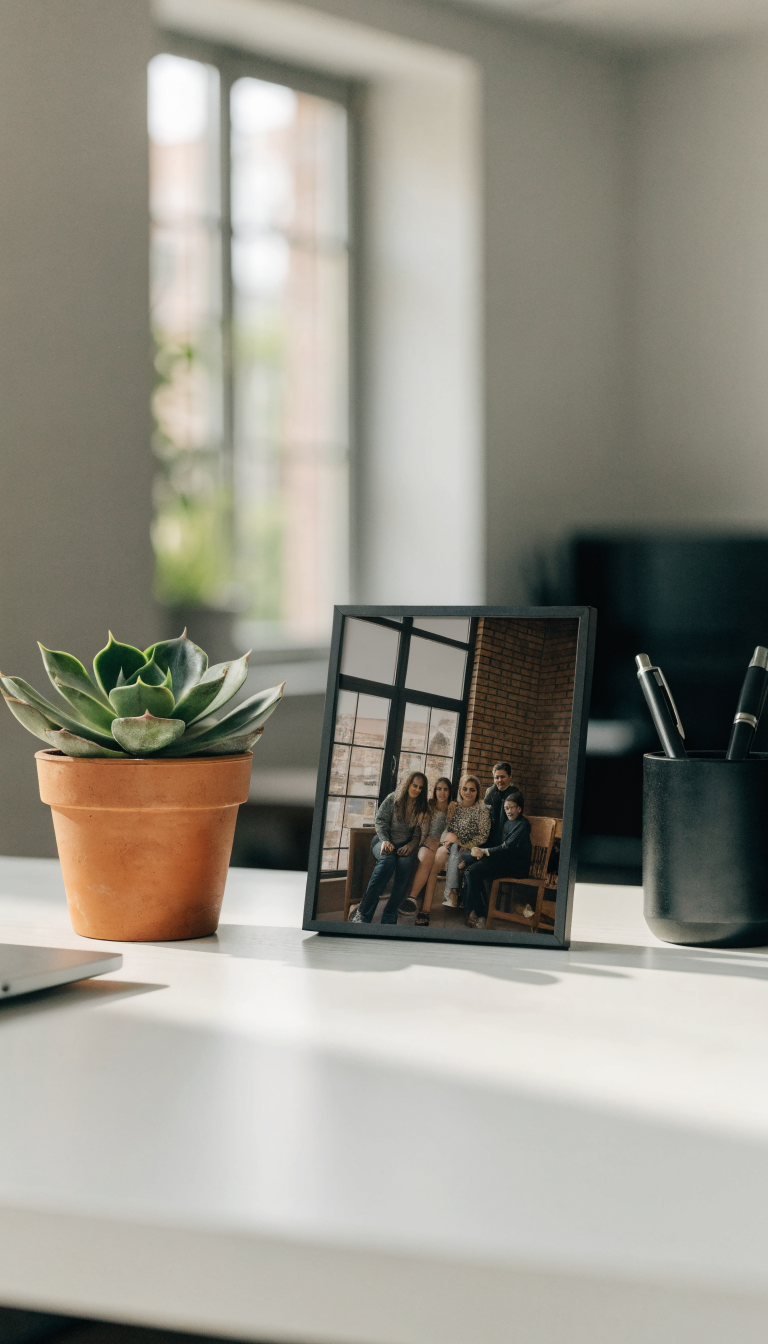
Here’s a simple rule that’ll change everything: only keep three decorative items on your desk. Not three categories—three actual items. A plant, a photo, and a nice pen holder. Done.
This forces you to choose what truly matters instead of gradually accumulating a desktop museum of random stuff. Each item gets to shine because it’s not competing with seventeen other things.
The psychological impact is real—fewer visual distractions mean better focus. When you glance up from your work, you see intentional choices instead of chaotic clutter demanding your attention.
Choosing Your Three Items:
- One living element (plant or fresh flowers)
- One personal item (photo, small sculpture, meaningful object)
- One functional-but-beautiful piece (nice pen cup, designer paperweight, elegant lamp)
Rotate these items seasonally if you want variety. Swap your succulent for a seasonal plant, change out the photo, switch up your pen holder. You get freshness without accumulation.
This approach works particularly well if you struggle with decision fatigue. When you limit your options upfront, you stop second-guessing whether you need more stuff on your desk. You don’t—you’ve already got your three.
The three-item rule extends beautifully to shelving too. Three objects per shelf creates visual balance without looking sparse or overcrowded.
Ready to reclaim your small office from the chaos? Start with just one of these ideas—seriously, just one—and watch how quickly that “less is more” philosophy transforms not just your space, but your entire work mindset. Your future, more focused self will thank you.
0 Comments