Let’s be honest: most standing desk setups look like sad IT departments from 2003. But it doesn’t have to be that way! These five layouts prove you can prioritize ergonomics without sacrificing style, and your back (and your Instagram feed) will thank you.
1. The Minimalist Corner Commander
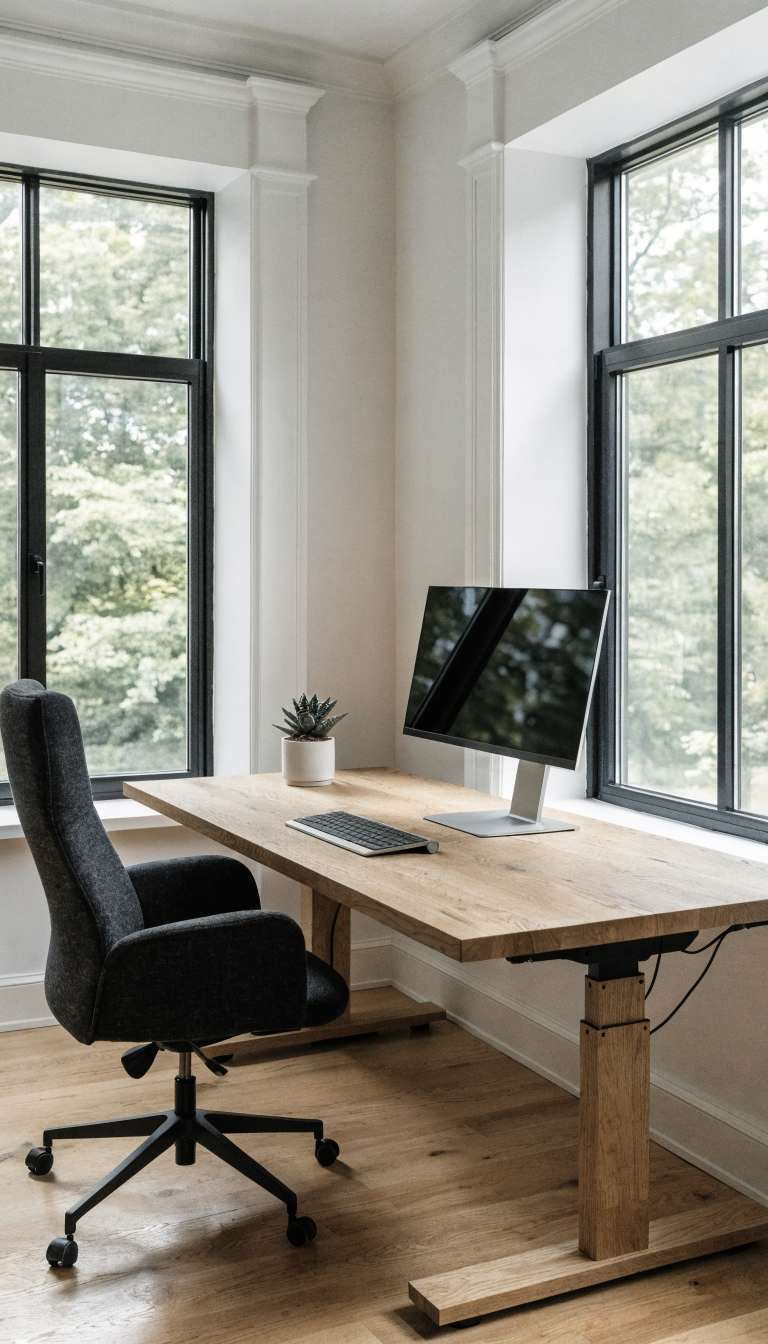
Corner spaces are basically wasted real estate in most home offices, but not anymore. This layout turns that awkward angle into your productivity powerhouse while keeping things sleek and uncluttered.
The secret? A corner-mounted sit-stand desk that maximizes your footprint without eating up the entire room. Position it so you’re facing into the room rather than the wall—trust me, staring at drywall all day kills creativity faster than back-to-back Zoom meetings.
Essential Elements
- L-shaped or corner sit-stand desk in white oak or walnut
- Single monitor arm to free up desk space
- Slim desk lamp with adjustable arm
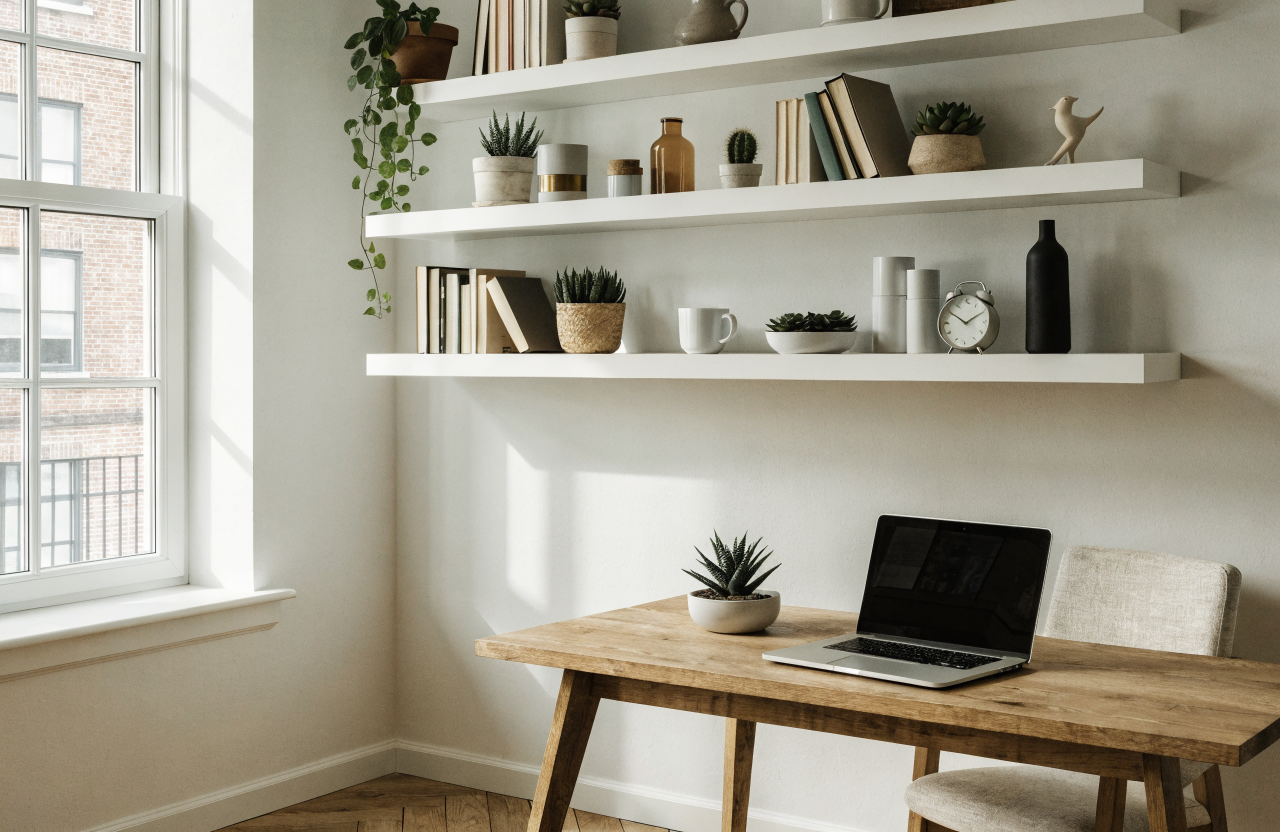
- Floating shelves above for decor and storage
- Low-profile cable management tray
Keep your desktop completely clear except for your monitor and a small plant. Seriously, the negative space makes the whole setup feel intentional rather than cramped. Store everything else in a rolling file cabinet that tucks neatly under the desk when you’re standing.
The floating shelves above do double duty—they hold your books and cute storage boxes while drawing the eye upward, making your ceiling feel higher. This layout works especially well in small apartments where every square foot counts, and it photographs beautifully if you’re into that whole workspace aesthetic thing.
2. The Natural Light Maximizer
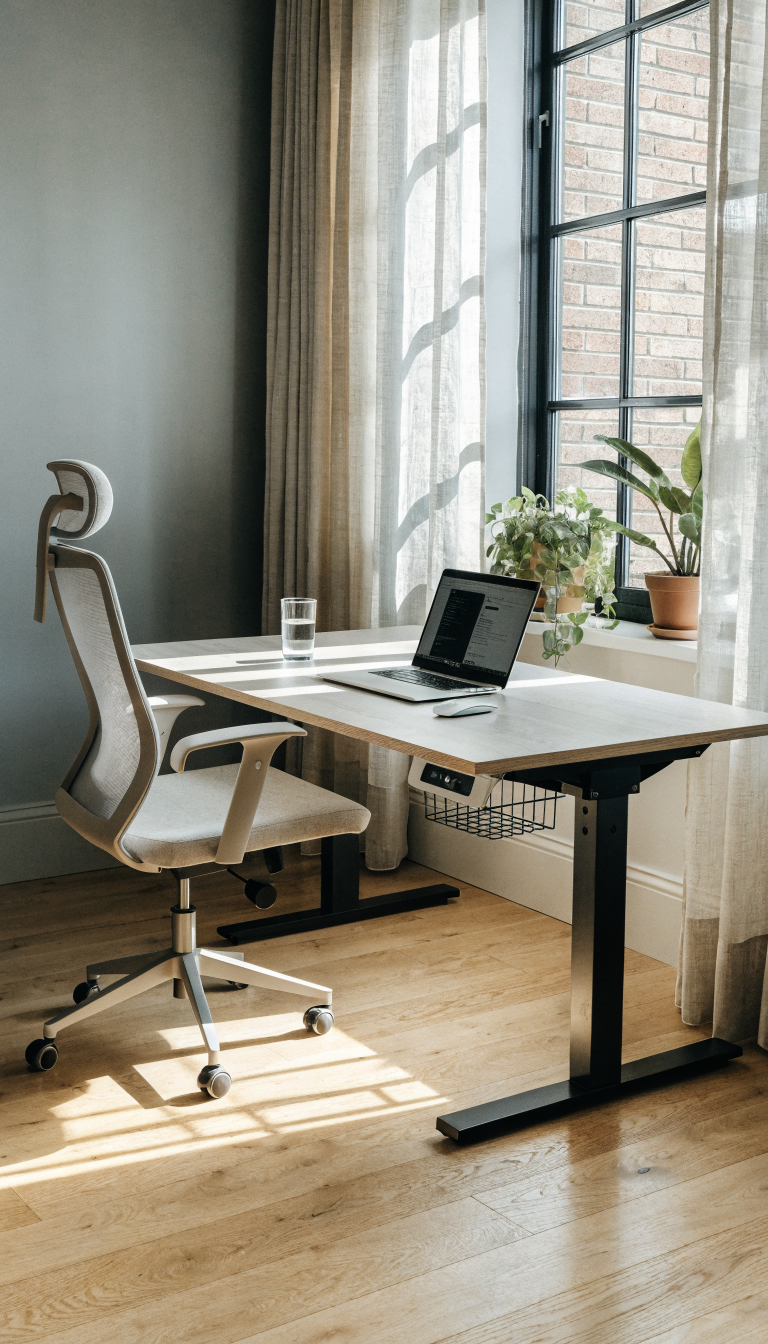
If you’re lucky enough to have a window in your home office, this layout makes it the star of the show. Nothing beats natural light for both mood and those video calls where you actually want to look alive.
Position your sit-stand desk perpendicular to the window—not directly facing it (hello, screen glare) and not with your back to it (hello, silhouette of doom on Zoom). This T-shaped arrangement gives you side lighting that’s flattering and functional.
The Setup
- Motorized standing desk in light wood finish
- Sheer linen curtains for diffused light
- Ergonomic chair in a complementary fabric
- Tall potted plant in the corner by the window
- Narrow console table behind desk for additional surface area
The console table behind your desk is a game-changer. When you’re standing, it holds your water bottle, notebook, or whatever you need within arm’s reach. When sitting, it creates visual depth and gives you a spot for decor that doesn’t clutter your actual workspace.
Choose furniture in warm, natural materials that echo the outdoor views. Think light woods, woven textures, and earth tones. This creates a seamless flow between inside and outside that makes your office feel less like a cave and more like a retreat.
Pro tip: Add a small area rug under your desk to define the workspace and provide cushioning when you’re standing. Go for something with subtle texture in neutral tones—this isn’t the place for that bold geometric pattern you’ve been eyeing.
3. The Gallery Wall Wonder
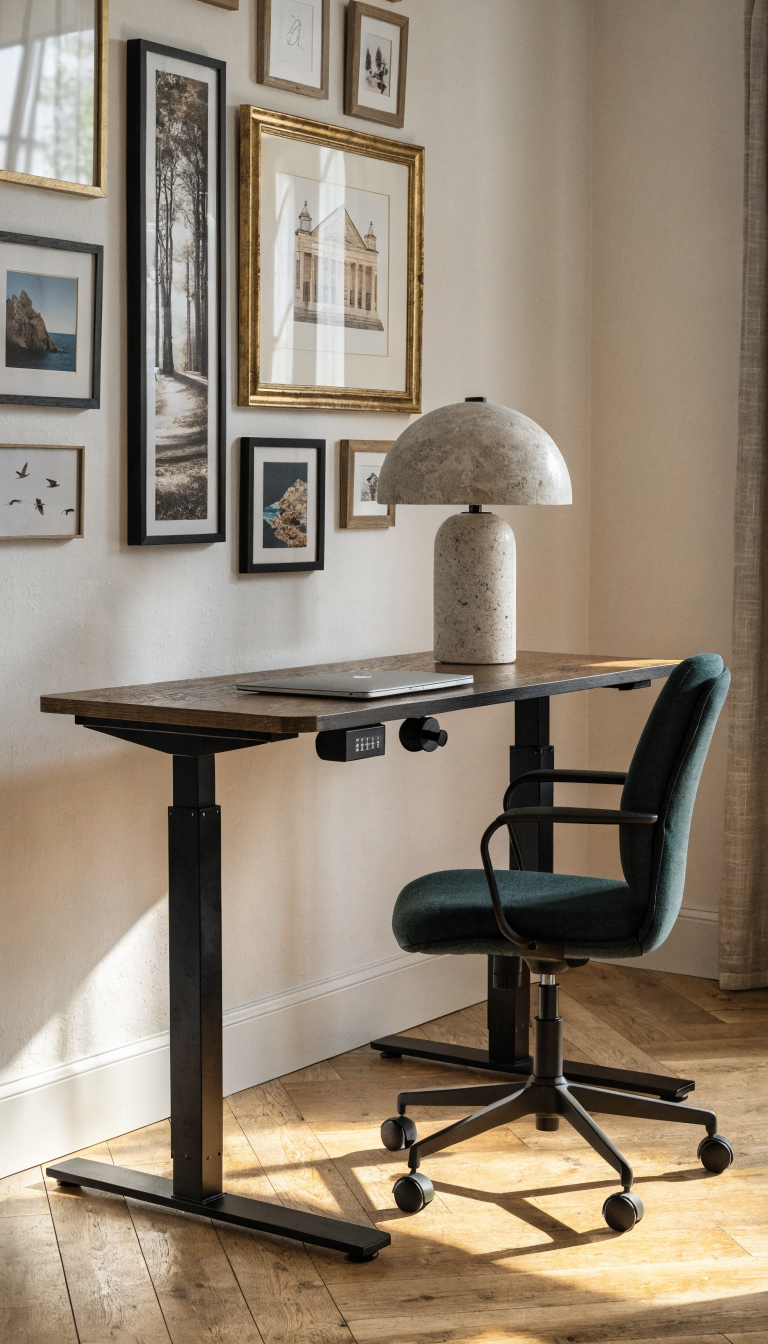
Who says functional can’t be fabulous? This layout treats your sit-stand desk as the foundation for a curated gallery wall that makes your workspace feel more “design studio” than “corporate drone.”
Start with a sleek black or white desk frame and a wooden or laminate top. The simple base disappears visually, letting your wall art take center stage. Mount your desk against your most visible wall—the one everyone sees on video calls.
Creating Your Gallery
- Mix of framed prints, photographs, and small floating shelves
- Consistent frame style (all black, all natural wood, or all white)
- Variety of sizes arranged in a loose grid
- One or two small potted plants on floating shelves
- Coordinating desk accessories in matching metals
The trick to making this look intentional rather than chaotic? Maintain consistent spacing between frames (about 2-3 inches works perfectly) and stick to a limited color palette. If your frames are black, your desk accessories should incorporate black too—matching pen holder, matching desk organizer, matching lamp base.
Keep the gallery wall above your monitor height when sitting. This ensures people on video calls see your carefully curated aesthetic, not just the top of your head and some random picture frames. When you stand up to work, you get the full visual impact, which honestly makes standing sessions way more enjoyable.
This layout works brilliantly in rental spaces where you can’t do major renovations. A gallery wall adds personality and polish without requiring a single paint stroke, and you can take it all with you when you move.
4. The Dual-Zone Productivity Station
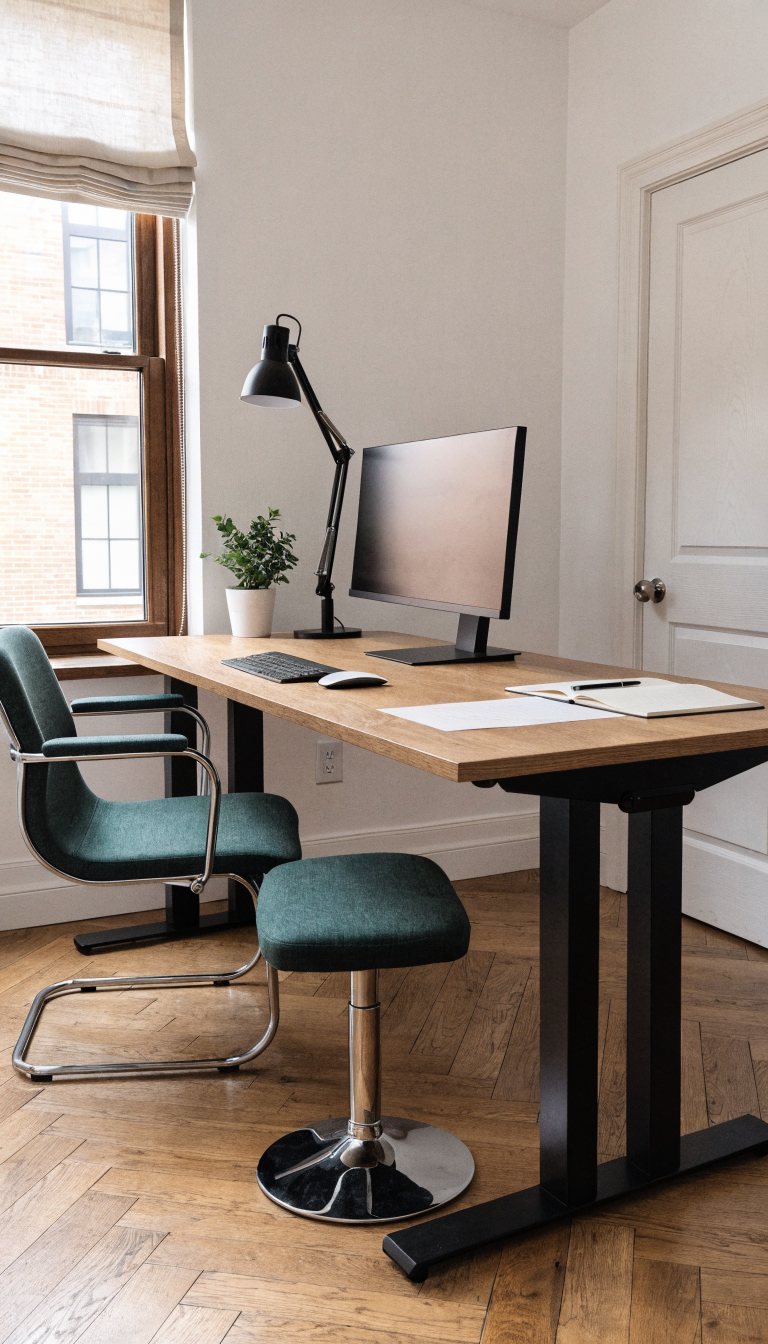
Sometimes you need to switch between computer work and analog tasks—sketching, writing by hand, reviewing printed documents. This layout creates two distinct zones without requiring two separate desks.
Install a long sit-stand desk (at least 60 inches) along one wall. Dedicate one half to your computer setup and leave the other half completely clear for non-digital work. When you need to stand and brainstorm on paper, you’ve got ample space without shuffling things around like you’re playing office Tetris.
Zone Configuration
- Computer zone: monitor, keyboard, mouse, small desk organizer
- Analog zone: desk pad, task lighting, pen holder, notebook stand
- Shared: cable management system, anti-fatigue mat
- Above desk: pegboard or rail system for tools and supplies
The pegboard or rail system above your desk is clutch for this setup. It keeps supplies visible and accessible without taking up precious desktop real estate. Mount it at a height where you can easily grab items whether sitting or standing—usually about 18-24 inches above your desk surface.
Color-code or theme each zone differently. Maybe your computer side has cool-toned accessories while your analog zone rocks warm metallics. This visual distinction helps your brain switch between digital and physical tasks more easily. IMO, this psychological trick actually works—your mind picks up on the environmental cue and shifts gears.
This layout shines for creative professionals, students, or anyone who needs to toggle between different work modes throughout the day. It’s also perfect if you share your office with a partner and need clearly defined personal space.
5. The Warm Industrial Hybrid
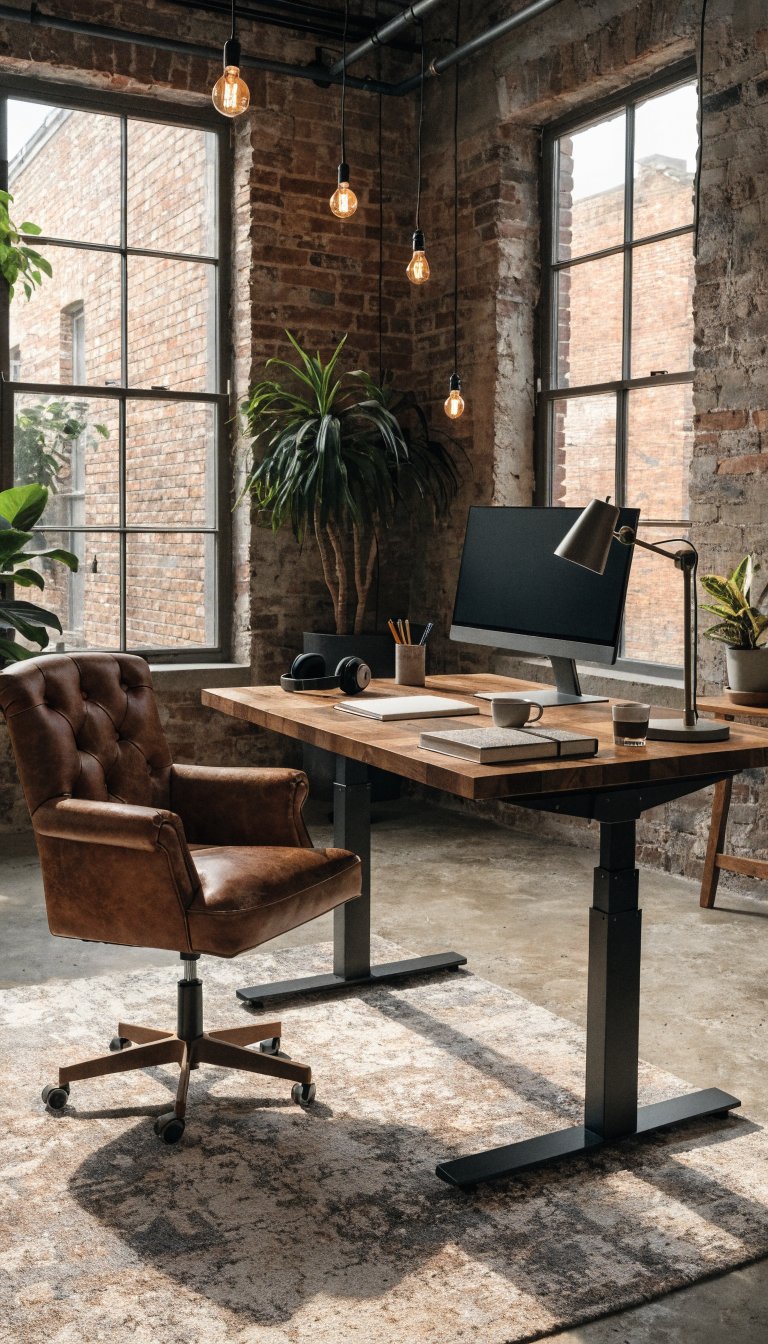
Industrial style gets a bad rap for feeling cold, but this layout proves you can nail that modern-loft aesthetic while keeping things cozy and inviting. The secret ingredient? Layering warm textures with raw materials.
Choose a sit-stand desk with a butcher block top and black metal frame. That combination of natural wood and industrial metal sets the tone for everything else. Position it away from walls if your space allows—floating furniture makes rooms feel larger and more intentional.
Material Mix
- Butcher block or reclaimed wood desk top
- Matte black metal frame and accessories
- Leather desk pad or mat
- Edison bulb task lamp or exposed bulb fixture
- Metal mesh organizers and storage
- Sheepskin or textured rug for standing
The leather desk pad is non-negotiable here—it adds warmth and softness that prevents the metal and wood combo from feeling too harsh. Go for cognac or tan leather rather than black; it catches light beautifully and develops character over time.
Layer in textiles strategically. A chunky knit throw over your chair. A shaggy rug or sheepskin where you stand. These soft elements create contrast with the harder industrial materials and make the space feel lived-in rather than staged.
Lighting makes or breaks this look. Skip the standard boring desk lamp and opt for something with exposed Edison bulbs or vintage-inspired fixtures. Warm-toned bulbs (2700K-3000K) are essential—cool white light will completely kill the cozy vibe you’re building.
For storage, embrace open shelving with metal brackets and reclaimed wood planks. Display a mix of work supplies and personal items—a few favorite books, a small plant, maybe a vintage camera or interesting object. This keeps things from feeling too sterile while maintaining that curated industrial aesthetic.
This layout works exceptionally well in loft apartments or modern homes with high ceilings and concrete or brick walls. But honestly? You can fake it in any space by choosing the right materials and sticking to the warm-industrial color palette of blacks, browns, tans, and warm grays.
Conclusion
Your sit-stand desk doesn’t have to look like medical equipment or an afterthought. With the right layout and a bit of intentional styling, you can create a workspace that supports your body and your aesthetic. Pick the layout that speaks to your space and style, then make it your own—your back and your eyeballs will both be happy.
0 Comments