Do you feel cramped and unproductive in your small workspace? You’re not alone. Many of us find it hard to make our homes work well for us. But what if you could turn your tiny workspace into a productivity powerhouse?
With a few simple tweaks, you can boost your productivity. We’ll share 10 efficient workspace tips to help you make the most of your small home office design.
Key Takeaways
- Discover how to create a functional workspace in a small area
- Learn how to maximize your productivity with efficient design
- Explore 10 tiny office space ideas to inspire your own workspace
- Get tips on how to declutter and organize your workspace
- Find out how to create a comfortable and inviting work environment
The Power of Smart Design in Limited Square Footage
Effective design is key to making the most of small office spaces. By using space-saving office solutions and creative office organization, you can turn a tiny office into a productivity hub.
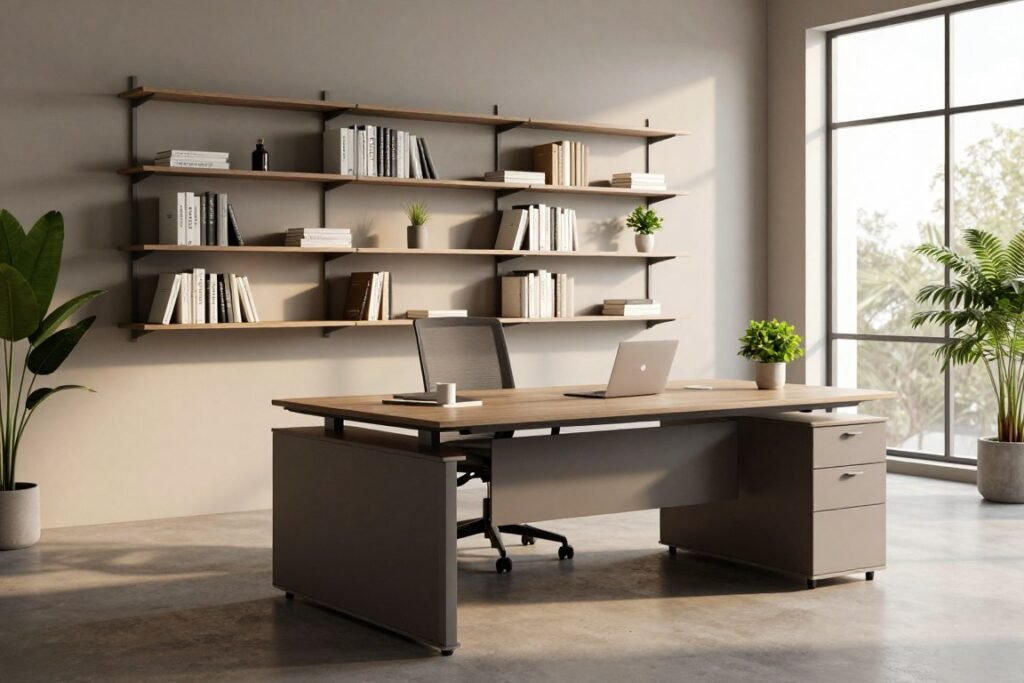
Why Small Spaces Can Actually Boost Focus
Small spaces can actually improve your focus. With less room, you focus better and avoid distractions. This leads to more productivity and a clearer mind. By using creative office organization strategies, you can optimize your small space and stay focused.
A clutter-free space is vital for focus. In a small office, it’s easier to keep things organized. This lets you focus better on your work.
Planning Your Tiny Office for Maximum Efficiency
To make your tiny office efficient, plan carefully. First, figure out what you need most in your workspace. Think about the layout, storage, and tech needs. By optimizing these, you can create a space that works well.
| Efficiency Tips | Benefits |
|---|---|
| Optimize your layout | Increased productivity |
| Utilize vertical storage | More floor space |
| Invest in multi-functional furniture | Reduced clutter |
1. Vertical Storage Solutions That Reclaim Your Space
Vertical storage solutions are a game-changer for tiny office spaces. They use the vertical space to improve both function and looks.
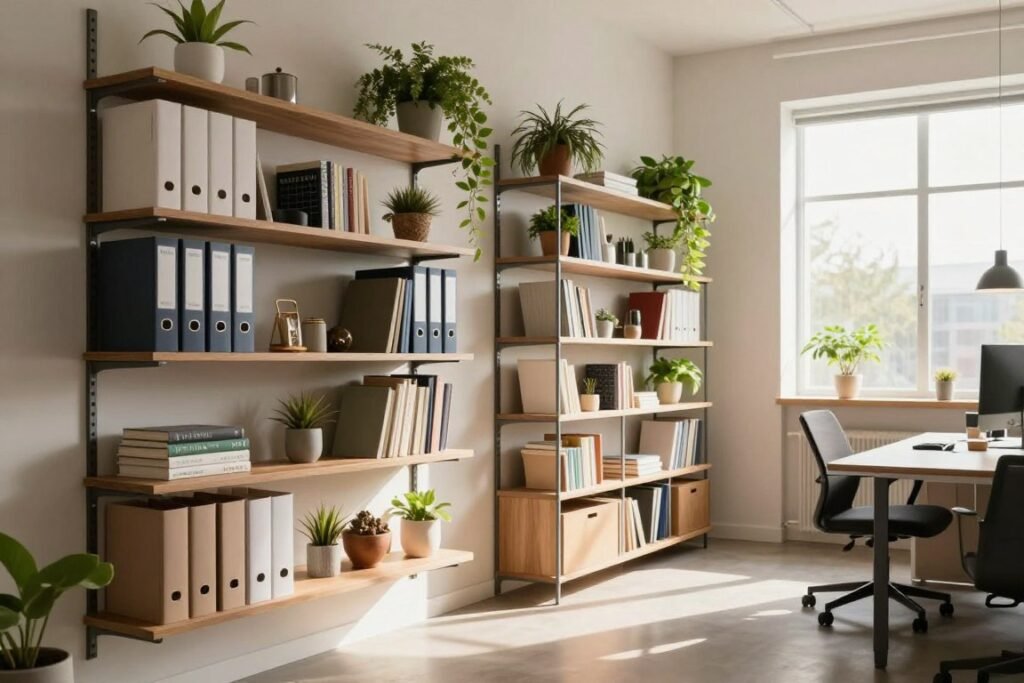
Wall-Mounted Shelving Systems for Document Storage
Wall-mounted shelving systems are great for storing documents. They keep things organized and within reach. You can customize them to fit your needs, making sure documents are sorted well.
Floating Shelves That Double as Display Areas
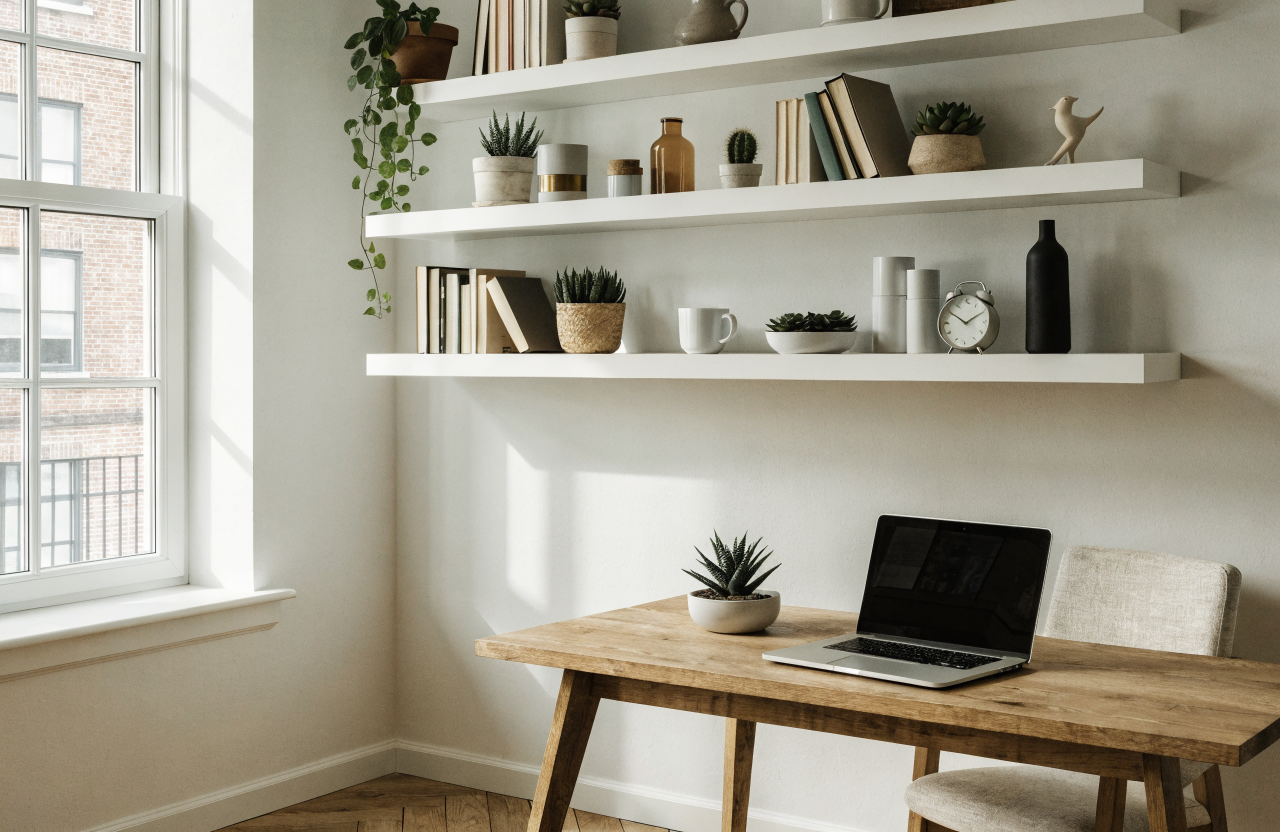
Floating shelves offer extra storage and display space. They’re perfect for showing off decorative items or office supplies. This keeps your space tidy while adding a personal touch.
Ceiling-to-Floor Organization Systems
Ceiling-to-floor systems make the most of vertical space. They provide lots of storage for supplies, documents, and equipment. They’re ideal for small offices where space is tight.
Installing Without Damaging Walls
To avoid wall damage, use removable anchors or adhesive strips. This way, you can have wall storage without harming your office’s walls.
Styling Your Vertical Storage
To keep your decor minimalist, focus on style and function. Choose sleek designs and neutral colors. This ensures your storage fits well with your office’s look.
| Storage Solution | Benefits | Best For |
|---|---|---|
| Wall-Mounted Shelving | Customizable, organized document storage | Document-heavy offices |
| Floating Shelves | Additional storage, display area | Offices needing decorative display |
| Ceiling-to-Floor Systems | Maximizes vertical space, ample storage | Very small offices |
2. Multi-Functional Furniture Investments
Investing in multi-functional furniture boosts your productivity in small offices. Choosing furniture that does more than one thing creates a space that meets your needs.
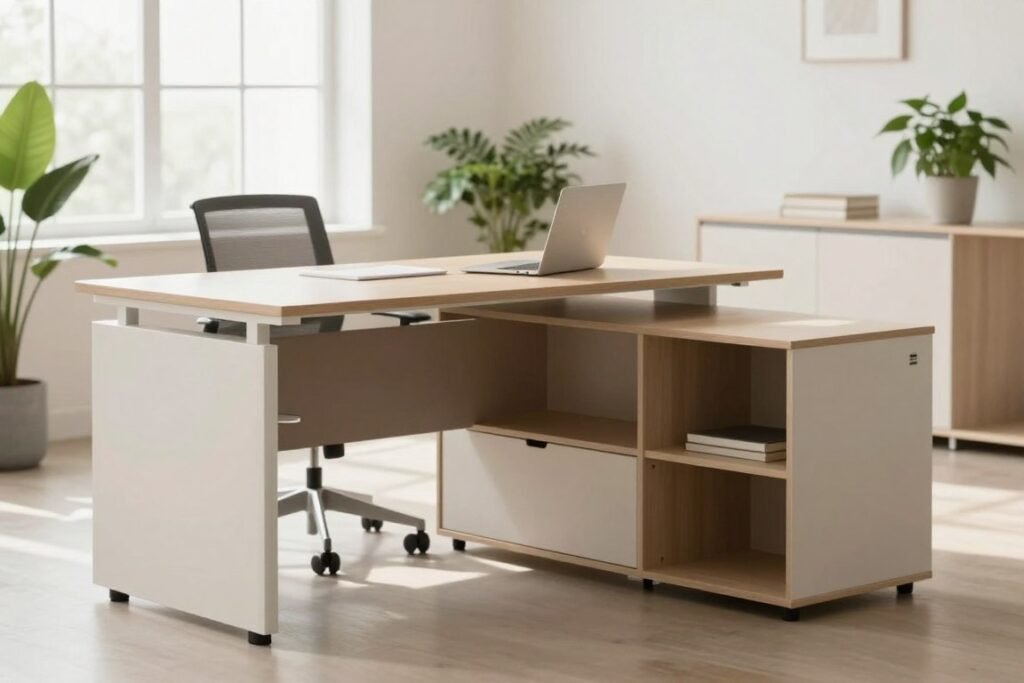
Desks with Built-in Storage Compartments
Desks with storage are a smart choice. They keep your space tidy by holding office supplies and documents. This helps you stay focused and organized.
Convertible Desk Solutions for Flexible Workspaces
Convertible desks are flexible, changing with your work needs. For example, a desk that switches from sitting to standing keeps you comfortable. They’re perfect for small spaces.
Furniture That Transforms Based on Your Needs
Furniture that changes, like nesting tables or modular shelves, adapts to your tasks. This is great for tiny offices where layouts often change.
Space-Saving Chairs and Seating Options
Look for chairs that save space, like stools or chairs with storage. They’re both useful and don’t take up much room.
When to Splurge vs. When to DIY
It’s key to invest in quality furniture, but DIY can also work. Think about what you need and decide whether to buy or make your own furniture.
3. Corner and Nook Office Transformations
Even the most awkward office corners can become productive hubs with proper planning. By implementing the right design strategies, you can transform neglected nooks into functional areas that boost your overall productivity.
Turning Awkward Corners into Productive Workspaces
Awkward corners can often feel like wasted space, but with a bit of creativity, they can be turned into valuable work areas. Consider using corner desks or L-shaped desks to maximize the available space. You can also use corner shelving units to store books, files, or office supplies, keeping your main workspace clutter-free.
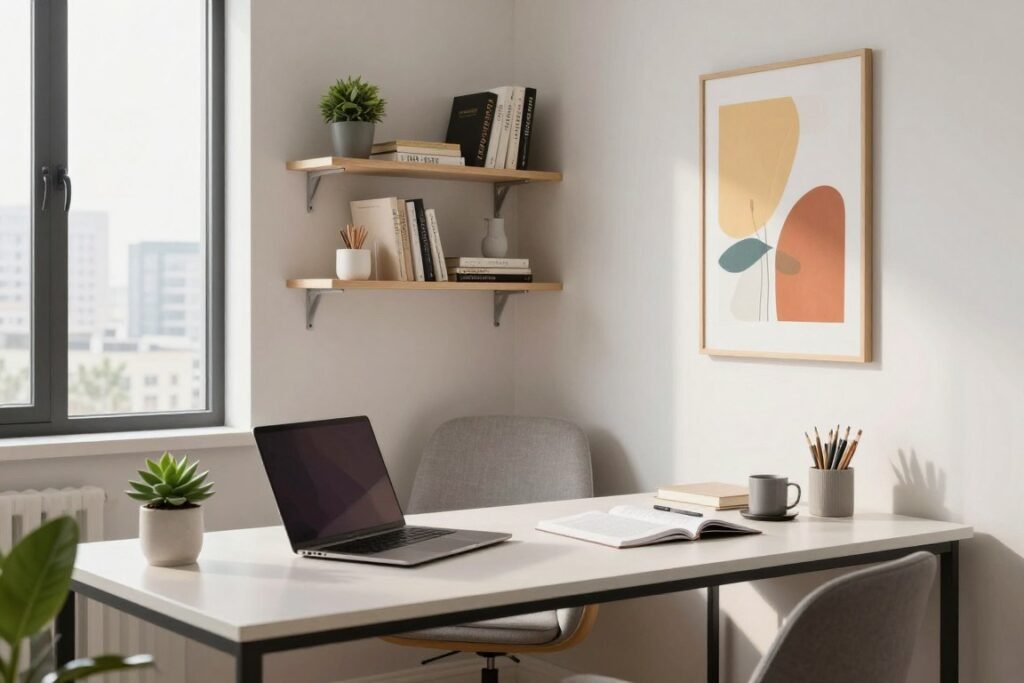
Custom Corner Desk Solutions for Odd-Shaped Spaces
Custom corner desks can be tailored to fit your specific office dimensions, ensuring that no space is wasted. When designing your custom desk, consider the workflow and tasks you’ll be performing. For instance, if you need to reference documents frequently, a desk with built-in storage can be a game-changer.
Measuring and Planning Your Corner Office
To create an effective corner office, start by measuring the space accurately. Take note of any obstructions, such as heating vents or electrical outlets. Use these measurements to plan your desk layout and ensure a comfortable working environment.
Lighting Solutions for Dark Corners
Dark corners can be challenging to work in. Improve the lighting by installing under-shelf lighting or using desk lamps. You can also consider painting the walls a lighter color to reflect more light into the area.
| Transformation Idea | Benefits | Implementation Tips |
|---|---|---|
| Corner Desks | Maximizes space, improves workflow | Measure accurately, consider workflow |
| Under-shelf Lighting | Brightens dark areas, reduces eye strain | Install LED strips, adjust brightness |
| Custom Shelving | Increases storage, keeps workspace clutter-free | Choose materials that match your decor |
4. Essential Tiny Office Space Ideas for Maximizing Natural Light
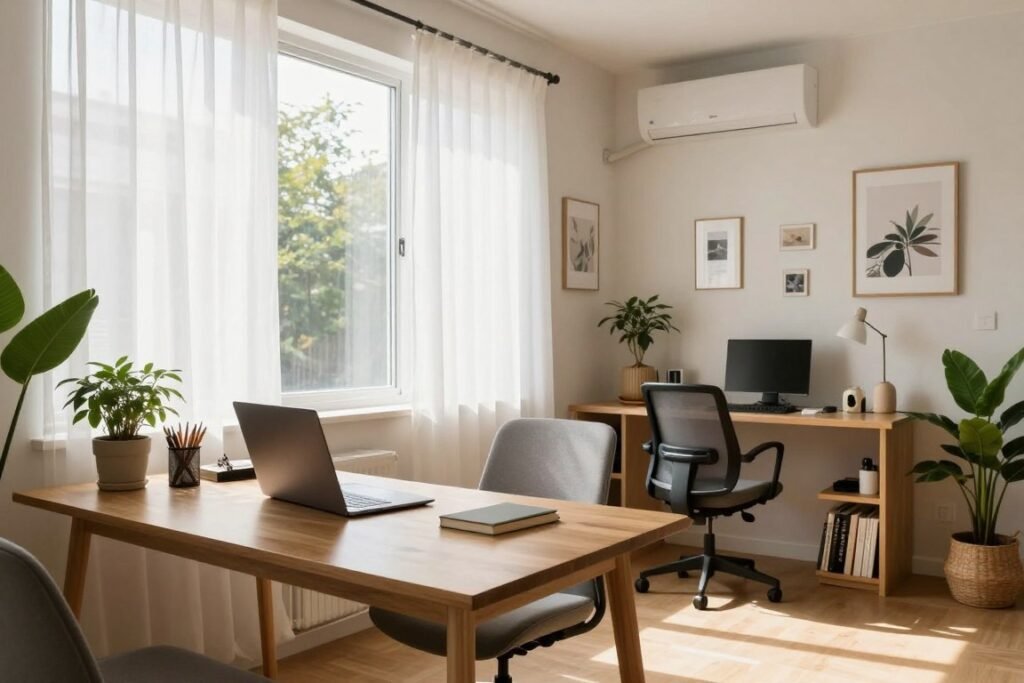
You can make your small office bright and welcoming with a few simple steps. Natural light makes your office look better and helps you feel better and work better.
Strategic Desk Positioning for Optimal Lighting
Putting your desk near a window is a great way to get more natural light. Make sure the light isn’t right in your eyes to avoid glare on your screen. Use curtains or blinds to control how much light comes in.
Mirror Placement to Amplify and Redirect Light
Placing mirrors opposite windows can make your room brighter. It also makes your space seem bigger. Just be careful not to put the mirror so it reflects light in a way that causes glare.
Light-Colored Decor Choices for Brighter Workspaces
Light-colored decor can make your office feel brighter. Paint your walls light colors and use white or light furniture. This helps spread light around and makes your space feel bigger and airier.
Window Treatment Options That Maximize Light
Choose sheer curtains or blinds to let light in while keeping things private. Stay away from heavy drapes that block light and make your office feel dark.
Artificial Lighting to Supplement Natural Light
Having good artificial lighting is also key. Use LED bulbs or lamps with a daylight spectrum to help when it’s cloudy or at night.
Here’s a table showing how different lighting affects your office:
| Lighting Condition | Productivity Level | Mood |
|---|---|---|
| Ample Natural Light | High | Positive |
| Limited Natural Light | Moderate | Neutral |
| Artificial Lighting Only | Low | Negative |
As an interior design expert says, “Natural light is key for a productive workspace. It improves the feel and well-being of those who work there.” –
5. Minimalist Desk Organization Systems
A minimalist desk setup can change your productivity game. It simplifies your workspace, improving focus, reducing stress, and boosting efficiency.
The Essential-Only Approach to Office Supplies
Choosing only the essentials for your desk is key. This means cutting down to just what you need, getting rid of anything that clutters your space.
- Identify the tools you use daily.
- Eliminate duplicates or redundant supplies.
- Store infrequently used items in labeled containers.
Digital Organization Methods to Reduce Physical Clutter
Digital organization helps cut down on physical clutter. By going digital with documents and using cloud storage, you need less physical space.
Consider these digital tools:
- Cloud storage services like Google Drive or Dropbox.
- Digital note-taking apps such as Evernote or OneNote.
- Task management tools like Trello or Asana.
Daily Decluttering Routines That Take Under 5 Minutes
Having a daily decluttering routine keeps your space organized. Simple tasks like clearing your desk or sorting papers can make a big difference.
Try these quick decluttering tips:
- Spend 5 minutes each day tidying up.
- Use a paper tray to organize documents.
- Keep a trash can nearby to dispose of unnecessary items.
Beautiful and Functional Desktop Organizers
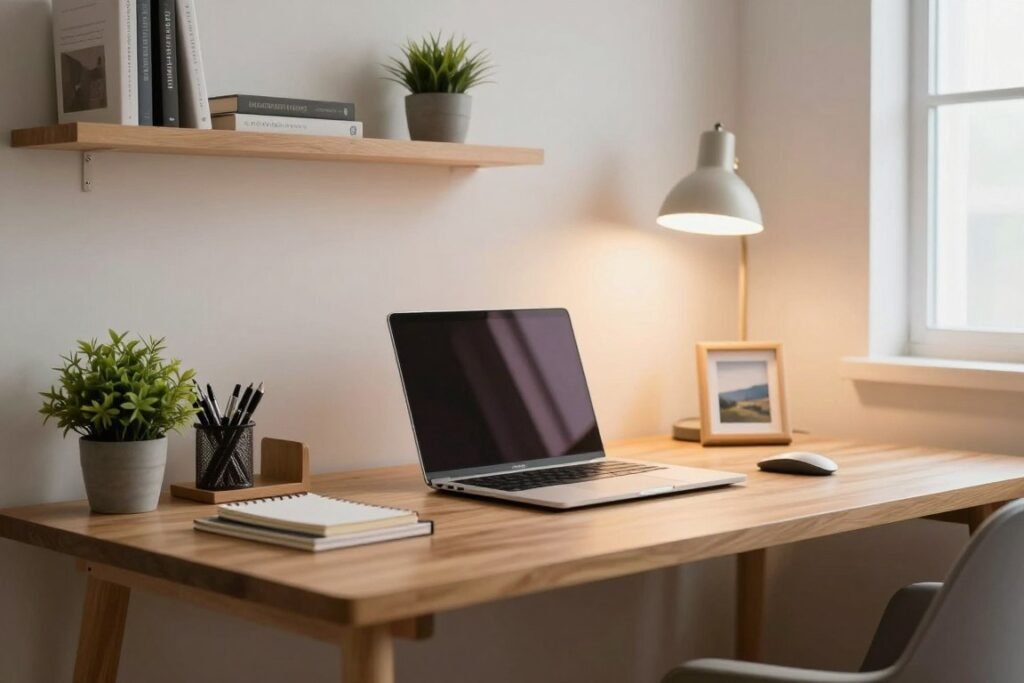
Desktop organizers make your workspace both beautiful and functional. Pick ones that are both stylish and practical to keep your desk neat.
Cable Management Solutions
Good cable management is key for a clean workspace. Use cable organizers or zip ties to keep cables neat and untangled.
6. Space-Saving Technology Solutions for Small Offices
Right technology can greatly improve your small office. Every inch matters, and modern tech boosts productivity and comfort.
Compact Computer Setups That Don’t Sacrifice Performance
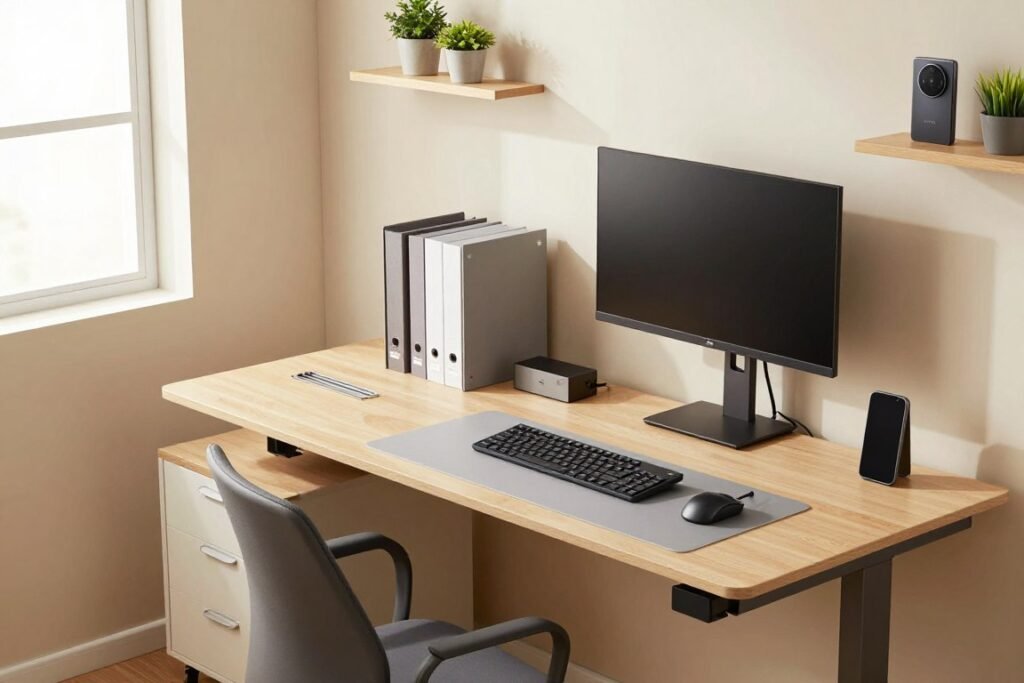
Compact computers are changing small office work. They come in mini PCs or all-in-one desktops. This means you get top performance without taking up much space.
- Mini PCs: Perfect for small desks, these tiny computers pack a punch.
- All-in-One Desktops: Combining the monitor and CPU into one sleek device, they save valuable space.
Wireless Peripherals to Eliminate Cable Clutter
Wireless peripherals are a big help for small offices. They cut down on cables and make your space more flexible. With wireless keyboards, mice, and headphones, your desk stays neat.
Benefits of Wireless Peripherals:
- Reduced clutter
- Increased mobility
- Easier setup
Wall-Mounted Monitors and Equipment Installations
Wall-mounted monitors and equipment save desk space. They make your work area more ergonomic and open.
All-in-One Devices That Save Space
All-in-one devices, like printers that scan and fax, are great for small offices. They combine several functions into one, saving space and cutting down on equipment.
Cloud Storage to Reduce Physical Storage Needs
Cloud storage is key for small offices. It lets you store and access files online. This means you don’t need as many physical devices, freeing up space for other important items.
Cloud storage lets you get to your files from anywhere, anytime. It makes working remotely more efficient.
7. Hidden and Foldable Workspace Designs
Maximizing your tiny office space often requires creative solutions. Hidden and foldable workspaces are perfect for small homes or apartments. They serve multiple purposes.
Murphy-Style Fold-Down Desks for Temporary Workspaces
Murphy-style fold-down desks are great for temporary workspaces. They fold up against the wall when not in use. This frees up valuable floor space.
This design is ideal for small homes or apartments. It allows the office area to double as a guest room or living space.
Closet Office Conversions: Before and After
Converting a closet into an office is a smart move. By installing a desk, shelves, and good lighting, you create a functional workspace. It remains out of sight when not in use.
This conversion boosts your productivity. It does so without cluttering your living area.
Behind-the-Door and Under-Stair Office Solutions
Using the space behind a door or under the stairs adds extra workspace. It doesn’t take up valuable floor area. Behind-the-door organizers and under-stair desks are great for small homes or offices with irregular shapes.
DIY Foldable Desk Projects
Building your own foldable desk is a fun DIY project. With basic materials and carpentry skills, you can create a desk that fits your needs and space.
Concealing Office Equipment When Not in Use
To keep your workspace clutter-free, hide office equipment when not in use. Use cabinets, drawers, or foldable storage units. This keeps your workspace organized and tidy.
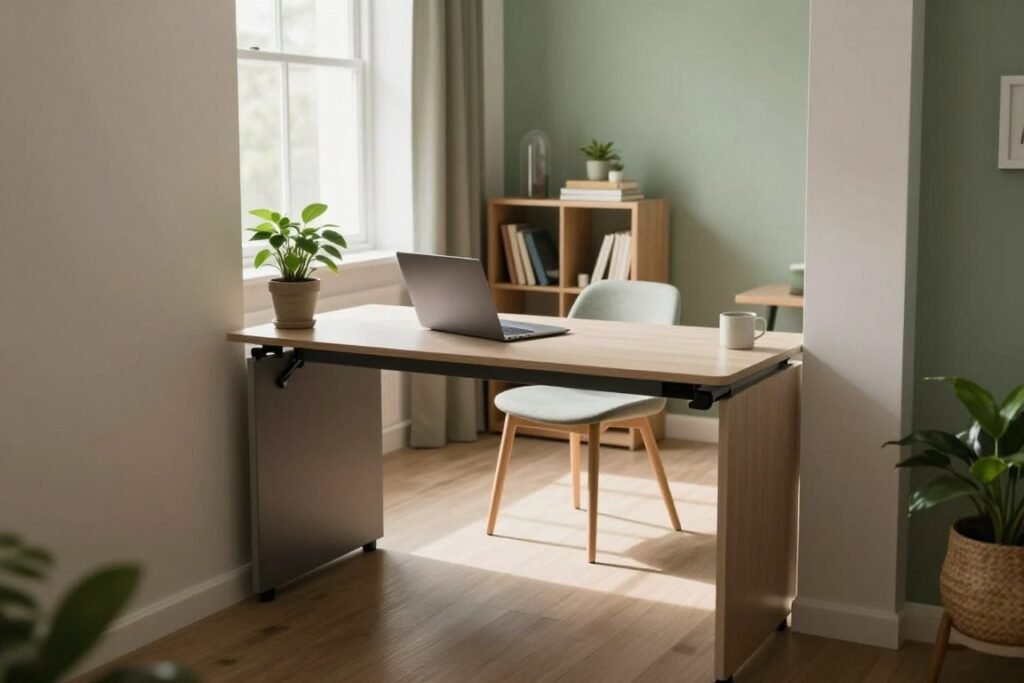
By using hidden and foldable workspace designs, you can make your office more efficient and productive. Even in the smallest of spaces, you can achieve this.
8. Dual-Purpose Room Strategies That Actually Work
Dual-purpose rooms are great for small homes. They let you use one room for many things. This way, you get a good workspace without losing other room uses.
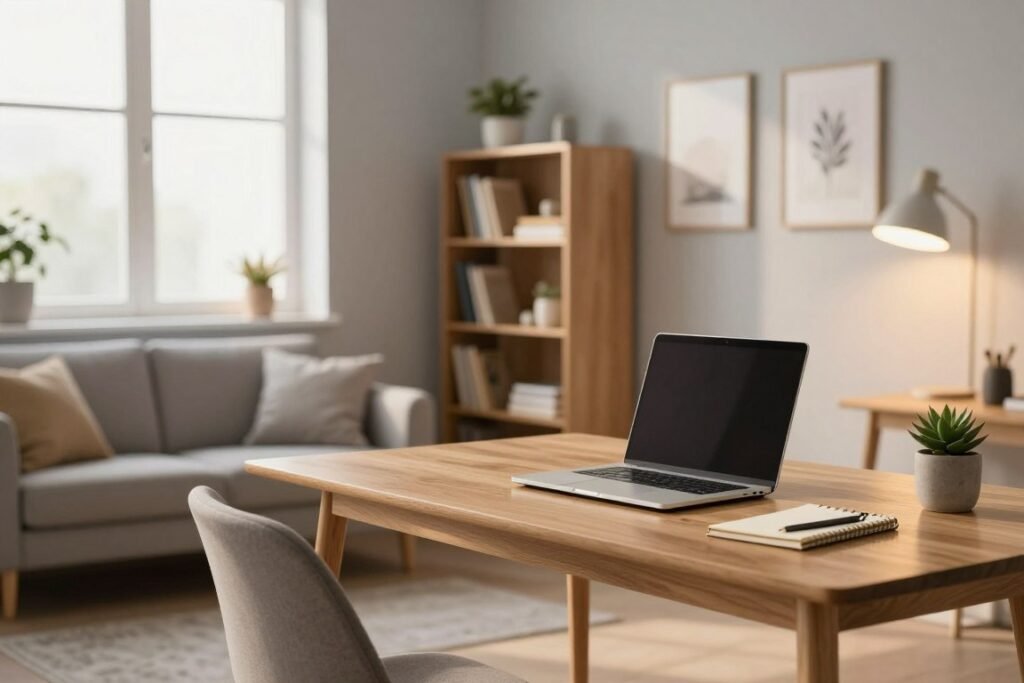
Guest Room and Office Combinations Without Compromise
Turning a guest room into an office needs smart planning. Think about using a murphy desk or a small desk that folds away. This keeps your office tidy and your guests comfortable.
Living Room Office Nooks That Blend Seamlessly
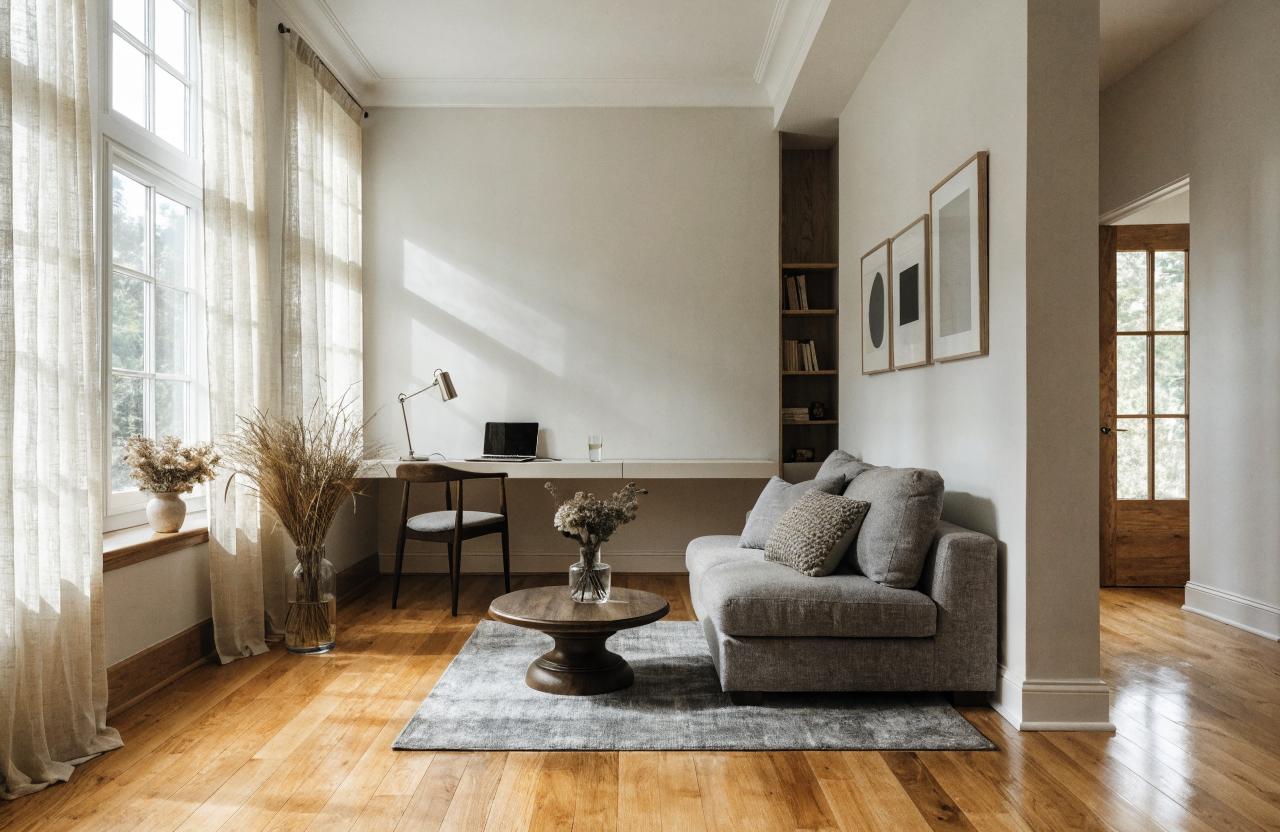
Adding an office nook to your living room is easy with the right furniture. Choose a desk that matches your living room style. A room divider can also help separate the office area.
Bedroom Workspace Integration Without Disrupting Sleep
Adding a workspace to your bedroom should keep work and sleep areas separate. Use a room divider or screen to divide the space. Pick a small desk that doesn’t take over the room.
Room Dividers and Visual Separation Techniques
Room dividers help separate areas in a dual-purpose room. You can use curtains, screens, or shelves to define spaces and cut down on distractions.
Transitioning Between Work and Home Modes
Switching between work and home life is key. Set up a daily routine to mark the end of work. This could be closing your laptop or putting away work stuff.
9. Creative Storage Hacks for Office Supply Organization
Creative storage hacks can turn a messy workspace into a productive area. In small offices, every inch matters. Smart storage solutions help keep things organized and boost productivity.
Magnetic and Pegboard Organizer Systems
Magnetic boards and pegboards are great for storing office supplies. They can be hung on walls or sit on desks. They hold items like scissors, pens, and notepads, keeping your space tidy.
Under-Desk and Vertical Storage Solutions
Using space under your desk and on walls adds storage. Under-desk drawers and vertical shelves are perfect for documents and supplies. They keep your main area organized and clutter-free.
Repurposed Household Items for Beautiful Organization
Using old items for storage is creative and green. Mason jars can hold pens and pencils. Vintage crates are great for files or as a desk organizer.
Color-Coding Systems for Visual Organization
Color-coding makes organizing easier. It helps you quickly find what you need. This saves time and keeps your space tidy.
Seasonal Rotation of Supplies and Documents
Switching supplies and documents with the seasons keeps your office neat. Store items you don’t use often in labeled boxes. This way, you can easily find what you need.
| Storage Solution | Description | Benefits |
|---|---|---|
| Magnetic Boards | Mountable boards for holding metal items | Keeps frequently used items within reach |
| Pegboards | Boards with pegs for hanging supplies | Customizable and versatile storage |
| Under-Desk Drawers | Storage units that fit under desks | Maximizes under-desk space, keeps workspace clear |
10. Psychological Space-Enhancing Design Techniques
Creating a tiny office that boosts productivity needs careful thought. It’s not just about the layout. It’s about making an environment that improves your mindset and work efficiency.
Color Psychology: Choosing the Right Palette for Productivity
The colors in your office greatly impact your mood and productivity. Cool colors like blue and green help you focus and stay calm, perfect for a workspace. Warm colors like orange and red boost creativity but should be used carefully to avoid distractions.
Strategic Mirror and Art Placement to Create Depth
Mirrors and art can make your space feel bigger. Putting a mirror opposite a window reflects natural light, making the room brighter and more spacious. Artwork adds depth and visual interest, too.
Minimalist Decor Approaches That Reduce Visual Clutter
Choosing minimalist decor reduces visual clutter, making your tiny office feel bigger and more organized. Choosing a few statement pieces and keeping surfaces clean helps keep your workspace focused and clean.
Incorporating Plants for Well-Being and Space Division
Plants not only clean the air and improve well-being but also divide spaces in a tiny office. Compact or vertical planters save space while adding nature.
Personal Touches That Don’t Overwhelm Small Spaces
Adding personal touches makes your workspace welcoming. Choosing a few meaningful items instead of many decorations personalizes your office without overwhelming it.
Transform Your Tiny Office Into a Productivity Powerhouse Today
You now have the tools and inspiration to make your small workspace a productivity haven. Use tiny office space ideas like vertical storage and multi-functional furniture. These can help you work more efficiently and create a space that suits you.
It’s not just about the space itself. How you use it matters too. Use efficient workspace tips like keeping your desk tidy and designing your space to boost focus and productivity.
Begin by checking out your current workspace and finding ways to improve it. Pick the ideas that match your needs and style. With creativity and planning, you can turn your small office into a powerful productivity center that helps you reach your goals.
Start today and see your productivity rise in your newly improved workspace.
0 Comments