Working from home with your partner sounds romantic until you’re both fighting over desk space and accidentally interrupting each other’s Zoom calls. These shared office setups will keep you both productive without wanting to throttle each other by 2 PM. Let’s create a workspace where you can actually coexist peacefully.
1. The Face-to-Face Focus Station (With Strategic Separation)
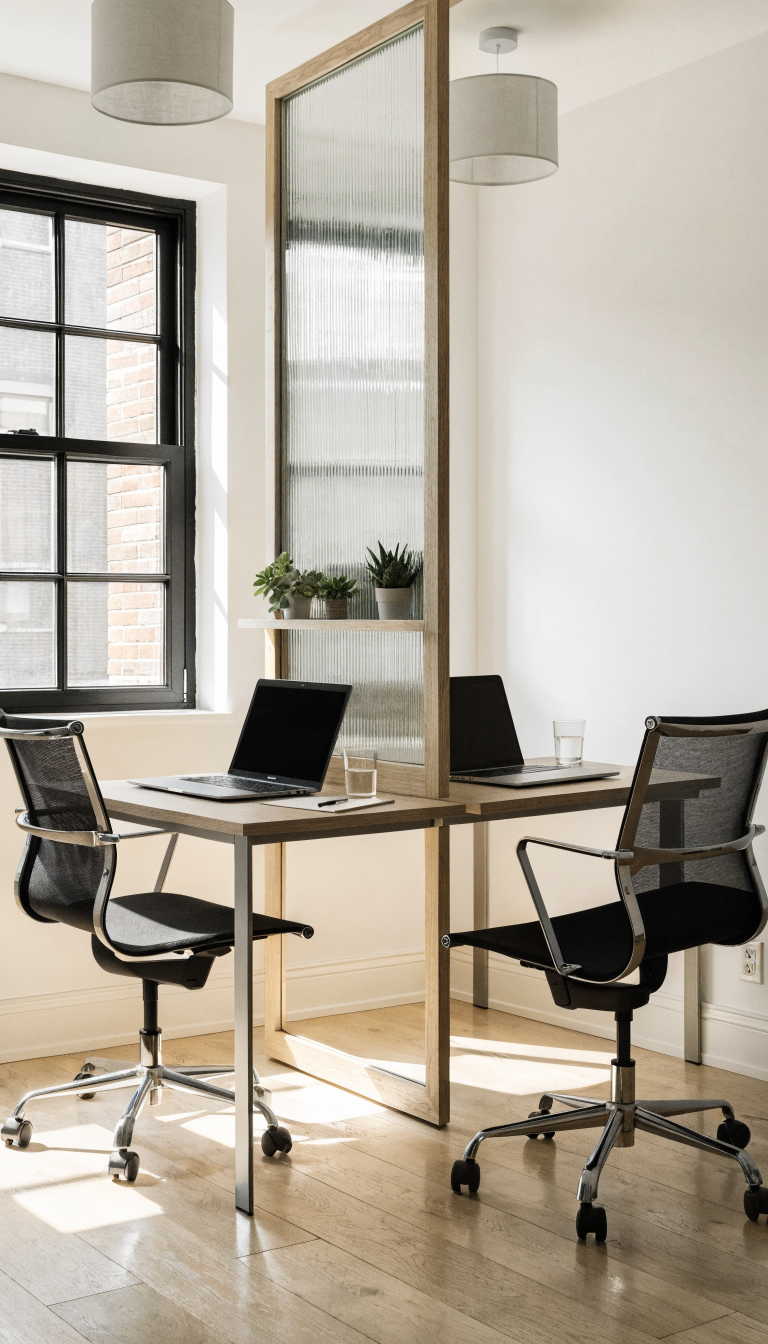
Here’s the thing about facing your partner while working: it sounds cute in theory, but in practice, you’ll spend half your day making awkward eye contact during important calls. The trick is creating a face-to-face setup with built-in privacy barriers.
Position two desks directly across from each other, but add a sleek divider between them. Think minimalist shelf units, frosted glass panels, or even a gorgeous plant wall that blocks direct sightlines while keeping the space open and airy.
What You’ll Need:
- Two matching or complementary desks (doesn’t have to be fancy)
- A divider that’s 18-24 inches tall (tall enough for privacy, low enough to not feel claustrophobic)
- Individual task lighting for each person
- Noise-canceling headphones (seriously, invest in good ones)
This layout works brilliantly in rectangular rooms where you can maximize length. The divider becomes a shared storage space, and you both get equal natural light from windows on either side.
The beauty here? You’re together but separate. You can pass each other coffee without leaving your desk, but you won’t accidentally photobomb each other’s video conferences. Trust me, your coworkers will thank you.
2. The Side-by-Side Split (AKA The Long Desk Solution)

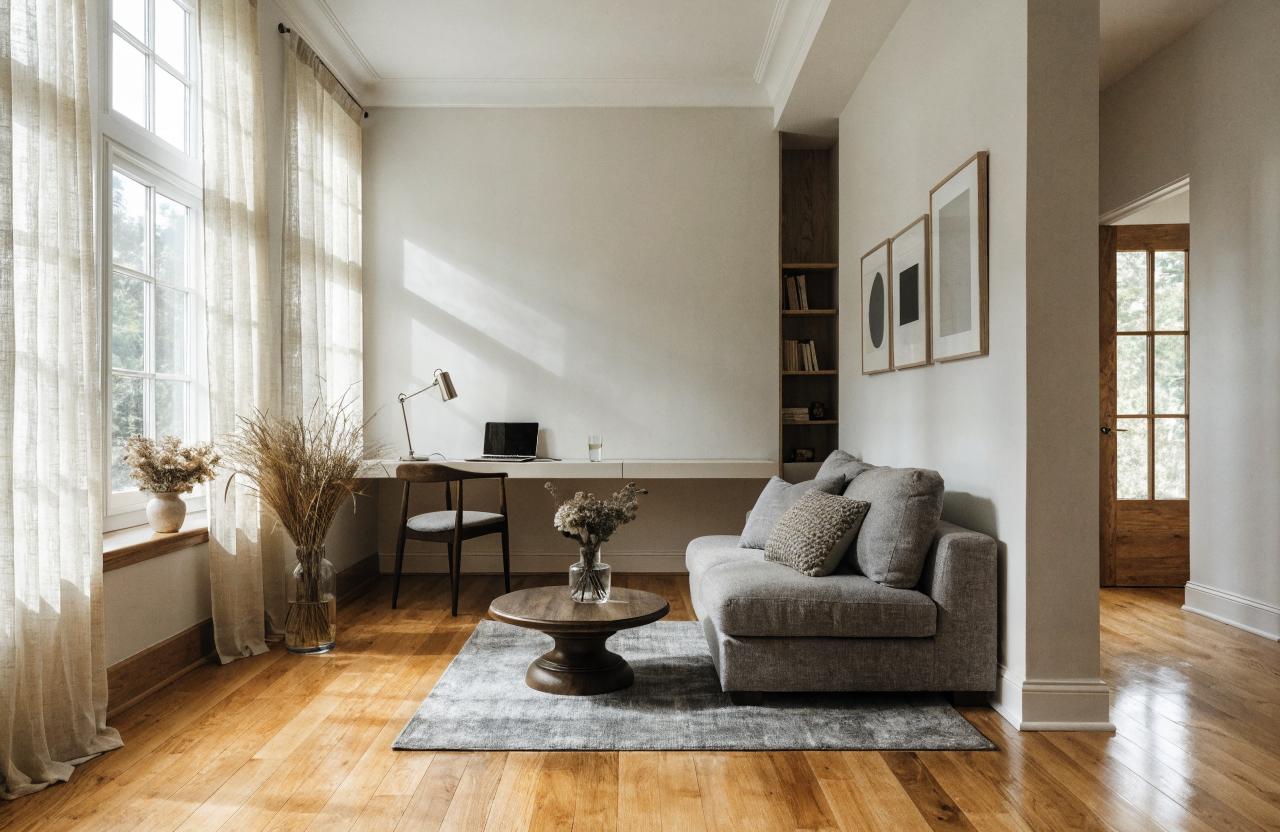
Want to feel like you’re working together without actually being in each other’s business? The continuous desk along one wall is your answer. This setup screams efficiency and makes the most of tight spaces.
Install a single long countertop or push two desks together along your longest wall. Each person gets their designated zone with clear boundaries. No more “is this my pen or yours?” debates.
Setup Tips:
- Use desktop organizers as subtle territorial markers between zones
- Mount dual monitor arms to save precious desk real estate
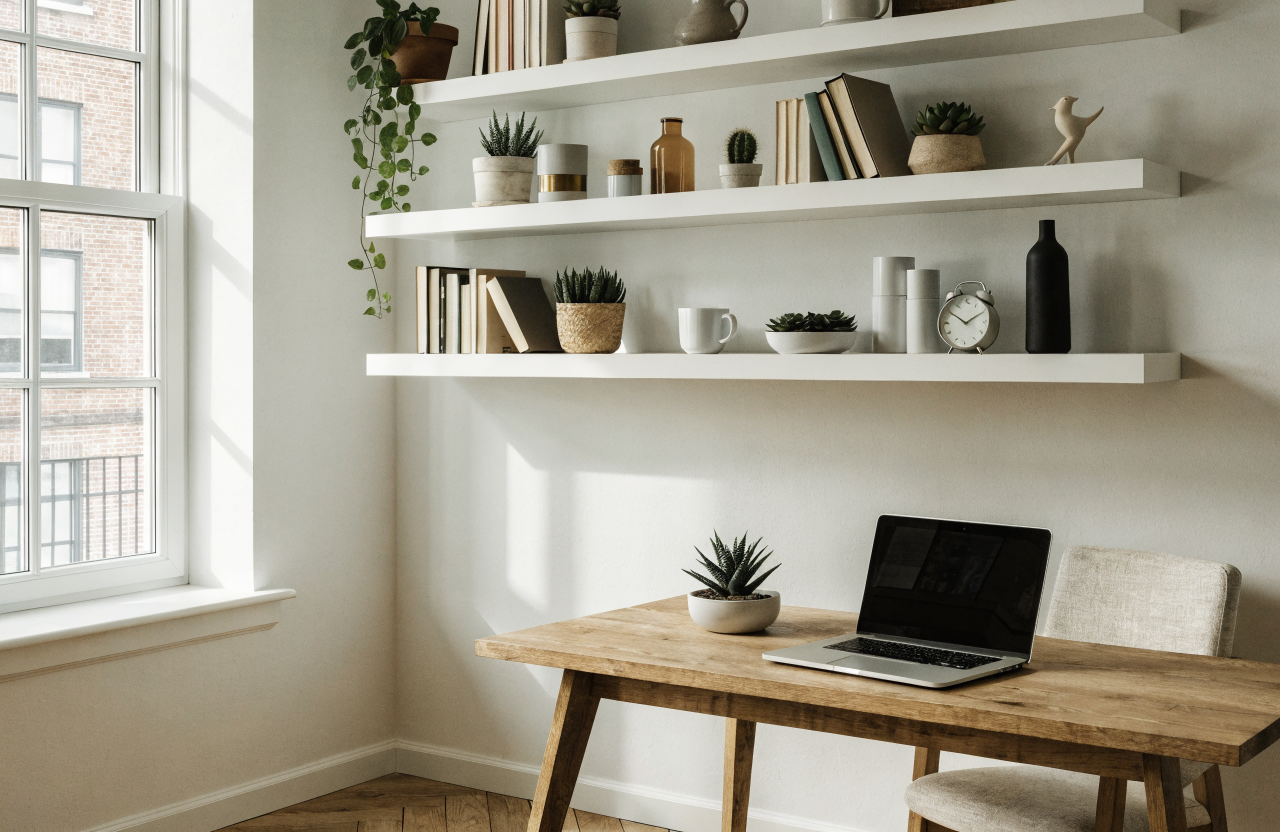
- Install floating shelves above each person’s area for individualized storage
- Consider different chair styles so you can instantly tell whose space is whose
The genius of this arrangement? You both face the wall, which minimizes distractions and creates that focused work vibe. Plus, you can easily chat during breaks without swiveling around dramatically.
This works especially well in small bedrooms converted to offices or narrow spare rooms. You’re maximizing every inch of wall space while keeping the center of the room open. It feels way less cramped than you’d expect.
3. The L-Shaped Power Move (Corner Domination)
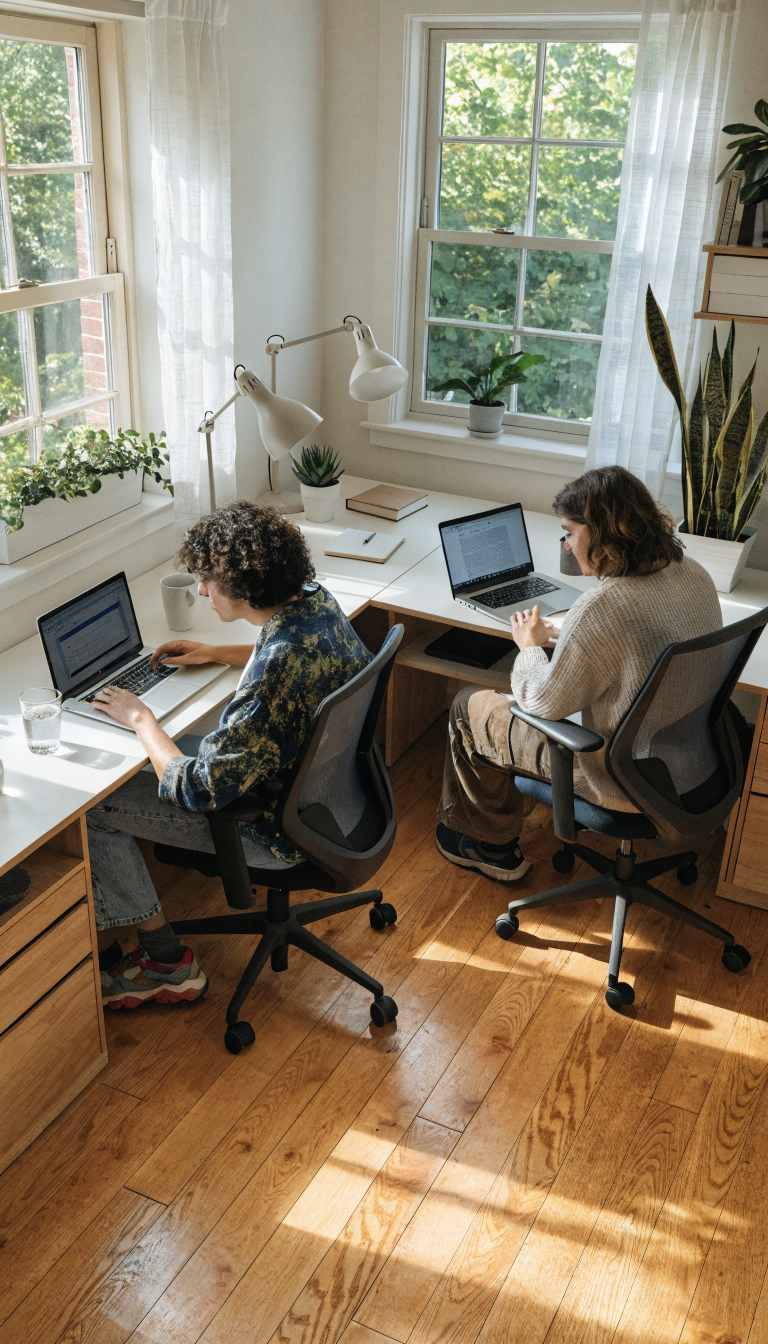
Got a corner? Congratulations, you’ve got the perfect setup for a shared office that actually feels separate. The L-shaped configuration gives you both dedicated workspace while utilizing the most awkward part of any room.
Position one desk along each wall meeting at the corner. You’re technically adjacent but facing different directions, which means fewer accidental distractions and more actual work getting done.
Why This Works:
- Each person gets their own wall and workspace orientation
- The corner becomes shared storage for printers, supplies, or that succulent collection
- Natural traffic flow keeps you from constantly bumping into each other
- You can customize each side based on individual work needs
One of you needs a standing desk? No problem. The other person prefers sitting? Also fine. The L-shape lets you customize without compromising the other person’s setup.
FYI, this arrangement is perfect for rooms with windows on adjacent walls. You both score natural light without fighting over the “good spot.” Add some task lighting for evening work sessions, and you’re golden.
The corner itself becomes this functional little hub. Stick a small filing cabinet there, or use vertical storage to keep shared resources accessible to both of you without cluttering individual desks.
4. The Yin-Yang Zone (Opposite Walls Arrangement)
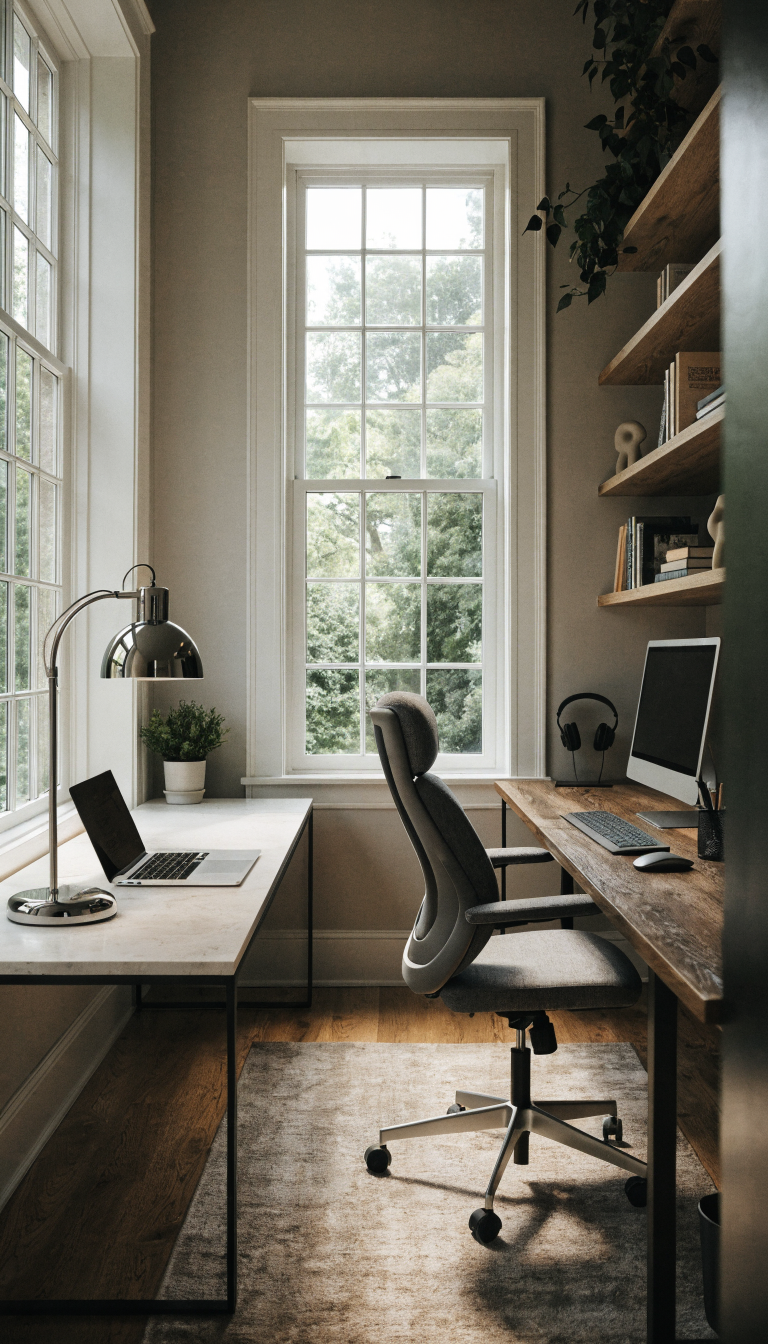
Sometimes the best way to work together is to literally face away from each other. Before you think that sounds harsh, hear me out: this setup maximizes privacy and minimizes distractions like nothing else.
Place each desk against opposite walls. You’re in the same room but working in your own little universes. When you need to collaborate, swivel your chair around. When you need to focus, you’ve got a wall to stare at without feeling antisocial.
Perfect For:
- People with vastly different work styles (early bird vs. night owl)
- Couples where one takes a lot of calls and the other needs quiet
- Square or nearly-square rooms where you can balance the space
- Situations where you both need substantial desk real estate
This layout gives you the most psychological separation while technically sharing space. You won’t feel watched or monitored, which honestly makes a huge difference in your stress levels throughout the day.
Add a small collaboration table between the desks if you’ve got room. This becomes your meeting spot for brainstorming sessions or lunch breaks without invading each other’s designated work zones.
IMO, this works best when you’re both in jobs that require intense concentration. Writers, programmers, designers – basically anyone who needs to get into flow state without external distractions breathing down their neck.
5. The Modular Musical Chairs (Flexible Furniture Magic)
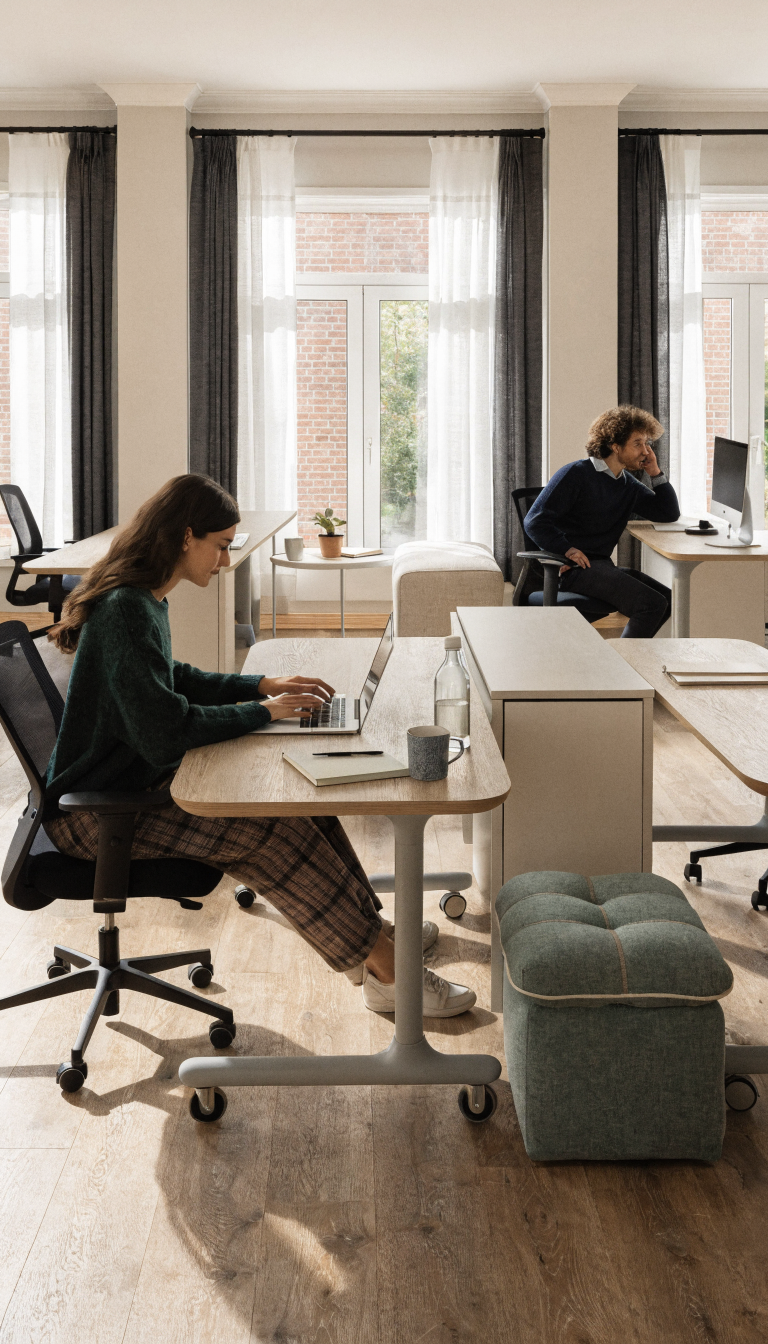
What if your space needs change throughout the week? Enter the modular mobile workspace where nothing stays permanently stuck in one place. This is next-level flexibility for couples with unpredictable schedules.
Invest in lightweight desks on wheels, rolling storage units, and furniture that easily reconfigures. Monday you’re doing side-by-side collaboration? Cool. Wednesday you need complete separation for back-to-back meetings? Also cool. Just rearrange.
Essential Components:
- Desks with locking casters (stability when you need it, mobility when you don’t)
- Rolling file cabinets that double as extra surface area
- Folding screens or portable dividers you can deploy as needed
- Wireless everything (because tangled cables kill the whole mobile vibe)
The secret sauce here is cable management. Seriously, wireless charging pads, Bluetooth peripherals, and cloud storage are your best friends. The fewer cords tethering you to specific outlets, the more freedom you have to rearrange.
This setup particularly shines in multipurpose rooms where the office needs to transform into a guest room, yoga studio, or whatever else life throws at you. Friday evening rolls around? Move the desks aside and reclaim your living space.
Keep a small basket of desk essentials (pens, notepads, chargers) that travels with you during reconfigurations. You won’t waste time hunting for your stuff every time you switch layouts. Everything stays organized and accessible regardless of your current arrangement.
The flexibility also helps when one person’s workload suddenly explodes. Need more desk space for a big project? Commandeer more territory temporarily. Once the crunch time passes, shift back to the regular setup. It’s relationship-saving adaptability.
You’ve got five solid blueprints for creating a shared home office that won’t destroy your sanity or your relationship. Pick the one that matches your space, your work styles, and your tolerance for each other’s keyboard clacking. Your productive, peaceful workspace awaits – now go claim it before the next Zoom call starts.
0 Comments