Your spare room can pull double duty without looking like a hot mess. These genius ideas transform that awkward extra space into a productive office that moonlights as a cozy guest retreat—and your visitors (and your work-from-home sanity) will thank you for it.
1. The Murphy Desk That Disappears Like Magic
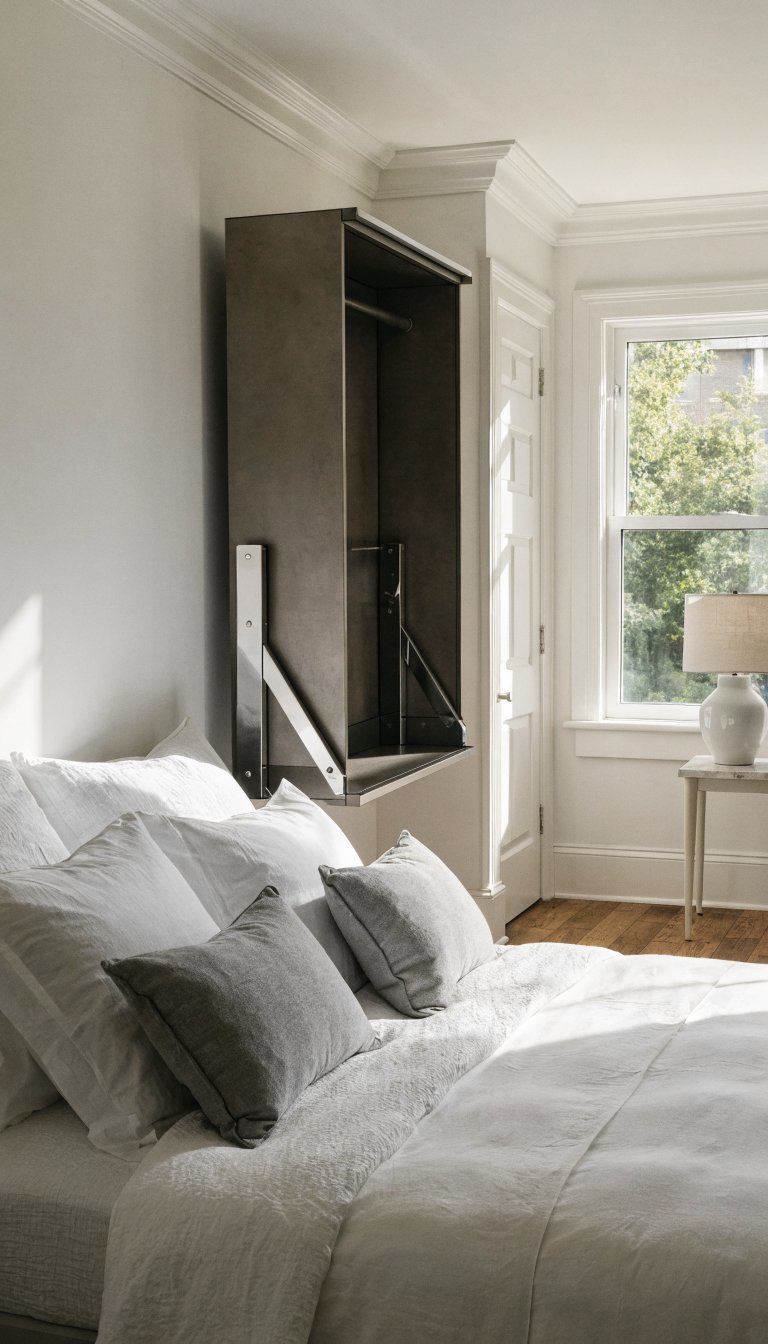
Forget everything you thought you knew about those clunky fold-down desks from the ’90s. Today’s wall-mounted Murphy desks are sleek, sturdy, and seriously space-savvy.
When you’re working, you’ve got a full-size desk with room for your laptop, monitor, and that ever-growing collection of coffee mugs. When guests arrive, you simply fold it up against the wall, and boom—instant guest room. No awkward desk taking up precious floor space while your mother-in-law tries to navigate around it in her slippers.
What Makes It Work
- Wall-mounted designs free up floor space entirely
- Built-in storage cubbies keep office supplies hidden but accessible
- Locking mechanisms prevent accidental fold-ups mid-Zoom call
- Weight capacity of 50+ pounds handles dual monitors
Look for models with integrated shelving or charging stations built right into the unit. Some even come with fold-down organizers for pens, sticky notes, and all those random desk accessories you can’t seem to live without.
The best part? Installation takes about two hours, and you’ll reclaim roughly 15-20 square feet of usable floor space. That’s room for an actual comfortable chair for guests or a reading nook that doesn’t feel like an afterthought.
2. The Sofa Bed That Doesn’t Scream “Sofa Bed”
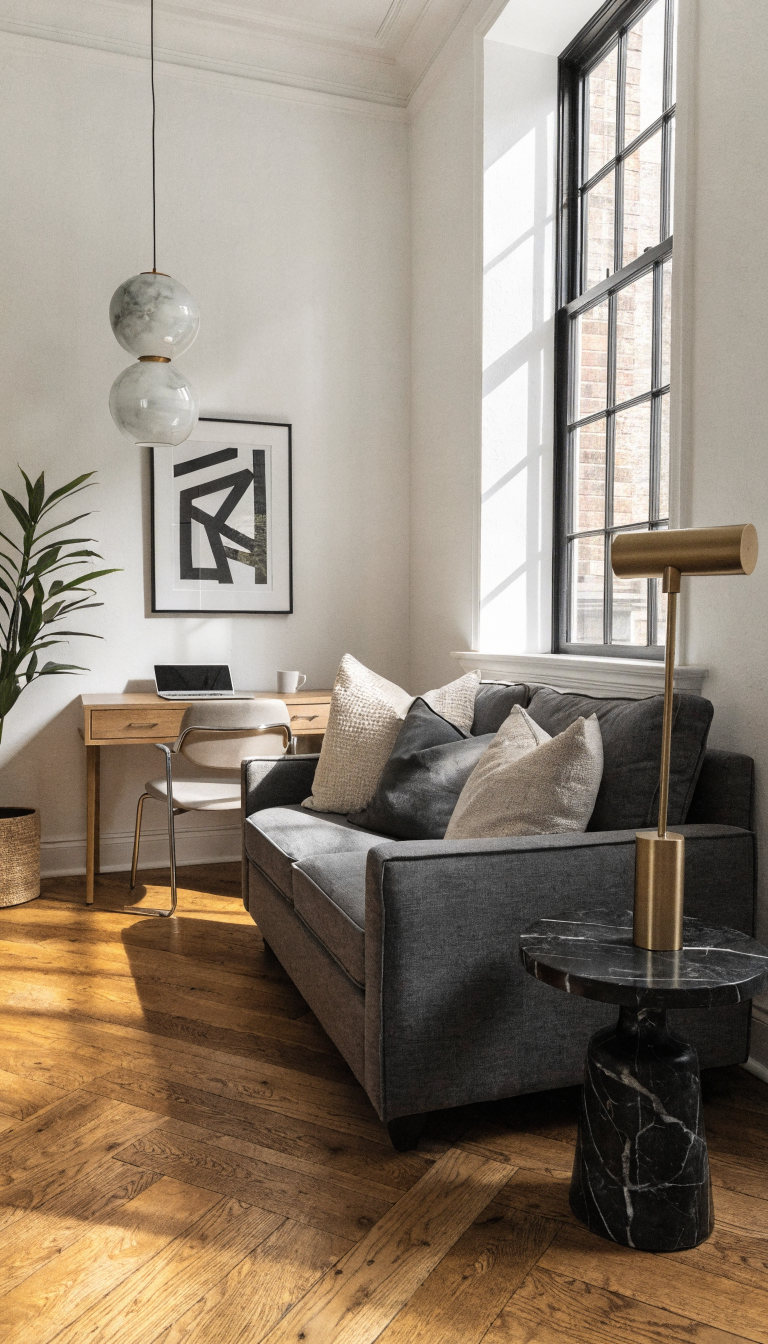
Let’s be real—most sofa beds are torture devices disguised as furniture. But modern sleeper sofas have come a long way from that metal bar that used to assault your spine at 3 AM.
Invest in a quality sleeper with a memory foam mattress, and your guests won’t spend their entire visit complaining about their back. During work hours, it’s your office couch for those午後 brainstorming sessions or quick power naps between meetings.
Features Worth The Splurge
- Memory foam or hybrid mattresses (minimum 5 inches thick)
- Easy-pull mechanisms that one person can operate
- Storage compartments underneath for bedding
- USB charging ports in the armrests
Go for a neutral color that works with both “office mode” and “guest mode.” A charcoal gray or warm beige keeps things professional during video calls but cozy when hosting overnight visitors.
Pro tip: Keep a mattress topper stored nearby. Even the best sleeper sofa benefits from an extra layer of cushioning, and your guests will appreciate the hotel-worthy touch.
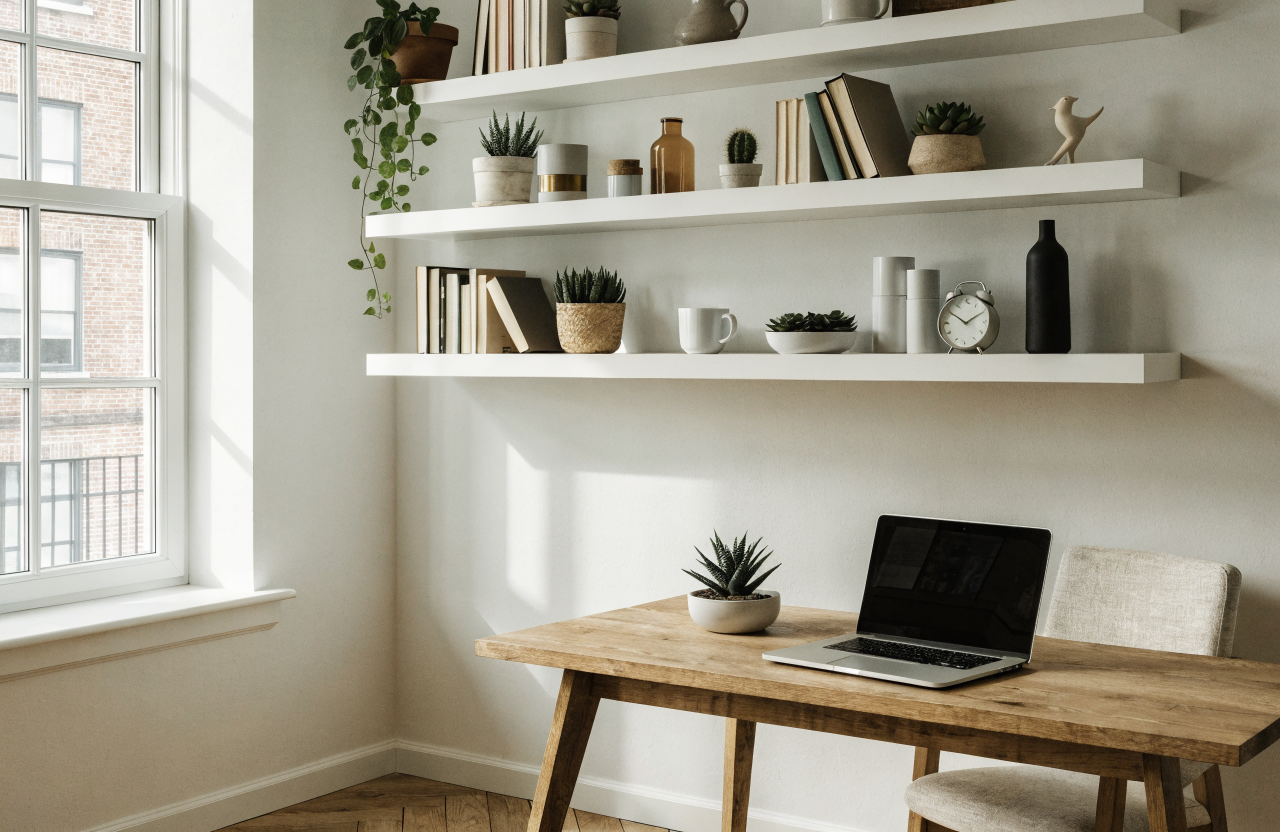
3. The Floating Shelf Desk Combo That Defies Physics
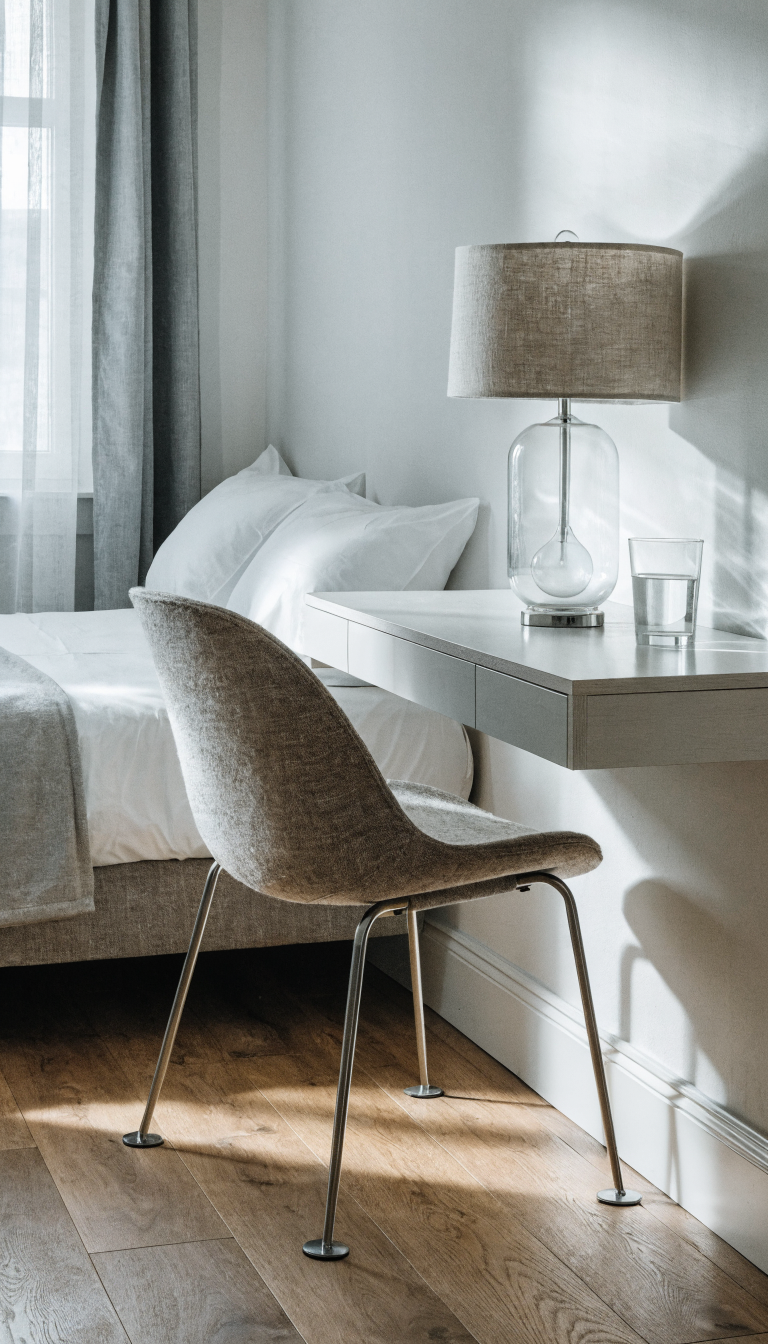
Who says you need a traditional desk eating up half your room? A floating shelf workspace creates a dedicated work zone that practically vanishes into the wall.
Mount a deep floating shelf (18-24 inches) at desk height, add a comfortable chair, and you’ve got a fully functional workspace that leaves the rest of the room wide open for guest accommodations. Seriously, this setup is perfect for rooms under 100 square feet where every inch counts.
Installation Essentials
- Heavy-duty brackets rated for at least 100 pounds
- Wall anchors that hit studs for maximum stability
- Cable management clips to hide unsightly cords
- Floating shelves above for additional storage
The beauty of this approach? You can customize the length to fit your exact space. Got an awkward 6-foot wall? Make a 6-foot desk. Working with a tiny 3-foot section? That works too.
Add a slim task lamp and some wall-mounted organizers, and you’ve created a functional office that doesn’t dominate the room’s aesthetic. When guests arrive, clear the desk surface (which takes all of 30 seconds), and they’ll barely notice it’s there.
4. The Daybed That Earns Its Keep 24/7
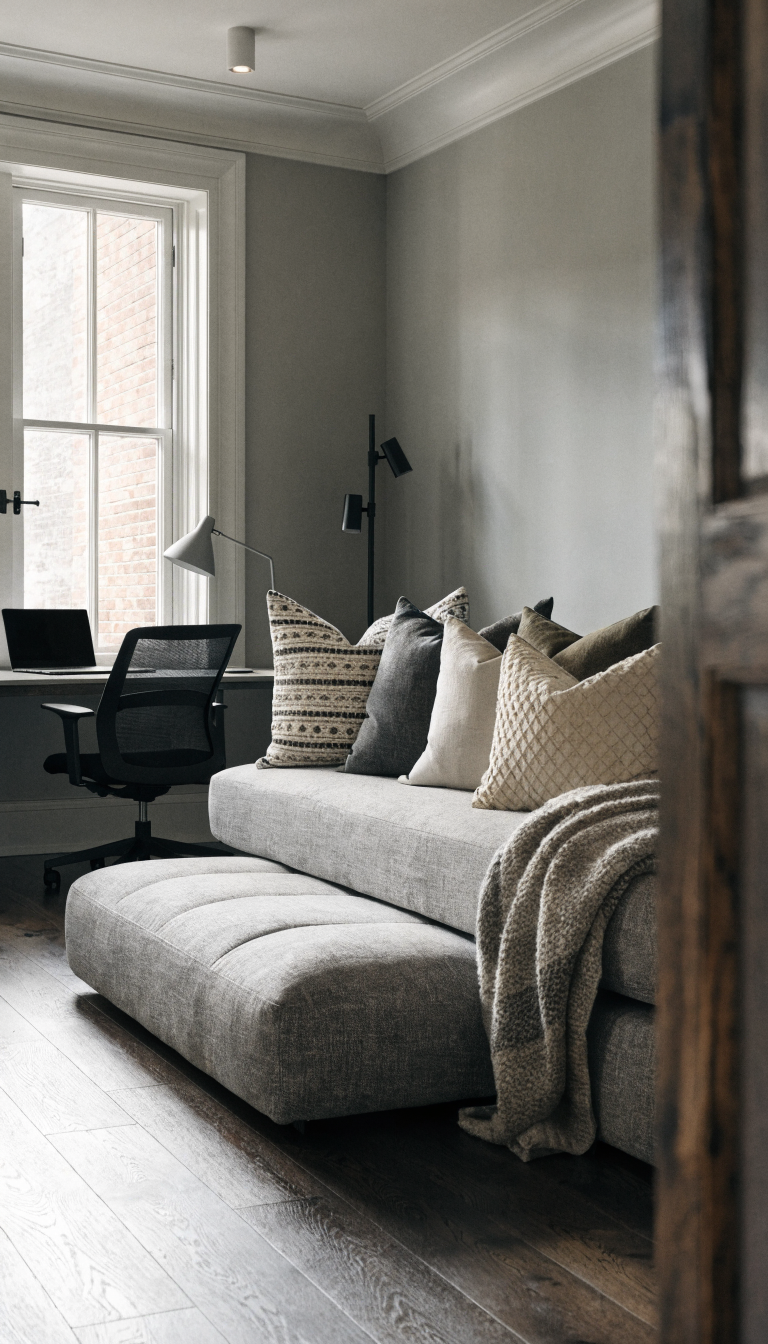
A daybed with a trundle is the ultimate multitasker. During work hours, pile it with throw pillows and use it as a comfy reading spot or casual seating for client meetings. When guests stay over, pull out the trundle, and suddenly you’re sleeping two people in the footprint of a twin bed.
Unlike a traditional bed that screams “bedroom,” a daybed reads more like sophisticated lounge furniture. Position it against the wall perpendicular to your desk, and you’ve created distinct zones within one small room.
Why Daybeds Win
- Trundle beds hide completely when not in use
- Three-sided design works as a sofa with back support
- Under-bed storage drawers hold office supplies or guest linens
- Firm mattresses provide better back support for daytime sitting
Choose a metal or wood frame in a finish that matches your office aesthetic. A matte black metal frame looks sharp and modern, while a warm walnut wood frame creates a more inviting, homey vibe.
FYI, the trundle mechanism should glide smoothly on casters. Test it in the store if possible, because a sticky trundle defeats the whole purpose of easy guest accommodations.
5. The Corner Desk That Conquers Dead Space
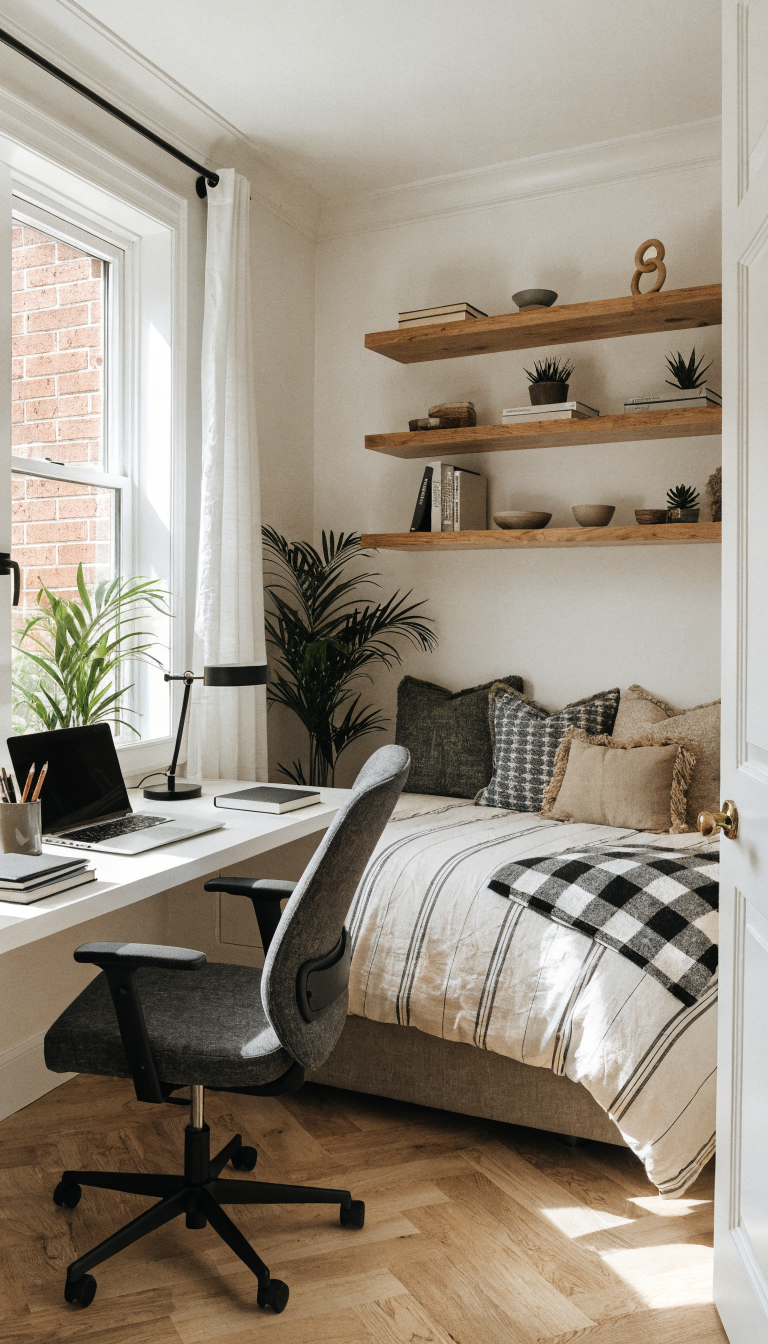
That awkward corner everyone ignores? It’s about to become your favorite workspace. A corner desk configuration maximizes typically wasted space while leaving the center of the room open for a proper bed or seating area.
You get way more usable desk surface than a traditional straight desk would provide in the same square footage. Plus, corner setups naturally create a focused work zone that feels separate from the guest sleeping area.
Corner Desk Configurations
- L-shaped desks with one long and one short leg
- Floating corner shelves at two heights for dual monitors
- Corner standing desk converters for ergonomic flexibility
- Built-in corner units with overhead storage cabinets
Position your monitor in the corner itself, facing out into the room. This setup gives you maximum desk space on either side for paperwork, your keyboard, or that succulent collection you definitely don’t overwater (sure).
Add a rolling file cabinet that tucks under one side of the desk. It provides necessary office storage and can roll away completely when you need to vacuum or rearrange for guests.
The corner location also means your workspace won’t be the first thing guests see when they walk in the door. Strategic placement keeps the room feeling more like a guest room that happens to have a desk, rather than an office with a bed shoved in it.
6. The Room Divider That Actually Divides
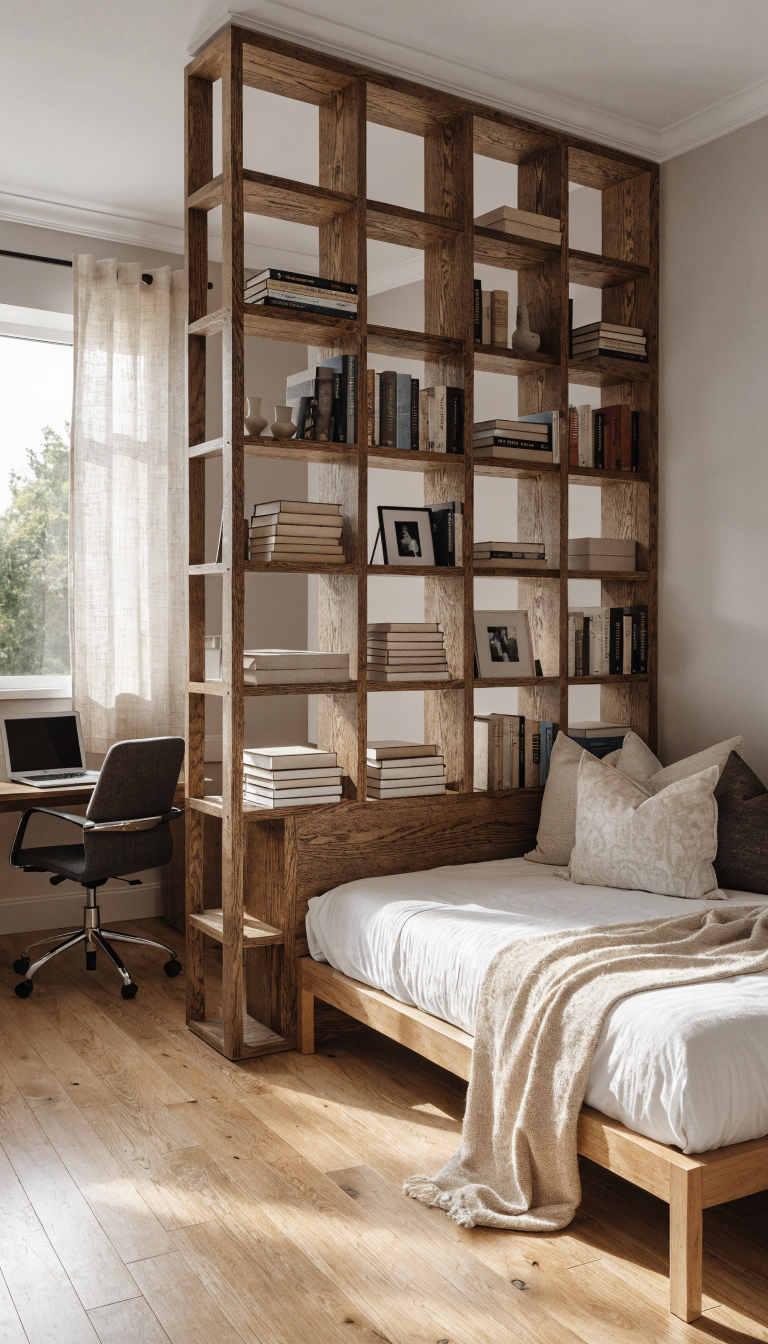
Sometimes you need a visual separation between “work brain” and “relaxation zone”—both for yourself and your guests. A strategic room divider creates distinct areas without the permanence of a wall.
We’re not talking about those flimsy accordion dividers from college dorm rooms. Think substantial bookshelf dividers, elegant folding screens, or even a carefully positioned tall plant that creates a natural boundary.
Divider Options That Work
- Open bookshelf units that provide storage and visual separation
- Three-panel folding screens you can move or remove entirely
- Curtain track systems with ceiling-mounted rails
- Large plants like fiddle leaf figs or birds of paradise
A bookshelf divider pulls serious double duty. Load it with work references and office supplies on the desk side, decorative items and guest amenities on the sleeping side. The open shelves let light pass through, preventing that claustrophobic divided-room feeling.
If you go the curtain route, choose a medium-weight fabric that provides privacy without blocking all the light. Linen or cotton blends work beautifully and won’t look cheap like those thin polyester panels.
Trust me, this psychological separation makes a huge difference. When you close your laptop for the day, walking to the “other side” of the room helps your brain shift out of work mode. And when guests visit, they’ll appreciate having a defined sleeping area that feels like their own space.
The key is choosing a divider that’s easy to move or remove. You want the flexibility to open up the full room when hosting multiple guests or reconfigure when your work needs change. A bookshelf on casters or a lightweight folding screen gives you options without commitment.
Ready to transform that spare room into the hardest-working space in your home? These ideas prove you don’t have to choose between a functional office and a welcoming guest room—you can absolutely have both. Start with the setup that solves your biggest pain point, whether that’s sleeping space, work surface, or storage, and build from there. Your future guests (and your productivity) will be impressed.
0 Comments