Your office exterior speaks volumes before anyone even walks through the door. Whether you’re working with a tiny storefront or a compact commercial space, these six facade ideas will transform your curb appeal from “meh” to “wow” without requiring a massive budget or months of construction.
Let’s dive into some seriously impactful changes that’ll make clients do a double-take.
1. Go Bold with a Statement Door
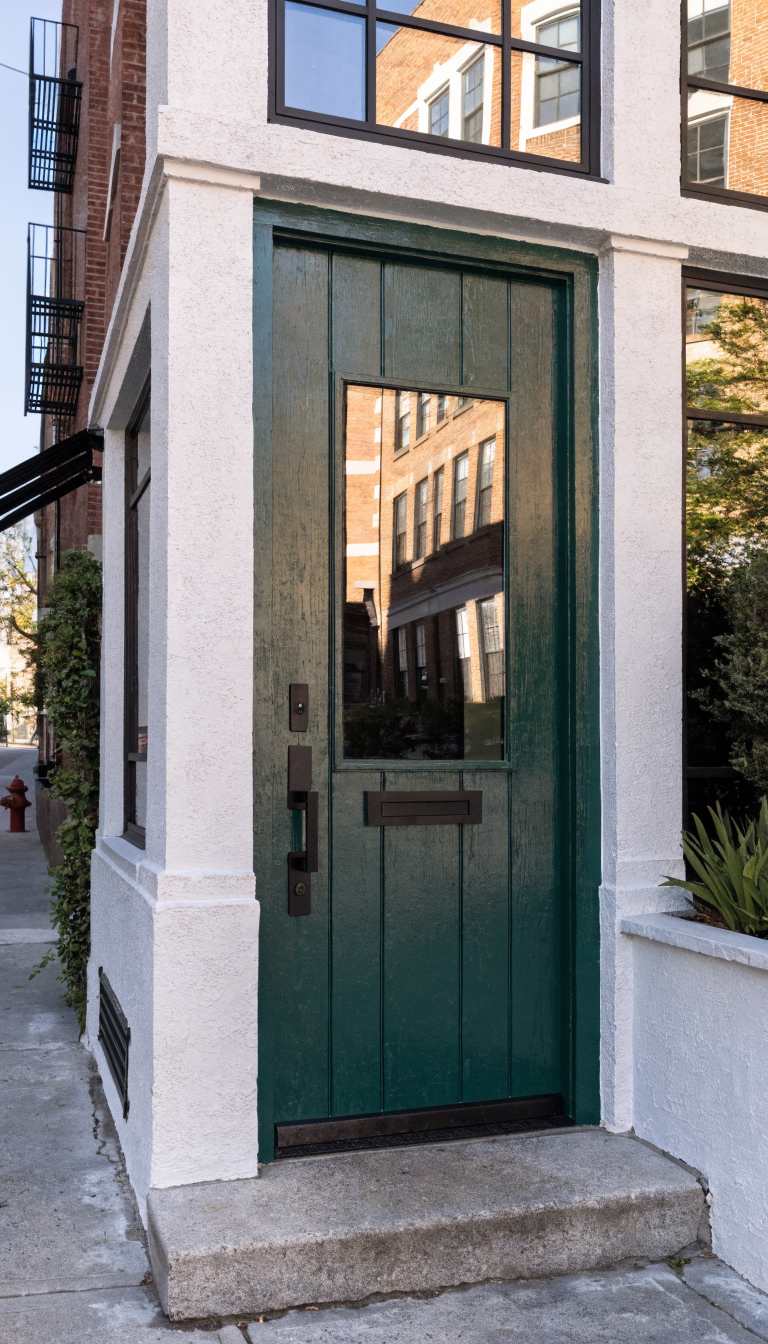
Nothing says “we mean business” quite like a knockout front door. Think of it as the jewelry of your building—it doesn’t need to be huge to make people stop and stare.
Your door is literally the first thing people touch when entering your space. A vibrant color choice like deep navy, forest green, or even a striking red can completely change the vibe of your entire facade. Pair it with modern hardware—think matte black handles or brushed brass fixtures—and you’ve got instant sophistication.
Key Elements to Consider:
- High-quality paint with UV protection to prevent fading
- Oversized house numbers in a contemporary font
- Statement hardware that matches your brand aesthetic
- A subtle welcome mat that doesn’t scream “generic office”
Don’t forget about the door frame itself. A contrasting trim color can make your statement door pop even more. If you’re feeling extra ambitious, consider a custom glass insert that lets natural light flood your entry while maintaining privacy.
This approach works beautifully for professional services offices, creative studios, or boutique consulting firms. The best part? You can knock this out in a weekend with minimal disruption to your business operations.
2. Layer Greenery Like You’re Creating an Urban Jungle
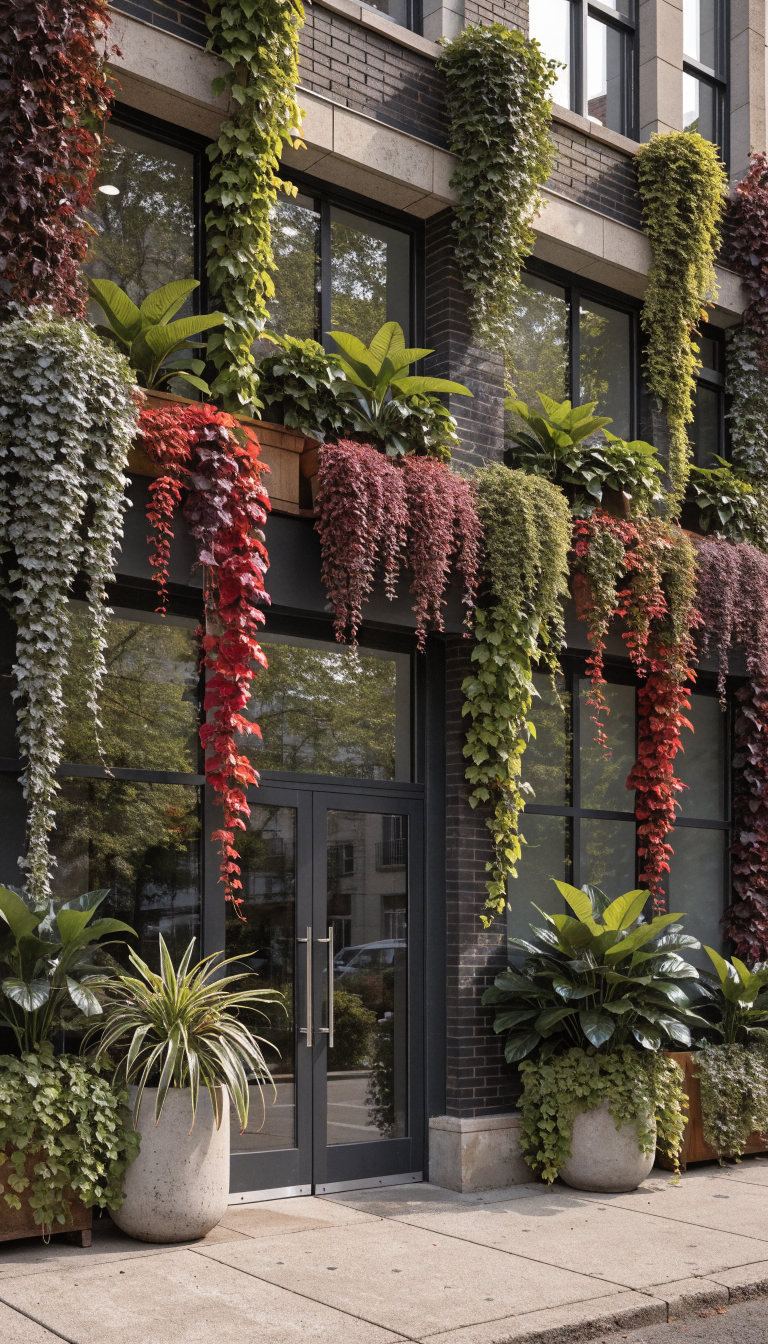
Plants aren’t just for Instagram anymore—they’re a legitimate facade game-changer. Strategic greenery softens hard architectural lines and makes your office feel approachable and fresh.
Start with window boxes if you’ve got street-facing windows. Fill them with seasonal blooms or trailing vines that cascade down your facade. No window ledges? No problem. Wall-mounted planters create the same effect and add dimension to flat surfaces.
Greenery Placement Strategy:
- Flank your entrance with large potted plants or small trees
- Use vertical planters on blank walls to create living art
- Install a simple trellis with climbing vines for year-round interest
- Add hanging baskets at varying heights for visual depth
The trick is choosing plants that actually survive in your climate. Seriously, nothing tanks curb appeal faster than dead plants. Opt for hardy varieties like boxwoods, ornamental grasses, or succulents depending on your zone.
Mix different textures and heights to create visual interest. Combine spiky plants with soft, flowing ones. Add some large-leafed specimens next to delicate ferns. This layering technique makes even a small space feel lush and intentional.
This works especially well for wellness-focused businesses, creative agencies, or any office trying to project an eco-conscious vibe. Plus, studies show that greenery actually makes people more likely to enter a business. Win-win.
3. Install Eye-Catching Modern Lighting Fixtures
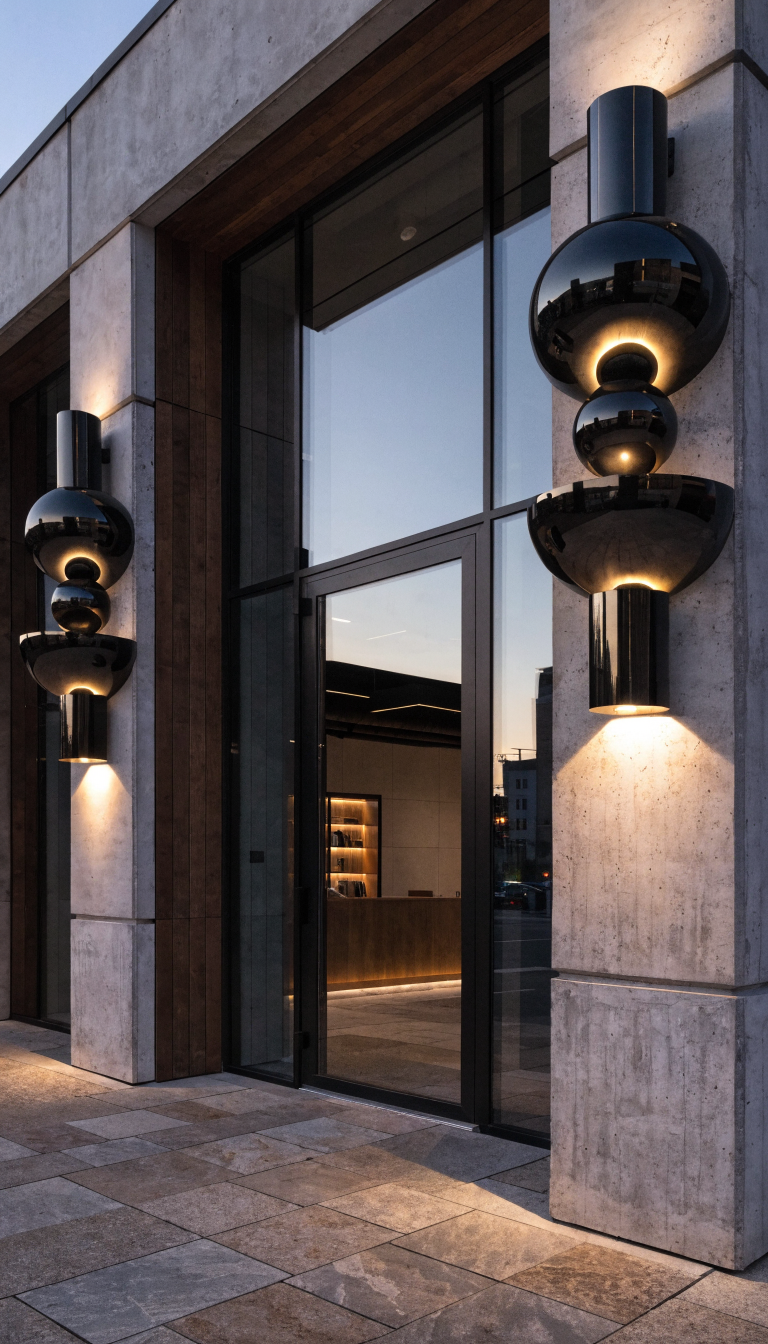
Here’s something most small offices completely overlook: your facade needs to look good after 5 PM too. The right lighting doesn’t just illuminate—it transforms your space into an architectural statement.
Ditch those builder-grade porch lights immediately. Instead, invest in statement sconces that complement your architectural style. Modern geometric fixtures work for contemporary spaces, while classic lanterns suit traditional buildings. The key is going slightly larger than you think you need—undersized fixtures just look cheap.
Lighting Layers to Consider:
- Uplighting to highlight architectural features or signage
- Path lighting to guide visitors safely to your entrance
- Accent lights on landscaping or textured walls
- Backlit signage for 24/7 brand visibility
Don’t sleep on the power of warm-toned LED bulbs. They create an inviting glow that’s way more appealing than harsh white light. Plus, they’ll save you money on your energy bill—a bonus your accountant will love.
Consider programmable lighting that adjusts throughout the evening. Start bright during business hours, then shift to ambient mood lighting after closing. This keeps your building looking alive and secure even when you’re not there.
Professional offices, retail spaces, and evening-friendly businesses like yoga studios or therapy practices benefit hugely from thoughtful exterior lighting. It’s an investment that literally pays dividends every single night.
4. Add Textural Contrast with Material Mixing
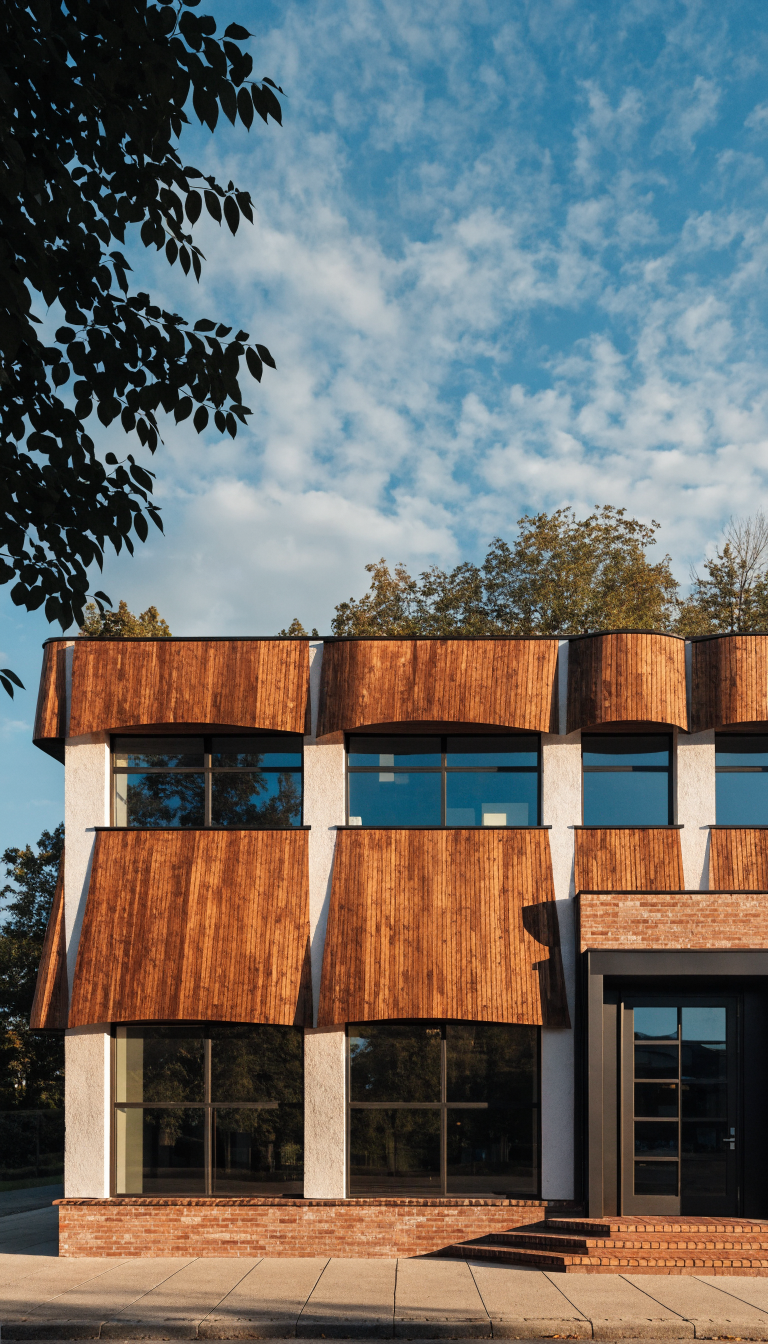
Want to know the secret that high-end architects use? They never stick to just one material. Material mixing creates visual interest that makes even small facades look professionally designed.
Look at your existing facade. Is it all brick? All siding? All stucco? Time to shake things up. Adding a contrasting material to even a small section—like around your door frame, on an accent wall, or as a horizontal band—creates instant architectural depth.
Winning Material Combinations:
- Wood slats against white painted brick
- Metal panels paired with natural stone
- Board-and-batten siding combined with stucco
- Reclaimed wood accent walls with modern glass
The magic happens when you mix textures thoughtfully. Rough against smooth. Matte beside glossy. Organic materials next to industrial ones. This contrast creates a dynamic look that photographs beautifully and sticks in people’s memories.
Start small if you’re nervous. A single feature wall using cedar planks or corrugated metal can completely change your building’s character without overwhelming your budget. Focus on high-visibility areas like your entrance or the corner that faces the street.
Keep proportions in mind—you want about 60-70% of one primary material with 30-40% of your accent material. Too much contrast gets chaotic. Too little? People won’t even notice.
This approach works brilliantly for tech startups, design firms, and modern professional offices that want to project innovation and creativity. It signals that you pay attention to details—which clients definitely notice.
5. Create Visual Flow with Cohesive Signage and Graphics
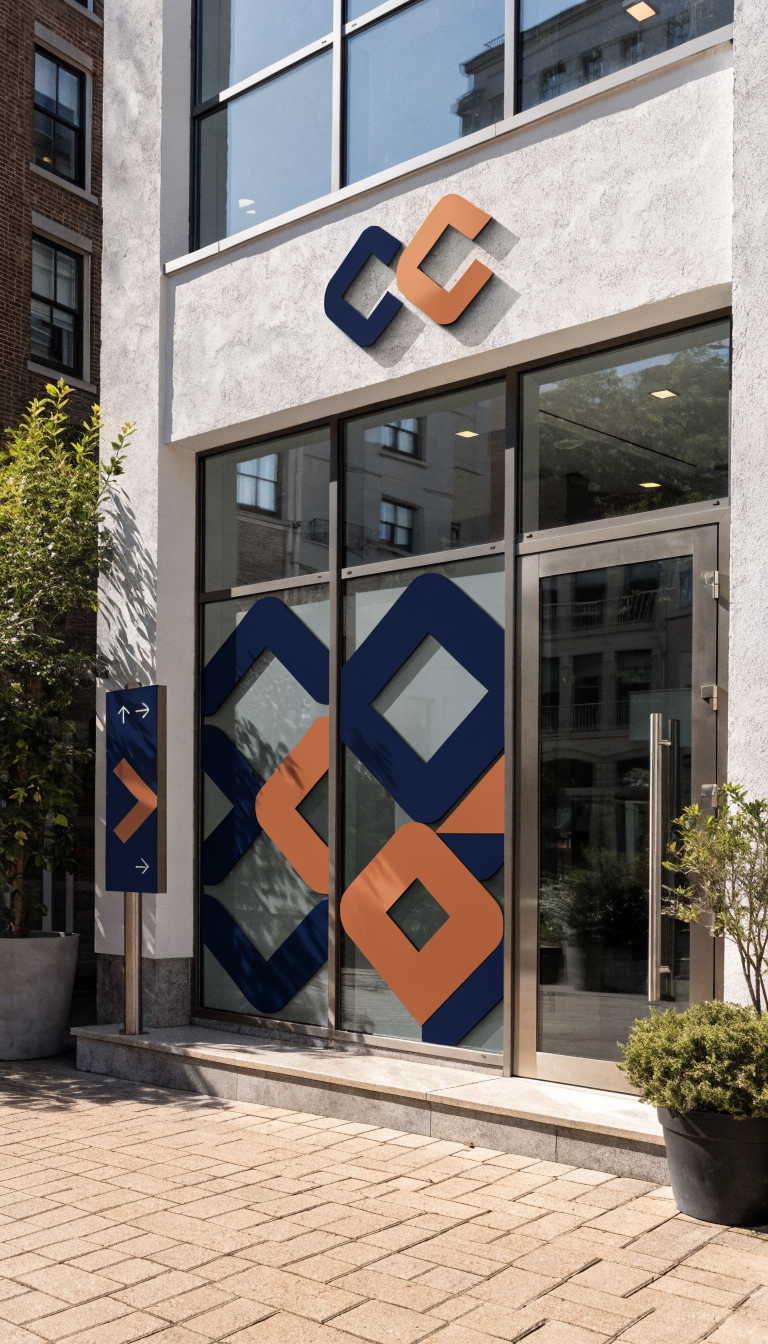
Your signage does way more than tell people your business name. The right signage system creates a visual journey from the street to your front door, building anticipation and professionalism along the way.
Think beyond the basic hanging sign. Consider how window decals, directional signs, and even pavement graphics can work together to create a cohesive brand experience. Each element should use your brand colors, fonts, and style consistently.
Signage Elements to Layer:
- Primary building signage with professional lighting
- Window graphics that showcase services or values
- Directional wayfinding for parking or alternative entrances
- Suite numbers or building identifiers in branded style
Here’s where most small offices mess up: they piece together signage over time without a plan, creating a visual hodgepodge that screams “disorganized.” Instead, map out your entire signage ecosystem at once, even if you implement it in phases.
Materials matter too. Cheap vinyl signs fade and peel—not the impression you want. Invest in durable materials like brushed aluminum, dimensional lettering, or high-quality painted wood. These hold up to weather and continue looking sharp year after year.
Don’t forget about scale. Your signage should be readable from where people actually are—whether that’s driving by at 25 mph or walking from the parking lot. Test visibility at different distances before finalizing sizes.
This strategy works for virtually any small office, but it’s especially crucial for businesses in multi-tenant buildings, medical offices, or service providers where clients need clear guidance. FYI, good signage reduces confused phone calls too.
6. Frame Your Entrance with Architectural Details
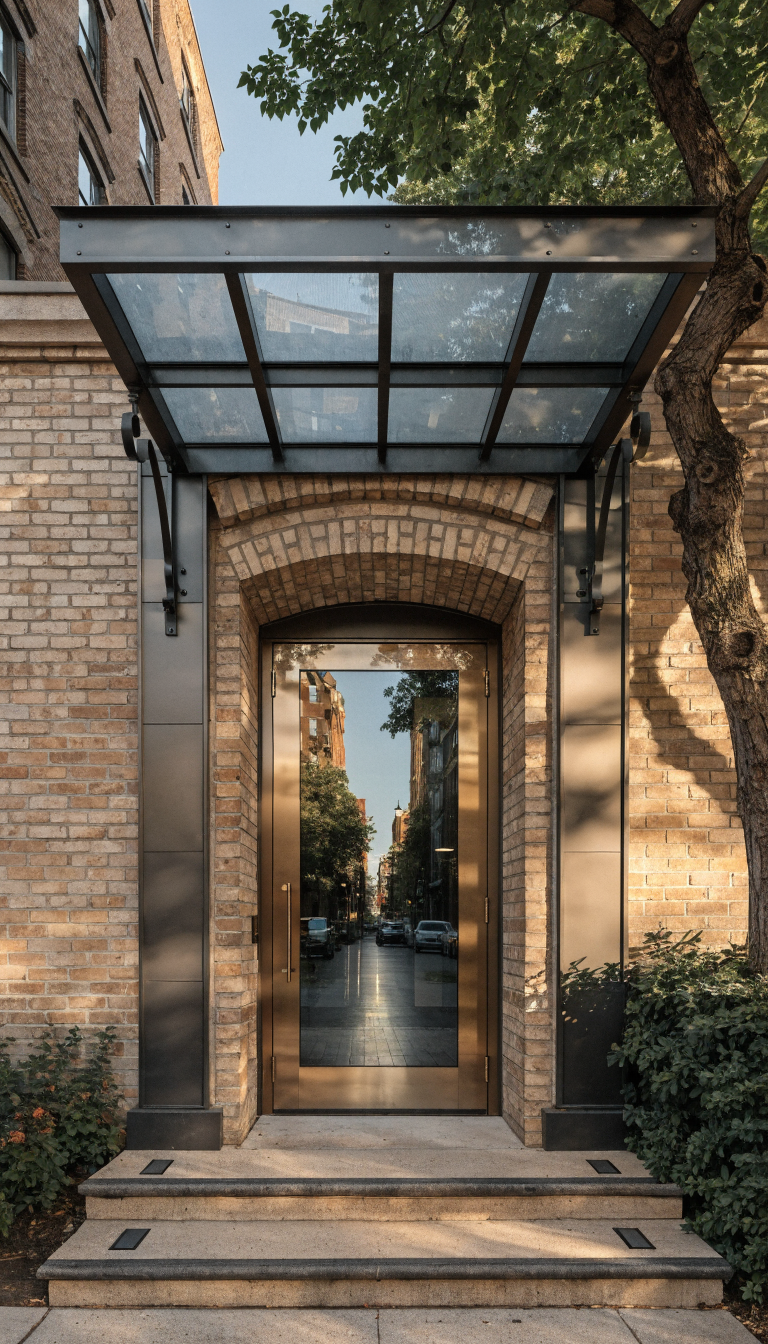
Your entrance deserves a frame that makes it feel important. Architectural details around your doorway create a focal point that draws the eye and elevates your entire facade from basic to boutique.
Think of this as creating a mini-entrance pavilion. An overhang or awning provides practical weather protection while adding serious visual weight. Pair it with columns, pilasters, or decorative brackets, and suddenly your humble office looks like it belongs in an architecture magazine.
Entrance Enhancement Options:
- A modern metal awning with integrated lighting
- Classic columns or pilasters in complementary materials
- A pergola structure for a softer, more organic feel
- Decorative molding or trim that emphasizes the doorway
The beauty of this approach is that you’re adding architectural interest without changing your building’s footprint. Most of these elements attach to existing structures, making them relatively straightforward installations that don’t require major permits.
Choose details that match your building’s existing style or intentionally contrast for a modern twist. A sleek metal canopy on a brick building? That’s the kind of unexpected pairing that gets people talking. Traditional columns on a modern box? Sometimes classic elegance is exactly what you need.
Don’t forget the underside of overhangs—this is prime real estate for adding personality. Paint it a bold color, install decorative beadboard, or add recessed lighting. People naturally look up as they approach your door, so give them something interesting to see.
Consider how these elements cast shadows throughout the day. Good architectural details create dynamic shadow patterns that change with the sun, adding movement and life to your facade. It’s like getting free decoration that renews itself every day.
This works beautifully for established professional practices, boutique agencies, or any business that wants to project stability and attention to quality. It’s a subtle signal that you care about craftsmanship—a quality clients value.
Conclusion
Your small office facade doesn’t need a massive budget to make a big impact—it just needs thoughtful design choices that work together. Whether you start with a statement door, layer in some greenery, or frame your entrance with architectural details, each of these ideas creates immediate visual interest that attracts clients and projects professionalism. Pick one or two to start, and watch how quickly people’s perception of your business transforms.
0 Comments