Your cramped office space doesn’t have to feel like a glorified closet anymore. These design approaches will transform your workspace into a place you actually want to spend time in, proving that square footage is just a number when you’ve got the right strategy.
1. The Minimalist Command Center
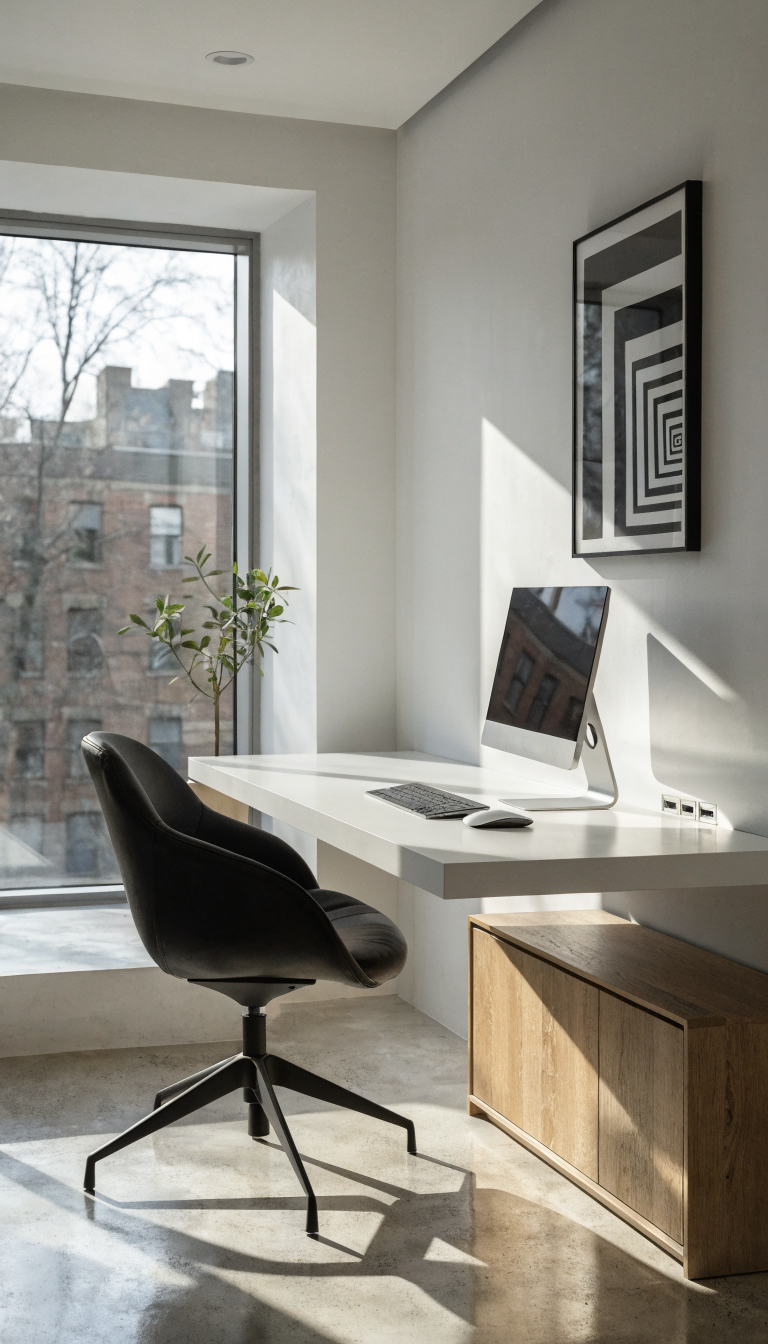
Less really is more when you’re working with limited square footage. A minimalist small office design strips away the clutter and focuses on what actually matters: a killer desk setup, strategic storage, and enough breathing room to think clearly.
The secret here is intentional furniture selection. Instead of cramming in everything you think you might need, choose pieces that pull double duty. A floating desk with built-in cable management? Yes, please. A sleek credenza that hides your printer and doubles as a surface for your coffee? Absolutely.
Essential Elements
- Wall-mounted desk to maximize floor space
- Hidden storage solutions with clean lines
- Neutral color palette (whites, grays, light woods)
- Single statement piece like a modern desk lamp or chair
- Wireless tech to eliminate cord chaos
The beauty of this approach is how it tricks your brain into feeling more spacious. When you’re not visually overwhelmed by stuff, even a tiny office feels like a sanctuary. Plus, cleaning takes about five minutes, which means more time for actual work.
This design works especially well for creative professionals, consultants, or anyone who needs a distraction-free zone. The lack of visual noise helps you focus on what’s in front of you instead of that stack of papers you’ve been meaning to file since 2019.
2. The Biophilic Oasis
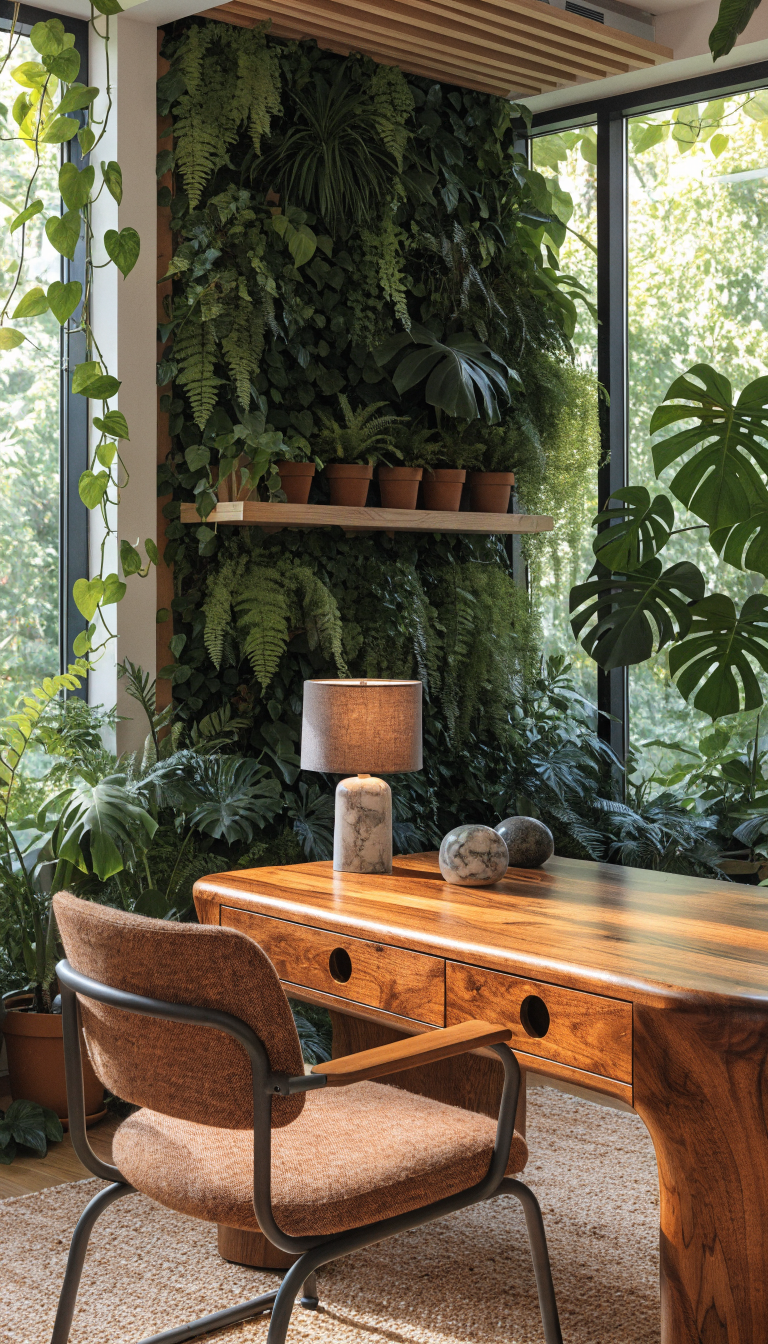
Want to feel less like you’re trapped in a box and more like you’re working in a garden pavilion? Welcome to biophilic design, where nature becomes your coworker. Trust me, adding plants to your workspace isn’t just Instagram-worthy—it’s scientifically proven to reduce stress and boost productivity.
This design style brings the outdoors in through strategic use of greenery, natural materials, and organic shapes. We’re talking real plants here (sorry, fake succulents don’t count for the psychological benefits), along with wood elements, natural light optimization, and earth-toned accents.
Key Components
- Multiple plants at varying heights (desk, floor, hanging)
- Natural wood desk or shelving
- Large window or supplemental full-spectrum lighting
- Stone or ceramic accessories
- Nature-inspired artwork or photography
The magic happens when you layer different types of plants. A tall fiddle leaf fig in the corner, a pothos trailing from a shelf, and a small snake plant on your desk creates visual interest at multiple levels. Your eyes naturally move around the space, which actually helps prevent that glazed-over feeling you get after staring at a screen for hours.
Here’s the practical part: start with low-maintenance plants if you’re worried about becoming a plant parent. Snake plants, ZZ plants, and pothos are basically indestructible and thrive on neglect. Position them near your natural light source, and you’re golden.
This design absolutely shines for anyone spending long hours at their desk. The improved air quality is a bonus, but the real win is how much more alive your space feels. FYI, clients and video call participants always comment on offices with great plant game.
3. The Tech-Forward Smart Office
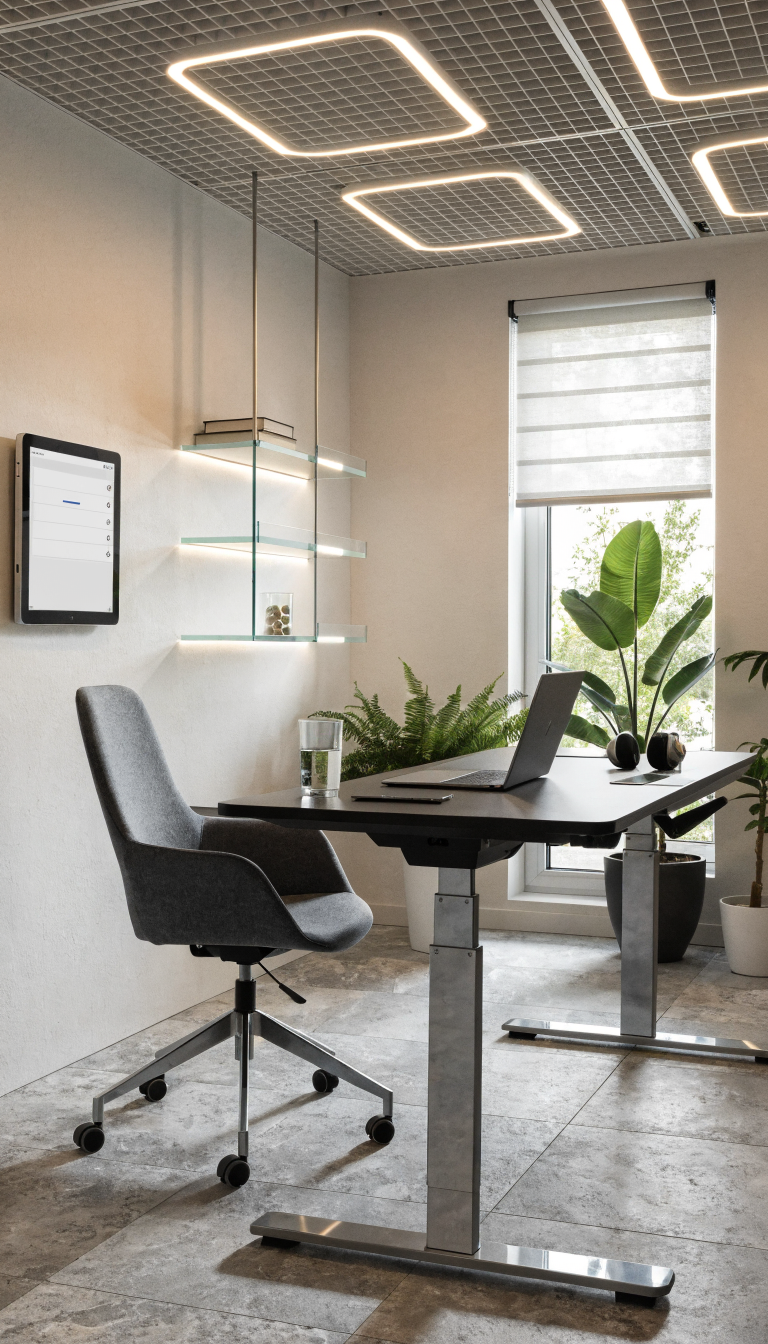
If you’re someone who gets genuinely excited about automation and gadgets, this design approach is your love language. The smart office isn’t about cramming in every tech toy you can find—it’s about using technology to make your small space work harder and smarter.
Think integrated solutions that respond to your needs without you lifting a finger. Lights that adjust based on time of day, a desk that reminds you to stand, cable management that actually manages cables (novel concept, right?), and storage that maximizes every cubic inch of space.
Smart Features to Include
- Adjustable standing desk with programmable heights
- Smart lighting system (color temperature and brightness control)
- Wireless charging stations built into furniture
- Voice-activated assistant for hands-free tasks
- Digital organization systems replacing physical files
- Monitor arms for flexible screen positioning
The standing desk alone is a game-changer for small offices. When you can adjust your work surface height, you’re essentially getting two workspaces in one footprint. Your back will thank you, and you’ll actually use the standing function when it’s programmed to remind you.
Cable management in a tech-heavy office is non-negotiable. Seriously, invest in under-desk cable trays, velcro straps, and wireless alternatives wherever possible. Nothing ruins a sleek office aesthetic faster than a rat’s nest of power cords.
Here’s where this approach really delivers: automation saves you mental energy for actual work. When your lights automatically shift to warmer tones in the afternoon or your desk nudges you to stand after 45 minutes of sitting, you’re not using precious brain power on these decisions. It just happens.
Perfect for tech enthusiasts, remote workers, or anyone juggling multiple devices. The initial setup takes some time and investment, but the daily efficiency gains add up fast.
4. The Multifunctional Marvel
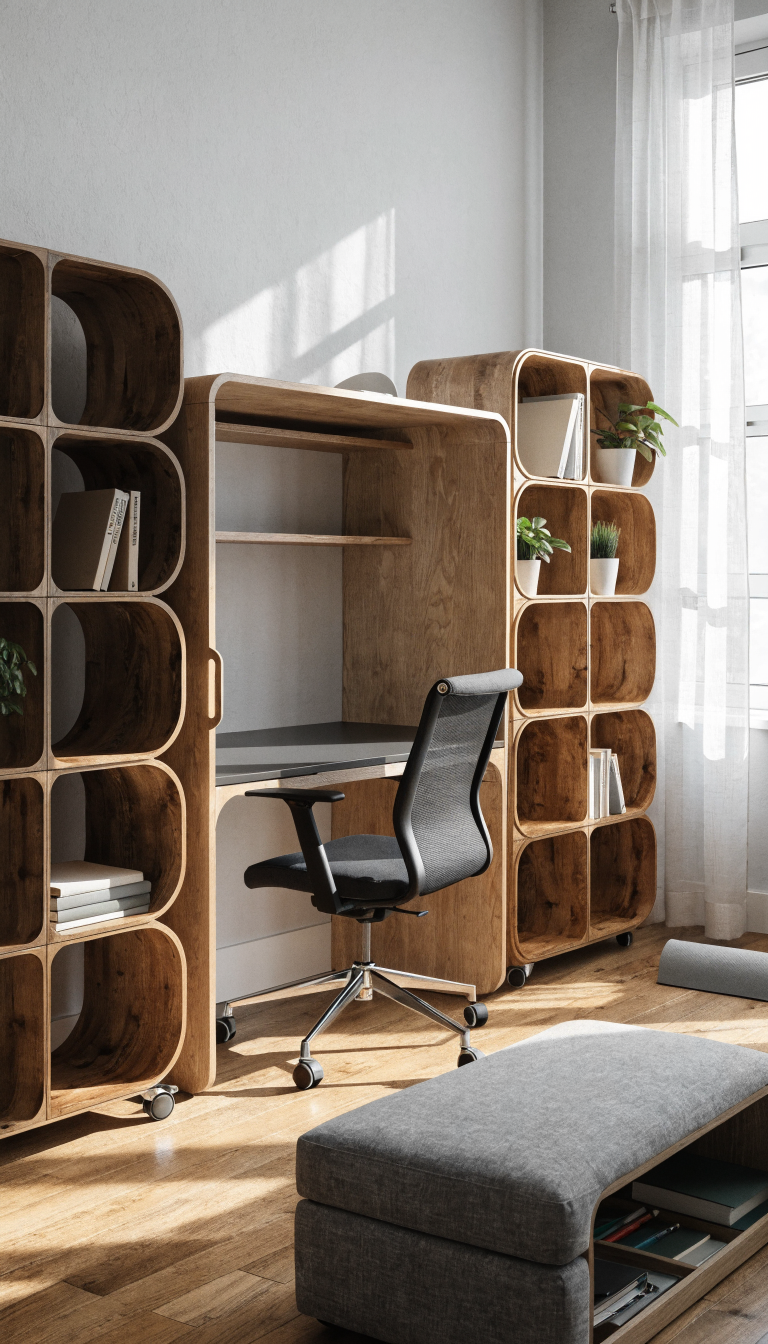
This design strategy is for everyone who needs their office to transform into a guest room, yoga studio, or creative workshop at a moment’s notice. The multifunctional office embraces flexibility as its core principle, using furniture and layouts that adapt to whatever you’re doing.
The secret sauce is modular furniture and strategic spatial planning. We’re talking murphy desks that fold up against the wall, ottomans with hidden storage, and shelving units on wheels that can reconfigure your entire layout in minutes. Your space literally shifts to accommodate different activities.
Flexible Design Elements
- Wall-mounted fold-down desk
- Rolling storage carts instead of fixed cabinets
- Convertible furniture (desk to dining table, etc.)
- Room dividers or curtains for zone creation
- Stackable seating for when you need extra chairs
- Magnetic or pegboard walls for reconfigurable organization
The fold-down desk is honestly genius for small spaces. When you’re done working, you literally close up shop and reclaim your room. Attach it at the right height, and it can even pull double duty as a standing desk or serving station during parties.
Storage on wheels changes everything about how you use space. Need to clear the floor for a workout? Roll that cart into the closet. Want to work in a different corner today? Your supplies come with you. This kind of spatial fluidity prevents that trapped feeling small offices can create.
The pegboard wall deserves special mention. You can rearrange your tools, supplies, and accessories whenever the mood strikes, and everything stays visible and accessible. Plus, it looks way cooler than a bulletin board covered in random sticky notes.
This approach works brilliantly for apartment dwellers, people with side hustles, or anyone whose work needs change throughout the day. The ability to transform your space on demand means you’re never locked into one configuration that doesn’t quite work.
5. The Scandinavian Simplicity Suite
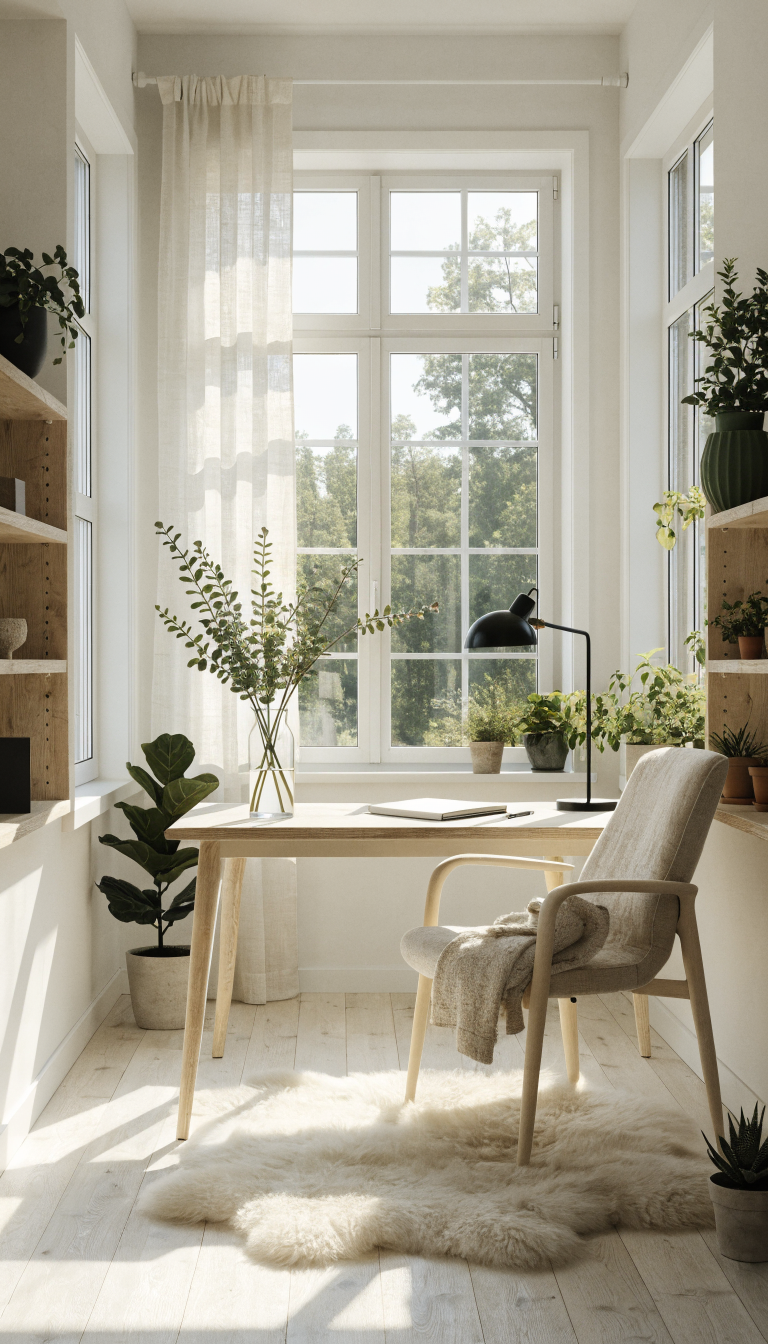
Clean lines, light woods, and that effortless “hygge” vibe—Scandinavian design makes small offices feel like peaceful retreats instead of cramped boxes. This style is all about purposeful simplicity with a warm, lived-in quality that keeps things from feeling sterile.
The color palette is your foundation here: lots of white and light gray, accented with pale wood tones and occasional black details for contrast. But here’s what separates Scandi design from just painting everything white—the thoughtful layering of textures and the emphasis on natural light.
Scandi Design Essentials
- Light wood desk and shelving (birch, ash, or oak)
- White or light gray walls to maximize brightness
- Sheepskin or wool textiles for warmth
- Minimalist desk accessories in matte black
- Task lighting with warm LED bulbs
- One or two plants in simple ceramic pots
- Open shelving with curated, functional items
The magic happens in the details. A chunky knit throw draped over your chair, a simple ceramic mug for your pens, a small sheepskin rug under your feet—these tactile elements add warmth without visual clutter. You get cozy without sacrificing the clean aesthetic.
Natural light is huge in Scandinavian design, which makes sense when you consider the long, dark winters up north. Position your desk near a window if possible, keep window treatments sheer or minimal, and supplement with warm-toned task lighting that mimics natural light. The goal is to fight the cave-like feeling that small spaces can develop.
Here’s a pro tip: embrace negative space. In Scandi design, what you don’t put in the room is just as important as what you do. That empty wall? It’s not missing something—it’s giving your eyes a place to rest. That clear desktop? It’s not boring—it’s intentional.
The functionality comes from smart storage solutions that hide behind those clean facades. Built-in drawers, boxes in matching neutral tones, and furniture with concealed storage keep everything you need close without cluttering your sightlines.
This design style is perfect for anyone who finds visual clutter stressful, people working in naturally dark spaces who need all the brightness they can get, or folks who want a timeless look that won’t feel dated in three years. IMO, it’s also the easiest style to maintain—when everything has its place and there’s not much to dust, keeping your office looking magazine-ready takes minimal effort.
Conclusion
Your small office has serious potential, no matter which design direction speaks to you. Pick the approach that matches your work style, start with one or two key changes, and watch how quickly your space transforms from “I guess this works” to “I actually love working here.” You’ve got this!
0 Comments