Your cramped spare bedroom doesn’t have to feel like a closet with a desk shoved in it. These smart design tricks will transform your tiny workspace into a room that feels twice its actual size—no sledgehammer required.
Whether you’re working with a glorified nook or an actual small bedroom, these ideas prove that square footage is just a number. Let’s make your WFH setup feel like the spacious home office of your dreams.
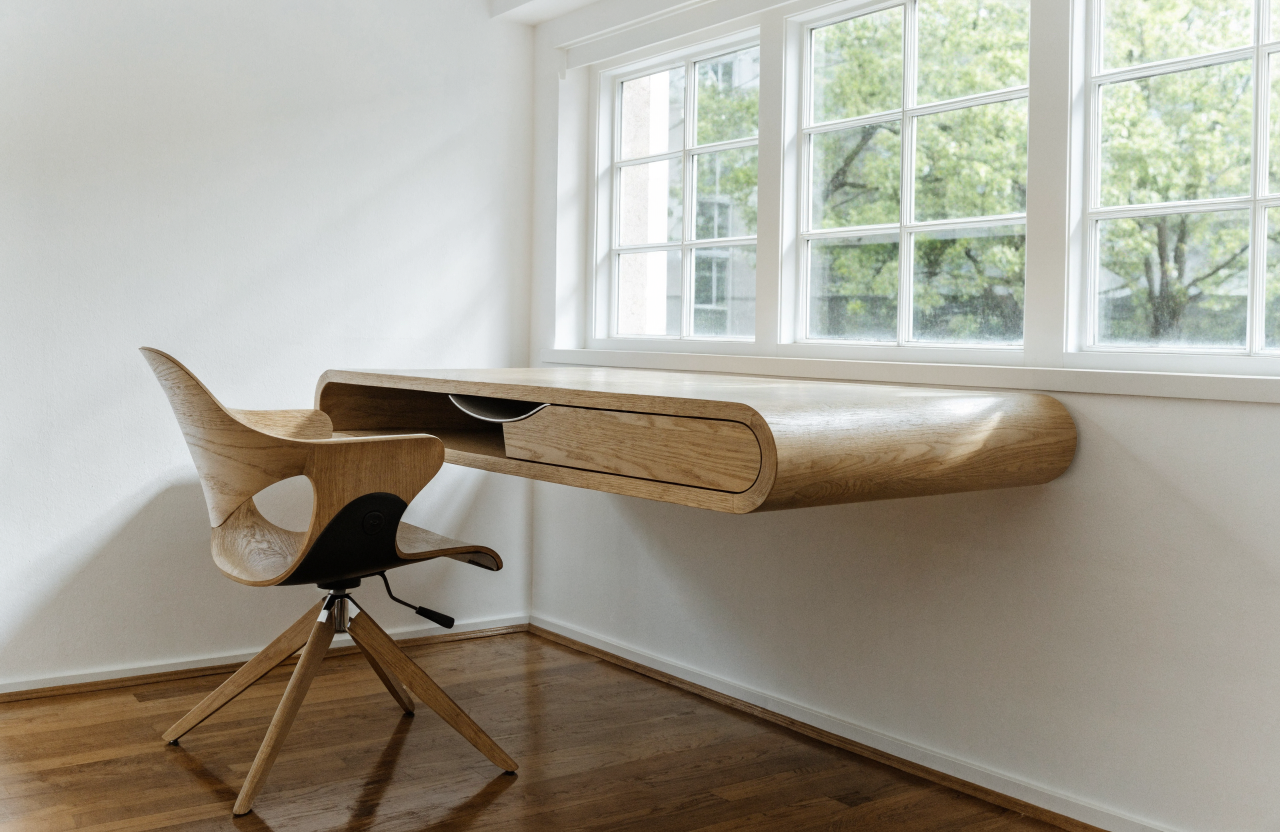
1. Float Your Desk Away From the Walls
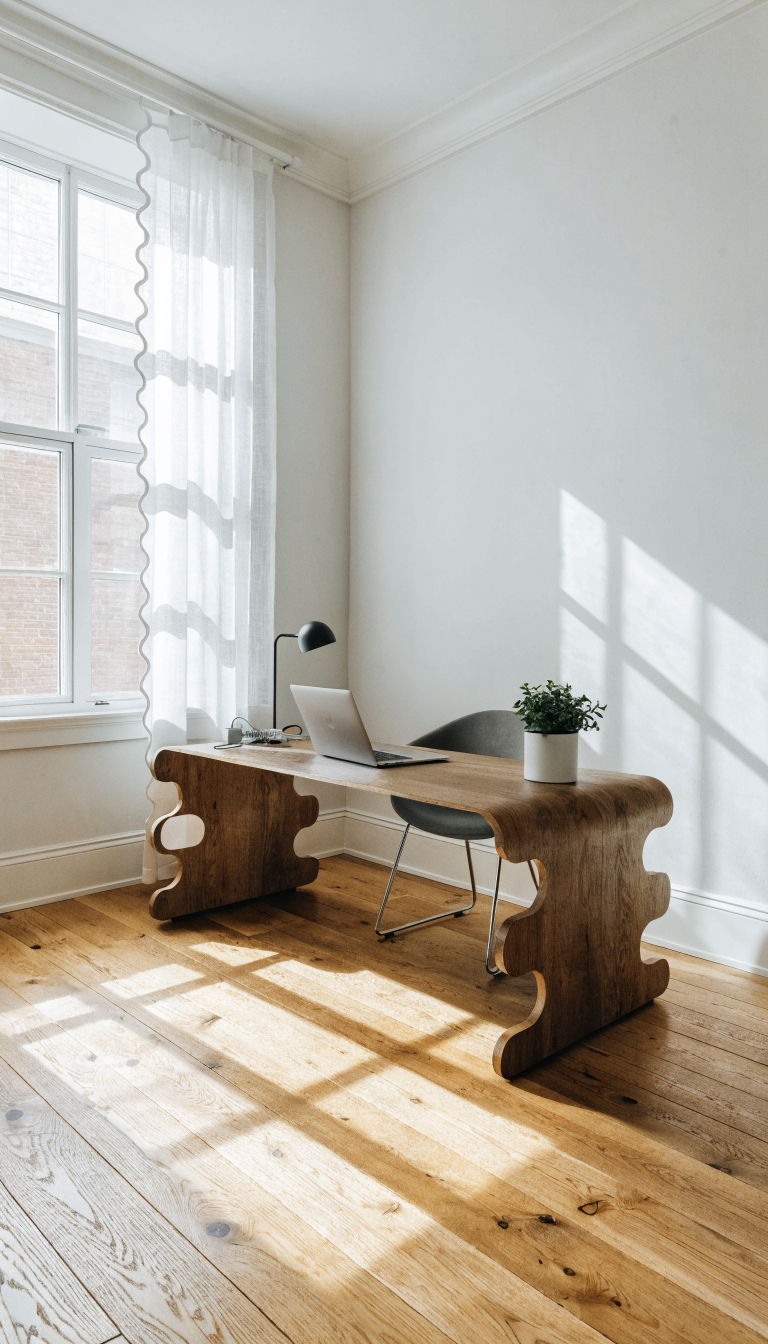
I know what you’re thinking—shouldn’t I push everything against the walls to save space? Actually, that’s the mistake everyone makes. Floating your desk creates the illusion of more floor space and gives your room breathing room.
Position your desk perpendicular to a wall or even in the center of the room if you’ve got enough space. This creates zones in your office and tricks your brain into thinking the room is larger than it actually is.
Why This Works:
- Creates visual flow around furniture instead of blocking it
- Defines separate areas for work and storage
- Makes the room feel intentionally designed rather than cramped
The key here is choosing a desk that’s scaled appropriately. A slim console table or a narrow writing desk (around 24-30 inches deep) works better than a massive executive desk that dominates the space.
Bonus points if you pick a desk with legs you can see through—like hairpin legs or a glass top. This adds to that airy, spacious vibe you’re going for.
2. Go Vertical With Wall-Mounted Everything
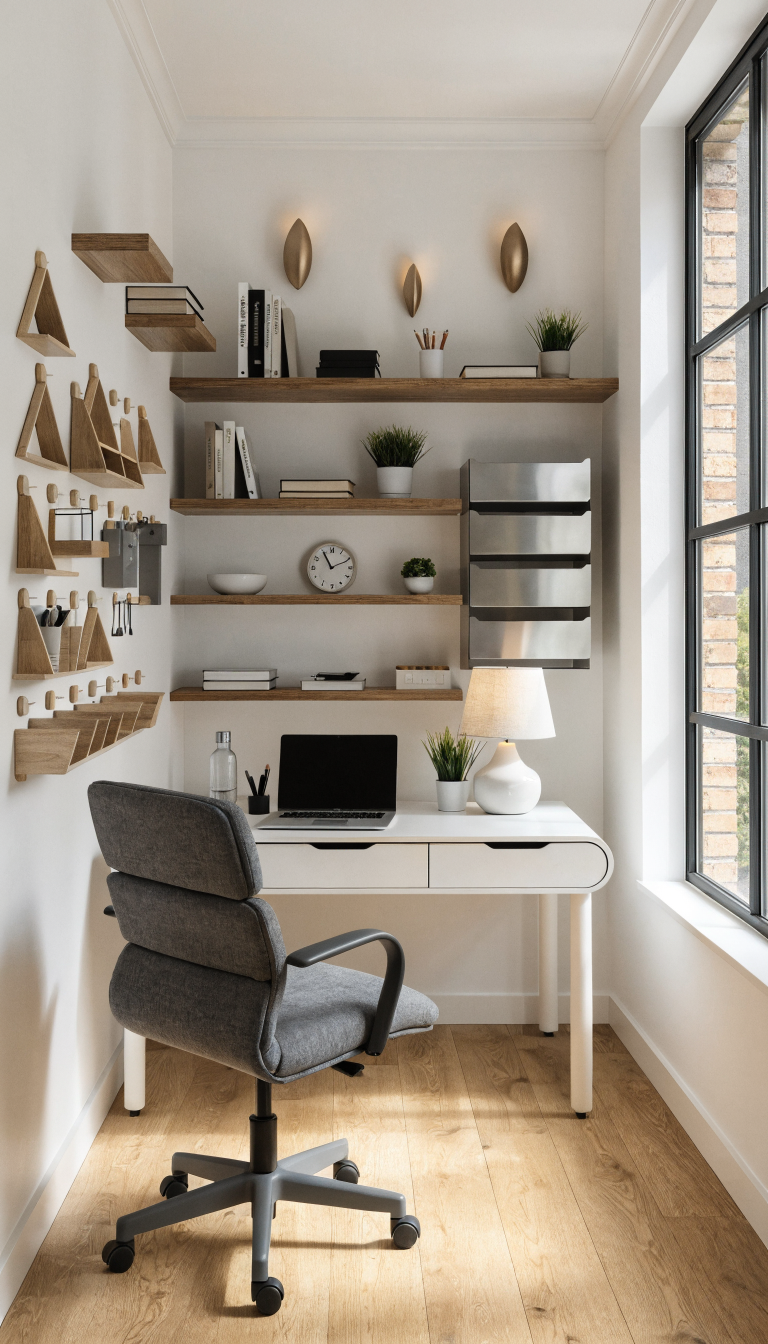
When you’re short on floor space, the walls become your best friend. Seriously, mount everything you possibly can to free up precious square footage below.
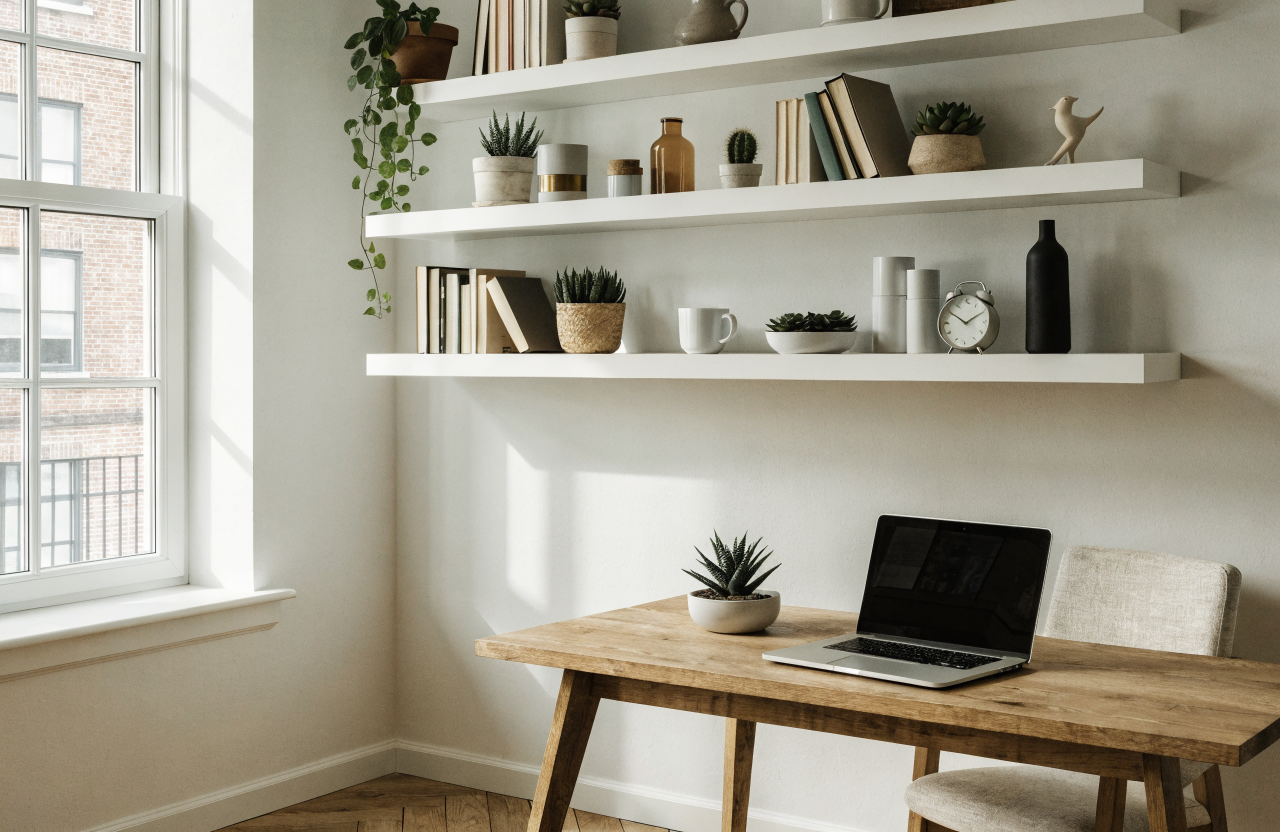
Start with floating shelves above your desk for books, plants, and office supplies. Add a pegboard system for organizing tools and accessories. Even your lighting can go up with wall-mounted sconces instead of floor lamps.
Essential Wall-Mounted Items:
- Floating shelves in varying lengths for visual interest
- Wall-mounted file organizers to keep papers off your desk
- Pegboard or grid panels for customizable storage
- Swing-arm wall lamps that don’t take up desk space
- Magnetic boards or cork boards for notes and inspiration
The beauty of vertical storage is that it draws the eye upward, making your ceiling feel higher and your room feel more spacious. Plus, keeping your floor clear makes the room exponentially easier to clean.
Pro tip: Paint your shelves the same color as your walls to make them visually recede and feel less cluttered.
3. Embrace the Power of Mirrors (Strategically)
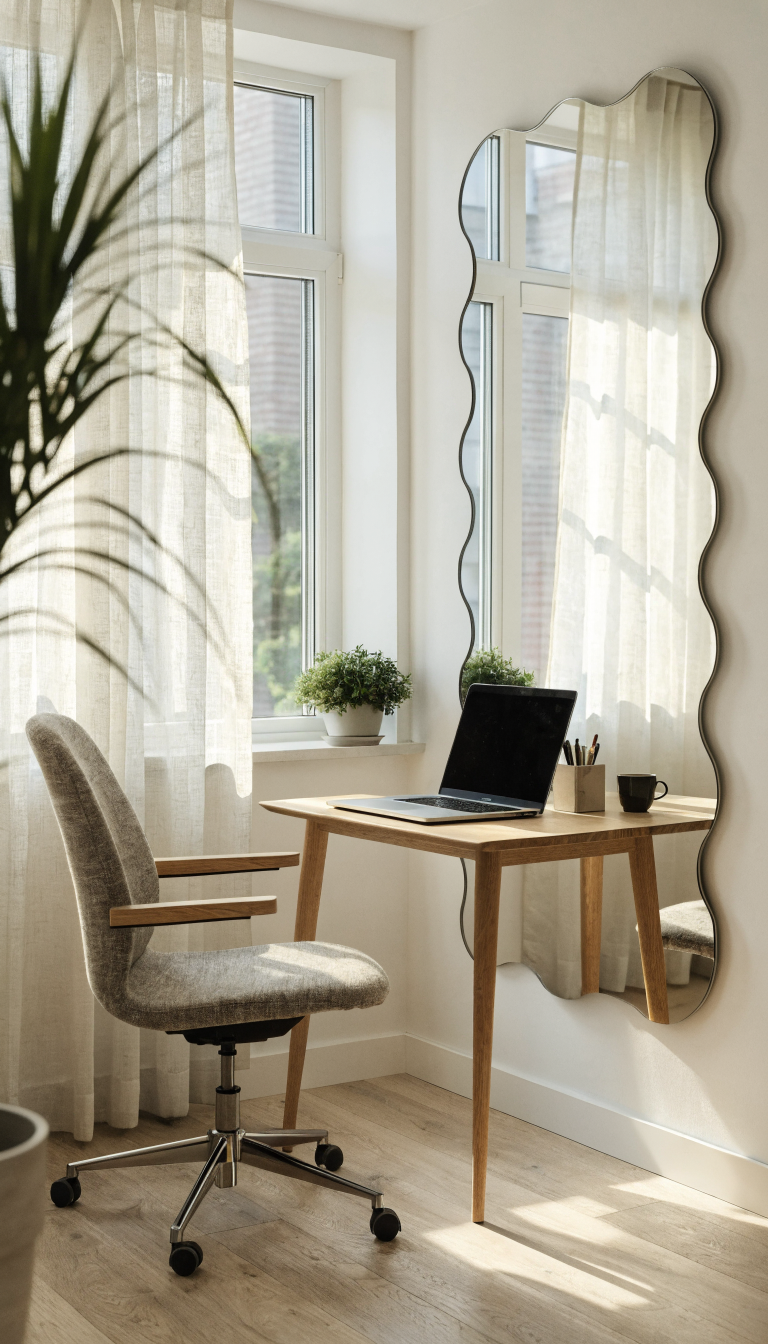
This is interior design 101, but mirrors genuinely double your visual space. The trick is placing them where they’ll reflect light and interesting views—not where you’ll be staring at yourself during Zoom calls all day.
Position a large mirror opposite a window to bounce natural light around the room. Or lean an oversized floor mirror against a wall to add depth without drilling holes.
Avoid placing mirrors directly behind your desk where they’ll be in your video call background. Nobody needs to see two of you in every meeting, trust me.
Mirror Placement Tips:
- Opposite windows to maximize natural light
- On narrow walls to make them appear wider
- Above storage furniture to create the illusion of taller ceilings
If you’re worried about mirrors feeling too fancy or feminine for a home office, opt for simple frames in black, wood, or brass. They’ll give you all the space-expanding benefits without the glam.
4. Choose Furniture That Does Double Duty
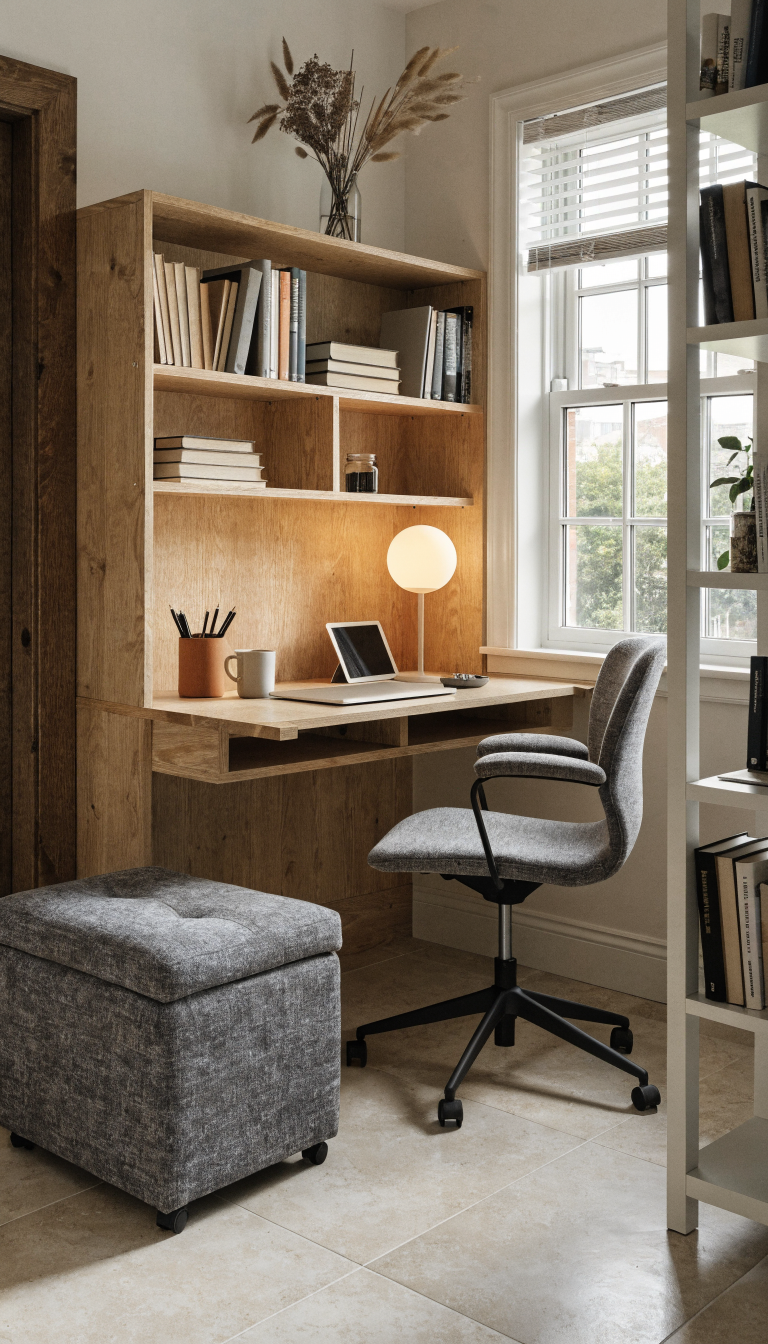
In a small home office, every piece of furniture needs to earn its keep. Say goodbye to single-purpose items and hello to multitasking pieces that work harder than you do.
A storage ottoman becomes seating for guests and a place to hide office supplies. A desk with built-in filing drawers eliminates the need for a separate filing cabinet. A bookshelf can act as a room divider if your office shares space with your bedroom.
Smart Dual-Purpose Pieces:
- Murphy desk that folds up when not in use
- Storage bench for seating and hidden storage
- Nesting tables that expand when you need extra surface space
- Bookshelf room divider for defining zones
- File cabinet topped with a cushion for extra seating
The goal is to keep your room functional without letting furniture overwhelm the space. Each piece should serve at least two purposes, or it doesn’t deserve a spot in your tiny office.
FYI, this doesn’t mean you need to buy all new furniture. Get creative with what you already own—stacking vintage suitcases can become a side table with storage, for example.
5. Paint an Accent Wall (But Make It the Right One)
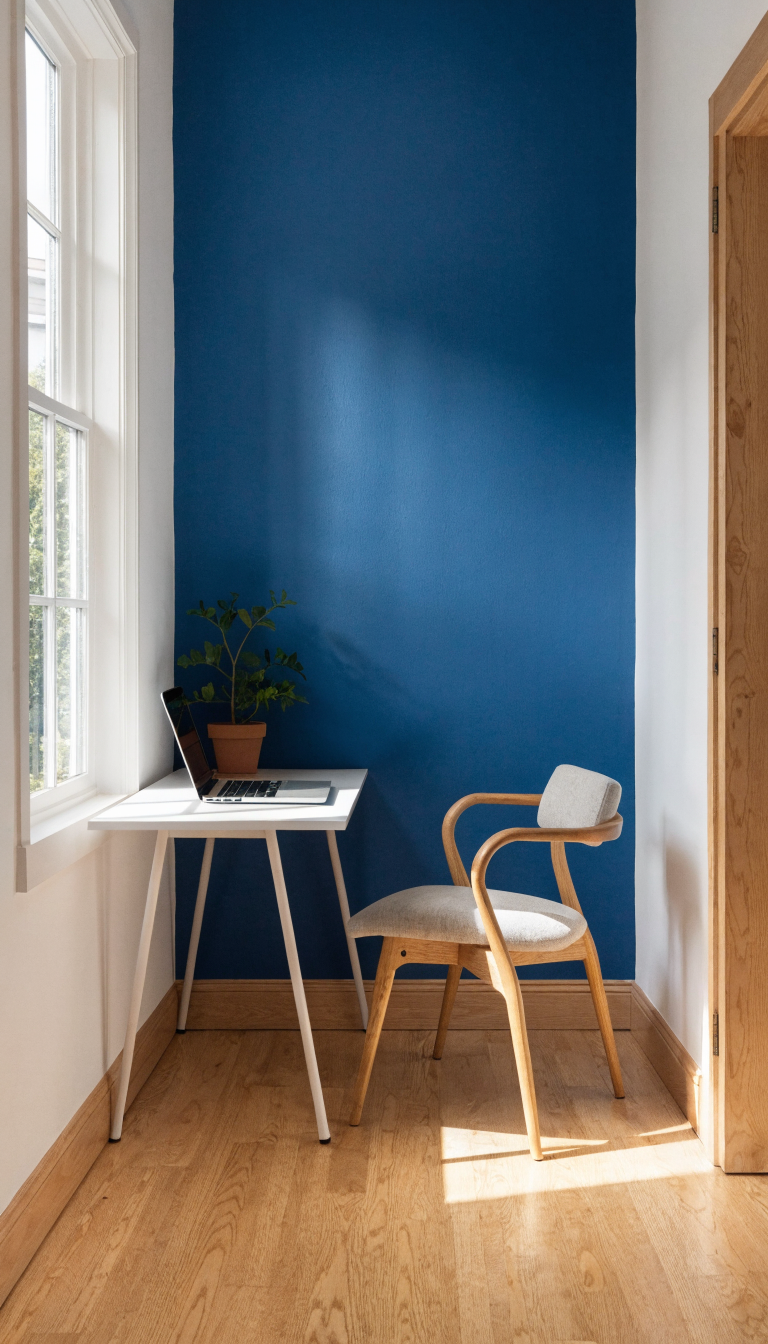
Want to add personality without making your room feel smaller? A single accent wall creates depth and dimension in ways that painting all four walls the same color never could.
The secret is choosing the wall farthest from the door as your accent wall. This draws the eye forward and makes the room feel longer. Go bold with a deep, saturated color or try a subtle textured wallpaper.
Contrary to popular belief, dark colors don’t always make rooms feel smaller. A rich navy, forest green, or even charcoal can add depth and make the walls feel like they’re receding.
Best Accent Wall Options:
- The wall behind your desk for Zoom call appeal
- Deep jewel tones like emerald or sapphire
- Textured wallpaper with subtle patterns
- Wood slat walls for added dimension
- Peel-and-stick options if you’re renting
Keep the other three walls light and bright to maintain that airy feeling. The contrast between the accent wall and the lighter walls actually makes the room feel more spacious, not less.
6. Let There Be Layers of Light
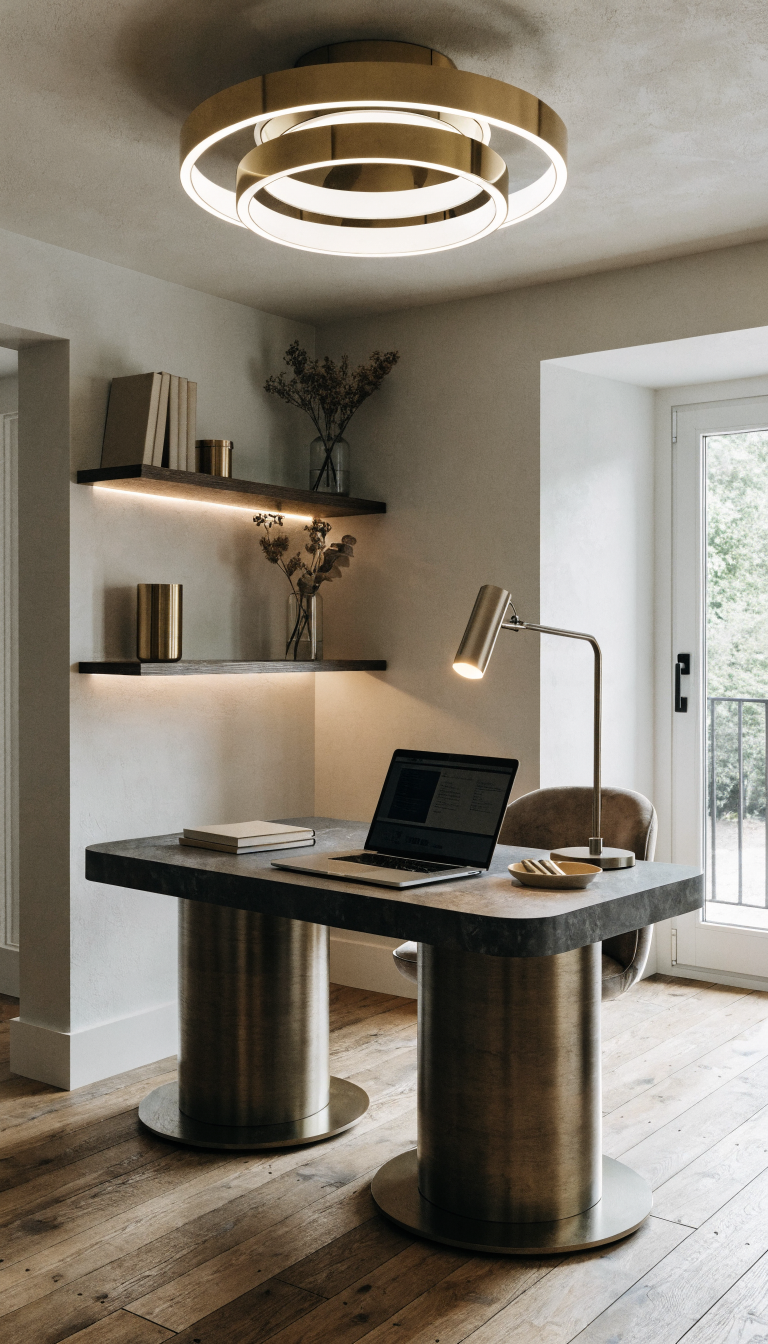
One sad ceiling light isn’t going to cut it in a small home office. You need multiple light sources at different heights to eliminate shadows and make the space feel bigger.
Start with your overhead lighting, then add a desk lamp for task lighting, and finish with ambient lighting like LED strips or a small table lamp in a corner. This layered approach creates depth and makes every corner of your room visible and usable.
Lighting Layers to Include:
- Overhead fixture for general illumination
- Desk lamp with adjustable arm for focused work
- Ambient lighting like LED strips under shelves
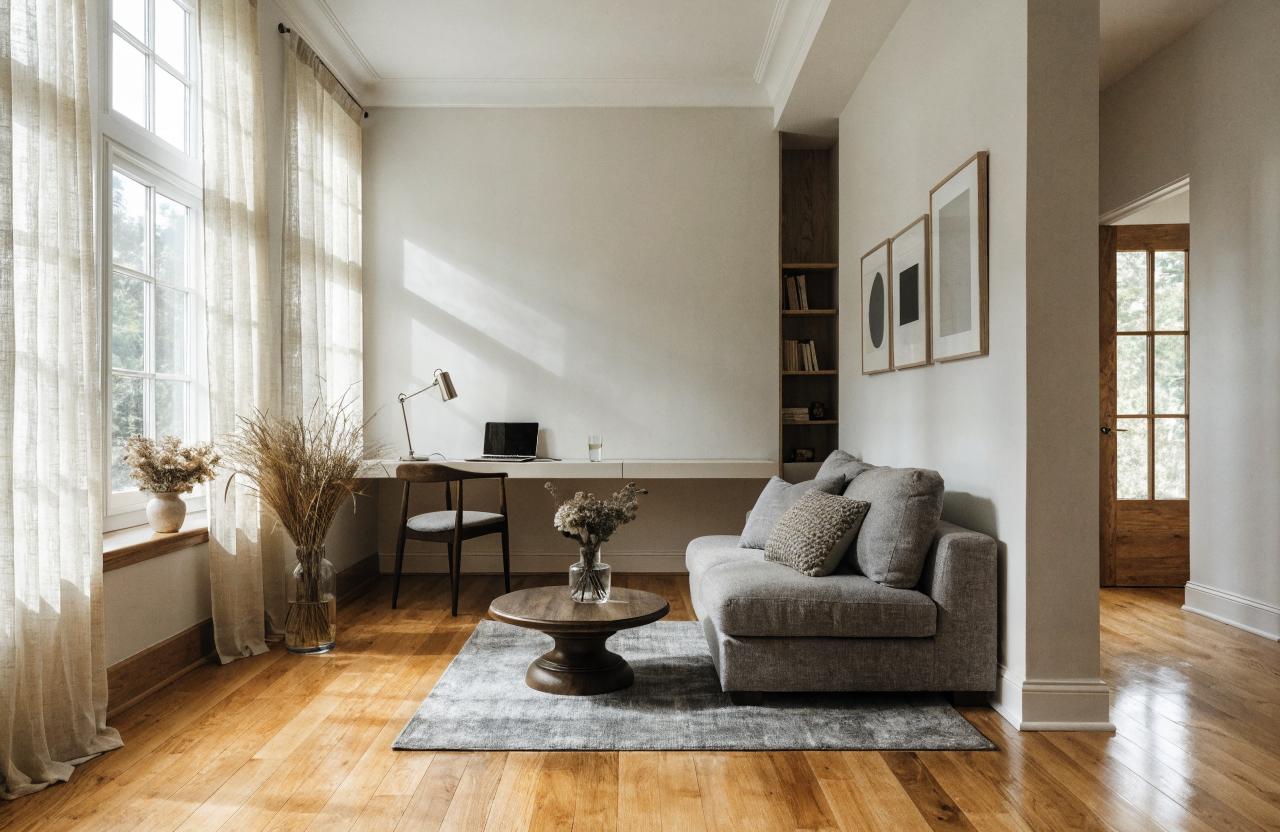
- Natural light maximized with sheer curtains
Dark corners make rooms feel cramped and cave-like. By illuminating every area, you create the illusion that your office extends further than it actually does.
Swap out any warm yellow bulbs for daylight-balanced LEDs (around 5000K). They make colors look truer and spaces feel more open and energizing—perfect for productivity.
7. Keep Your Color Palette Light and Cohesive
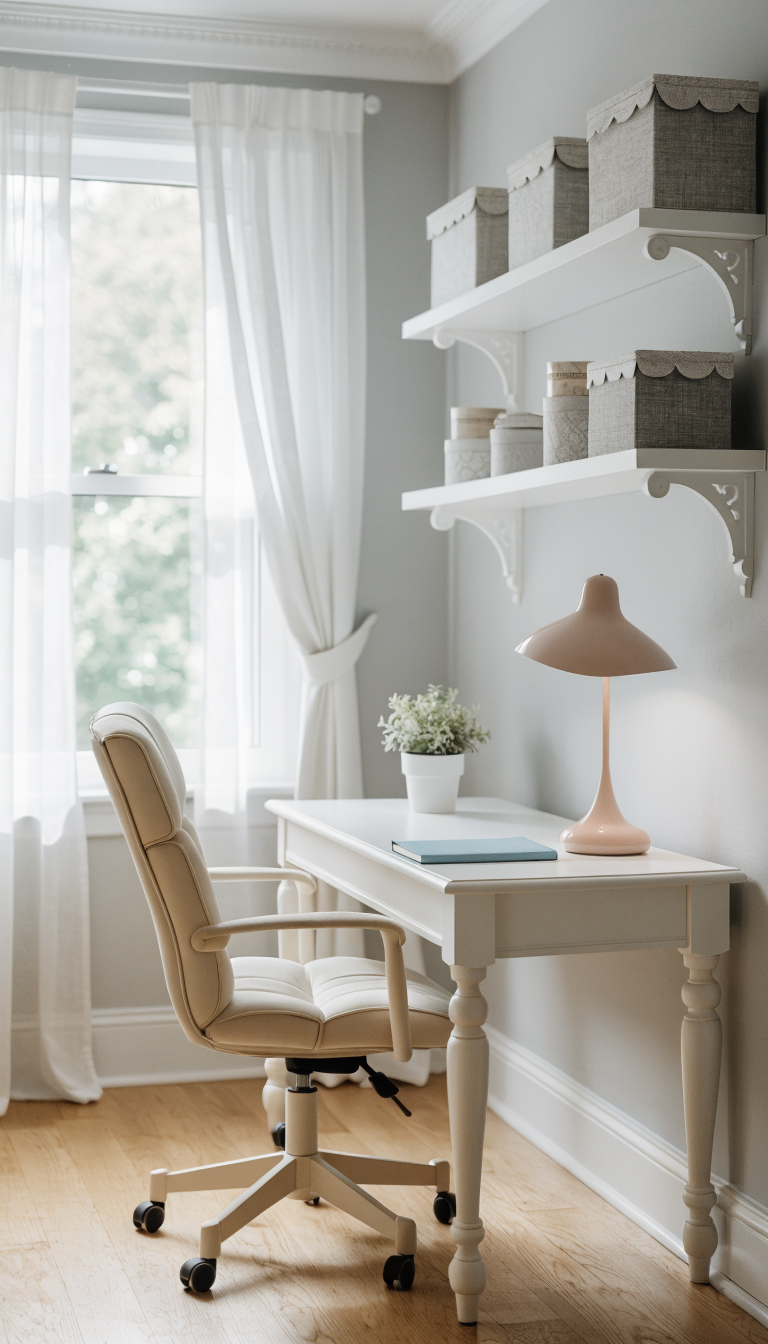
I’m not saying your entire office needs to be stark white (unless that’s your vibe). But sticking to a light, cohesive color scheme prevents visual clutter and makes your small room feel significantly larger.
Choose 2-3 main colors and stick with them throughout the space. Whites, creams, light grays, and soft pastels work beautifully as base colors. Then add pops of color through accessories that you can easily swap out.
When everything coordinates, your eye flows smoothly around the room instead of getting stuck on jarring color combinations. This visual continuity tricks your brain into perceiving more space.
Color Scheme Ideas:
- Scandinavian: White, gray, and natural wood tones
- Coastal: Soft blues, whites, and sandy beiges
- Minimalist: Black, white, and one accent color
- Earthy: Cream, terracotta, and sage green
This doesn’t mean your office has to be boring. Add personality through artwork, plants, and decorative objects—just keep them within your chosen color family.
IMO, this is where a lot of people go wrong. They think maximalism works in small spaces, but unless you’re a professional designer, it usually just makes things feel chaotic and cramped.
8. Create the Illusion of Height With Vertical Lines
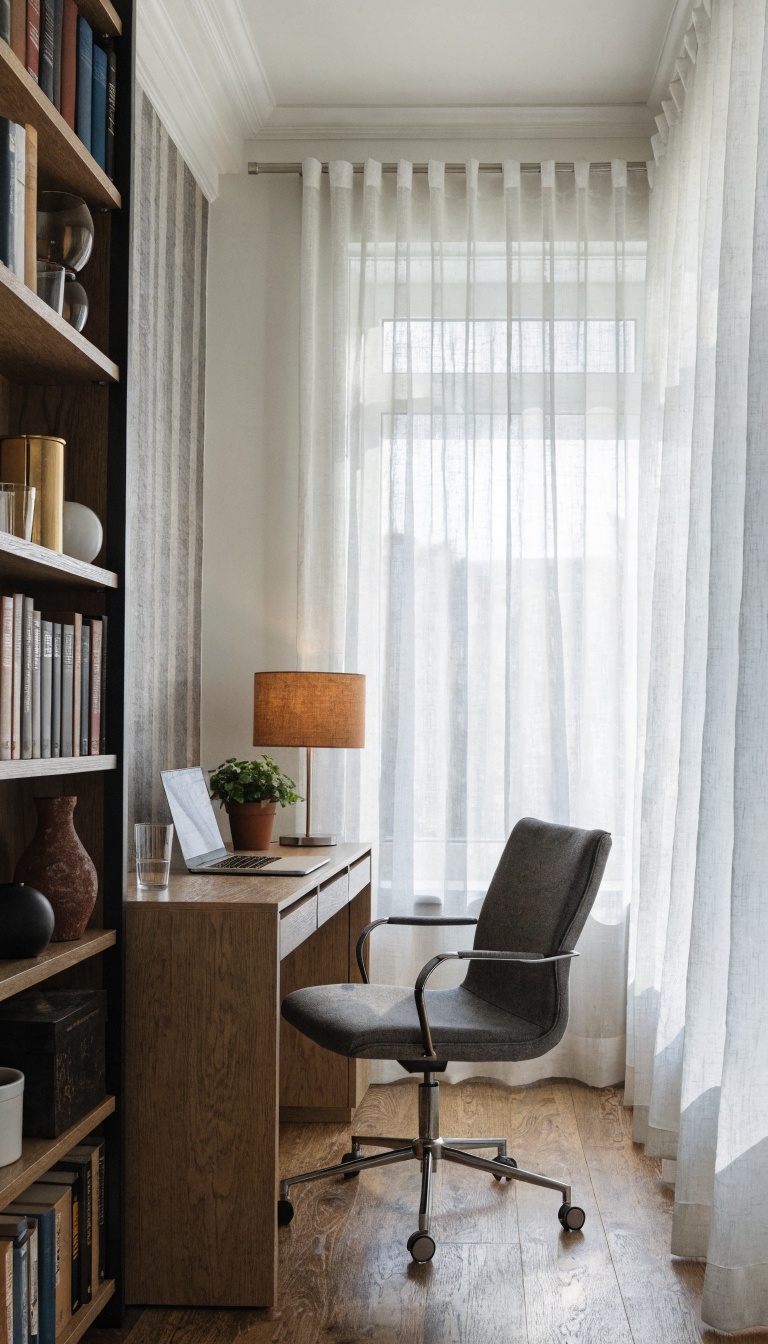
Drawing the eye upward makes ceilings feel higher and rooms feel more spacious. You can achieve this through vertical design elements that create long, unbroken lines from floor to ceiling.
Install floor-to-ceiling curtains even if your windows are small—hang the rod right below the ceiling. Choose tall, narrow bookcases instead of short, wide ones. Add vertical striped wallpaper or paint to guide the eye upward.
Ways to Add Vertical Lines:
- Floor-to-ceiling curtain panels in light fabrics
- Tall, narrow shelving units that maximize height
- Vertical paneling or board-and-batten walls
- Tall plants like fiddle leaf figs or snake plants
- Vertical art arrangements rather than horizontal
Even your furniture choices can emphasize height. Choose a desk chair with a tall back, or add a tall floor plant in the corner to draw attention upward.
The goal is to interrupt horizontal lines that make rooms feel squat and boxy. Every vertical element you add counteracts the natural tendency for small rooms to feel compressed.
And here’s a sneaky trick: paint your baseboards and trim the same color as your walls. This eliminates visual breaks and makes walls appear taller and more continuous.
Final Thoughts
Your small home office has way more potential than you think. These eight strategies work together to create a space that feels open, functional, and dare I say it—actually enjoyable to work in. Start with one or two ideas that resonate with you, and watch your tiny office transform into a room that punches way above its square footage.
0 Comments