Think you need an entire spare room to create a productive workspace? Think again. These clever bedroom office setups will have you working comfortably without sacrificing your cozy sleeping space, and honestly, some of them might even work better than a traditional home office.
1. The Corner Floating Desk That Disappears When You’re Done
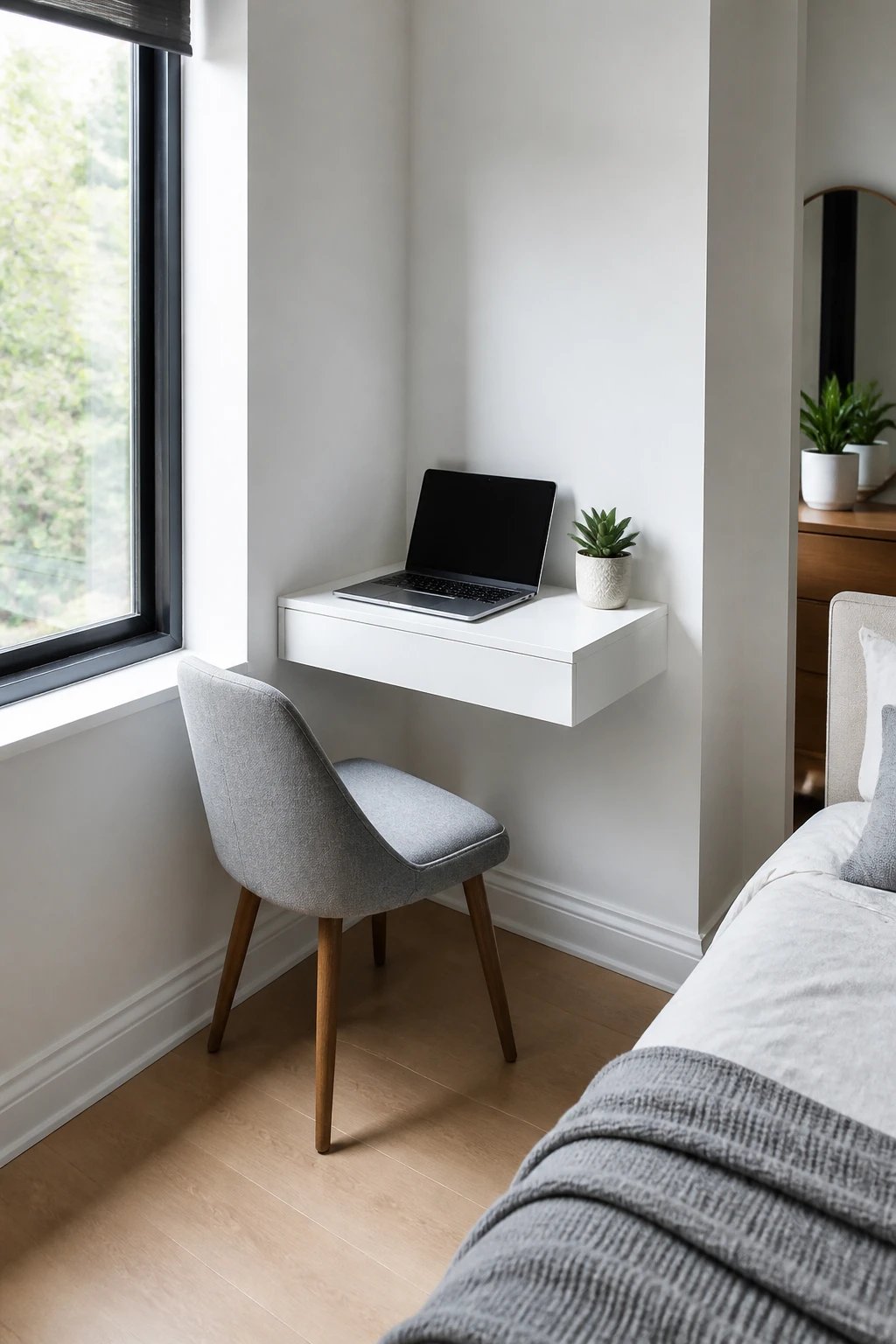
Corner spaces are the unsung heroes of small bedrooms. That awkward little nook that’s too small for furniture but too big to ignore? Perfect spot for a wall-mounted floating desk.
Install a simple floating desk in that corner, and you’ve instantly created a workspace that doesn’t eat up precious floor space. The beauty here is that these desks typically measure just 24-36 inches wide, so they won’t dominate your room visually.
What You’ll Need:
- Wall-mounted folding desk or floating shelf desk
- Minimal task lighting (clip-on or wall-mounted)
- Small organizer caddy for supplies
- Comfortable chair that tucks completely under
Want to take it up a notch? Choose a fold-down desk that literally disappears against the wall when you’re not using it. During work hours, it’s your command center. During sleep hours, it’s basically invisible.
This setup works especially well if you’re renting and can’t make major changes. Most floating desks require minimal wall anchors, and you can patch those tiny holes when you move out. Plus, positioning your desk in a corner naturally creates a sense of separation from your sleeping area, which helps your brain switch between work mode and rest mode.
2. The Nightstand-Desk Hybrid That Pulls Double Duty
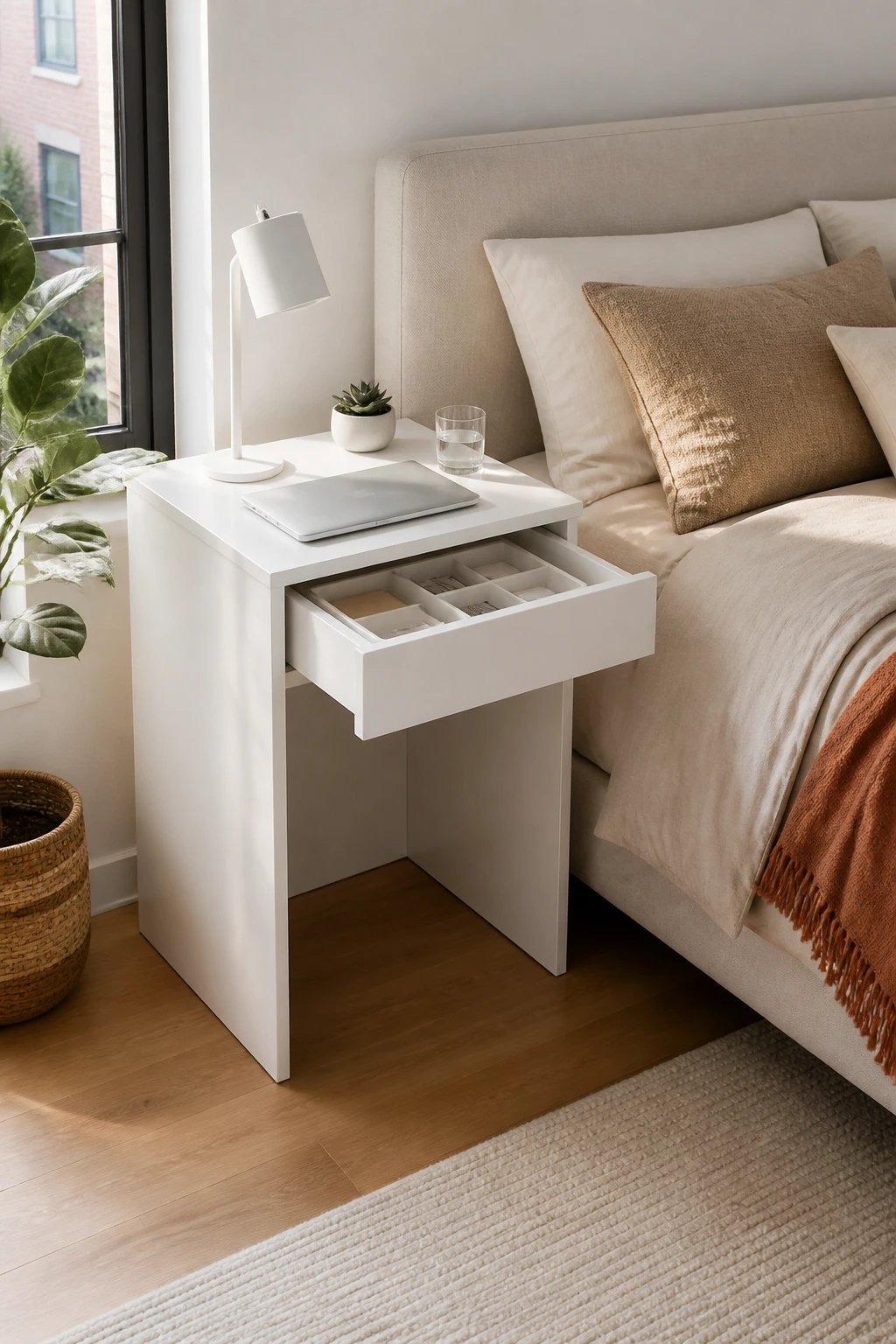
Why choose between a nightstand and a desk when you can have both? Seriously, this is the ultimate space-saving hack for tiny bedrooms.
Replace your traditional nightstand with a small writing desk positioned next to your bed. During the day, it’s your workspace. At night, it holds your book, phone, and that glass of water you never actually drink.
Making It Work:
- Choose a desk that’s 24-30 inches wide (nightstand-sized)
- Keep the top surface minimal and organized
- Use drawer organizers to separate work supplies from nighttime essentials
- Add a small lamp that works for both reading and task lighting
The trick here is intentional organization. Get yourself some drawer dividers and designate specific spaces for work stuff versus bedroom stuff. Left drawer for chargers and notebooks, right drawer for work documents and pens. You get the idea.
This setup is perfect for people who only need a computer and minimal supplies for work. If your job involves tons of papers and equipment, you might want to consider a different option. But for digital workers? This is gold.
3. The Closet Conversion That’s Easier Than You Think
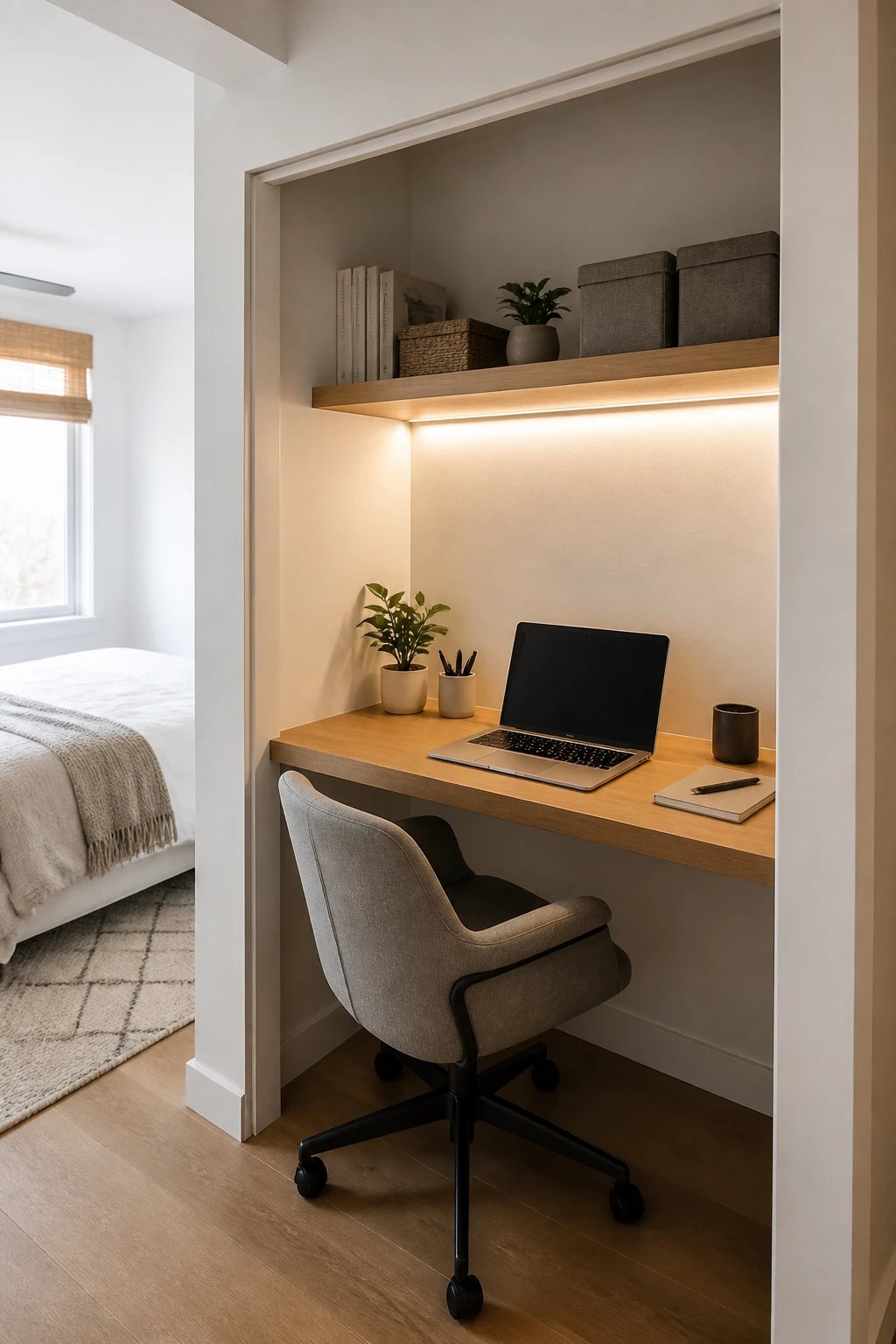
Got a closet you’re not fully using? Time to turn that sucker into a cloffice (closet + office, because apparently we’re just mashing words together now).
Remove the closet doors, add a small desk or floating shelf, and boom – you’ve got a built-in office nook that feels separate from your bedroom. The closet walls naturally create boundaries, which helps mentally separate work from sleep.
Closet Office Essentials:
- Desk or shelf cut to fit the closet width
- Adequate lighting (LED strip lights or a desk lamp)
- Wall-mounted organizers for vertical storage
- Small filing system or storage boxes on shelves above
- Curtain or room divider for “closing” the office after hours
The best part about a closet office? Built-in storage. Use the space above your desk for shelving, add hooks on the sides for bags or headphones, and install a small bulletin board on the back wall. You’re basically creating a custom office nook without any major construction.
FYI, you can still use part of the closet for clothes if you’re strategic. Install the desk on one side and keep a small hanging rod on the other for your most-worn items. Or go full office mode and relocate your clothes to a freestanding rack elsewhere in the room.
4. The Behind-The-Door Genius Move Nobody Talks About
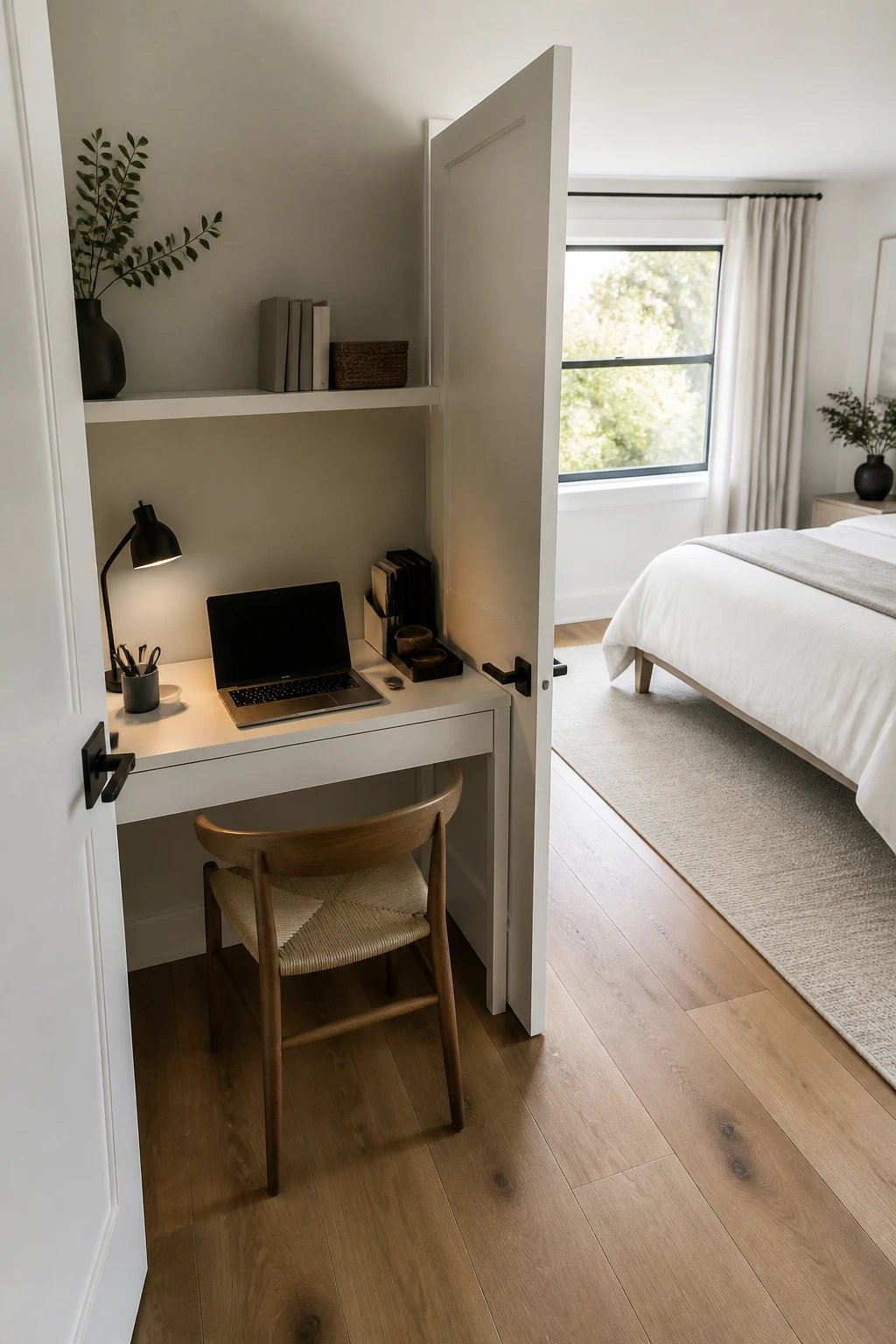
Want to know where everyone overlooks potential workspace? The area behind your bedroom door. When the door’s open, this space is completely hidden and totally unused.
Install a slim console table or narrow desk against the wall behind your door, and you’ve created a secret office that guests won’t even notice. This works especially well in bedrooms where the door opens against a wall with at least 36 inches of clearance.
Tips for Behind-Door Setups:
- Measure carefully – you need enough clearance for the door to open fully
- Choose desks 12-18 inches deep (narrow profile)
- Mount a small shelf above for extra storage
- Use the back of the door itself for hanging organizers
This setup is visually invisible when you enter the room because the open door hides it. Close the door when you’re working, and you’ve got a private little office. Open it when you’re done, and your bedroom looks totally normal.
The downside? You can’t have people constantly opening and closing your door while you’re working. But if you live alone or have respectful roommates, this is honestly one of the smartest small-space solutions out there.
5. The Window Desk That Gives You Natural Light Goals
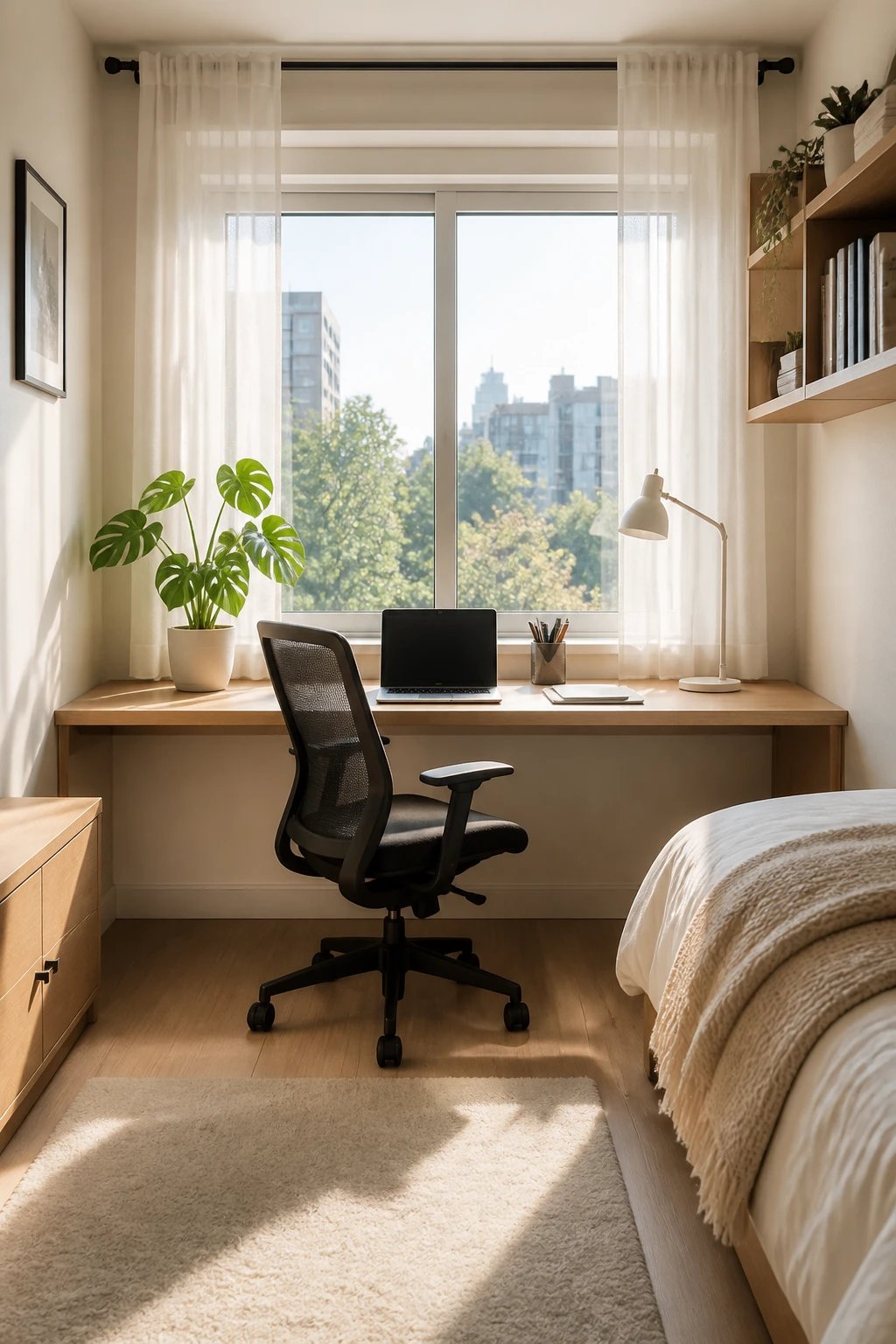
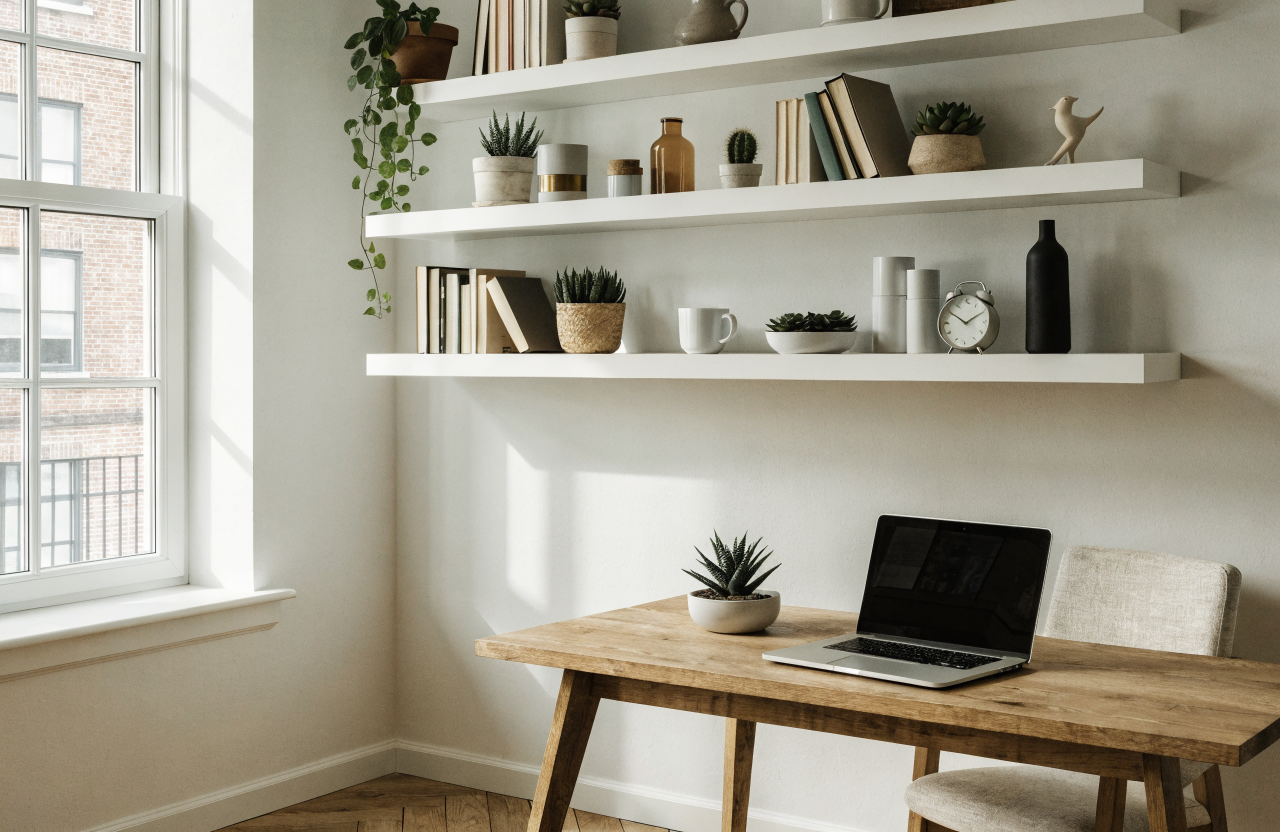
If you’ve got a window with wall space on either side, you’re sitting on prime real estate for a bedroom office. Natural light while you work? Yes, please.
Install a desktop surface between two walls or use a freestanding desk positioned directly in front of your window. Working with natural light reduces eye strain, boosts your mood, and makes those endless video calls way more flattering (trust me on this one).
Window Desk Setup:
- Custom-cut desktop or appropriately sized desk
- Adjustable window treatments for glare control
- Minimal desk accessories to maintain the view
- Cable management solutions to keep cords tidy
The key to making this work is managing glare and temperature. Get yourself some light-filtering shades that you can adjust throughout the day. Morning sun? Pull them down a bit. Afternoon glare making your screen impossible to see? Time to adjust again.
Position your monitor perpendicular to the window rather than facing it directly to minimize screen glare. And if your window gets crazy hot in summer, consider a small desk fan to keep comfortable without cranking the AC for your entire bedroom.
This setup is absolutely perfect for people who get depressed working in dark spaces. That natural light makes a massive difference in productivity and mental health, especially if you’re working from home full-time.
6. The Murphy Desk That Literally Folds Into the Wall
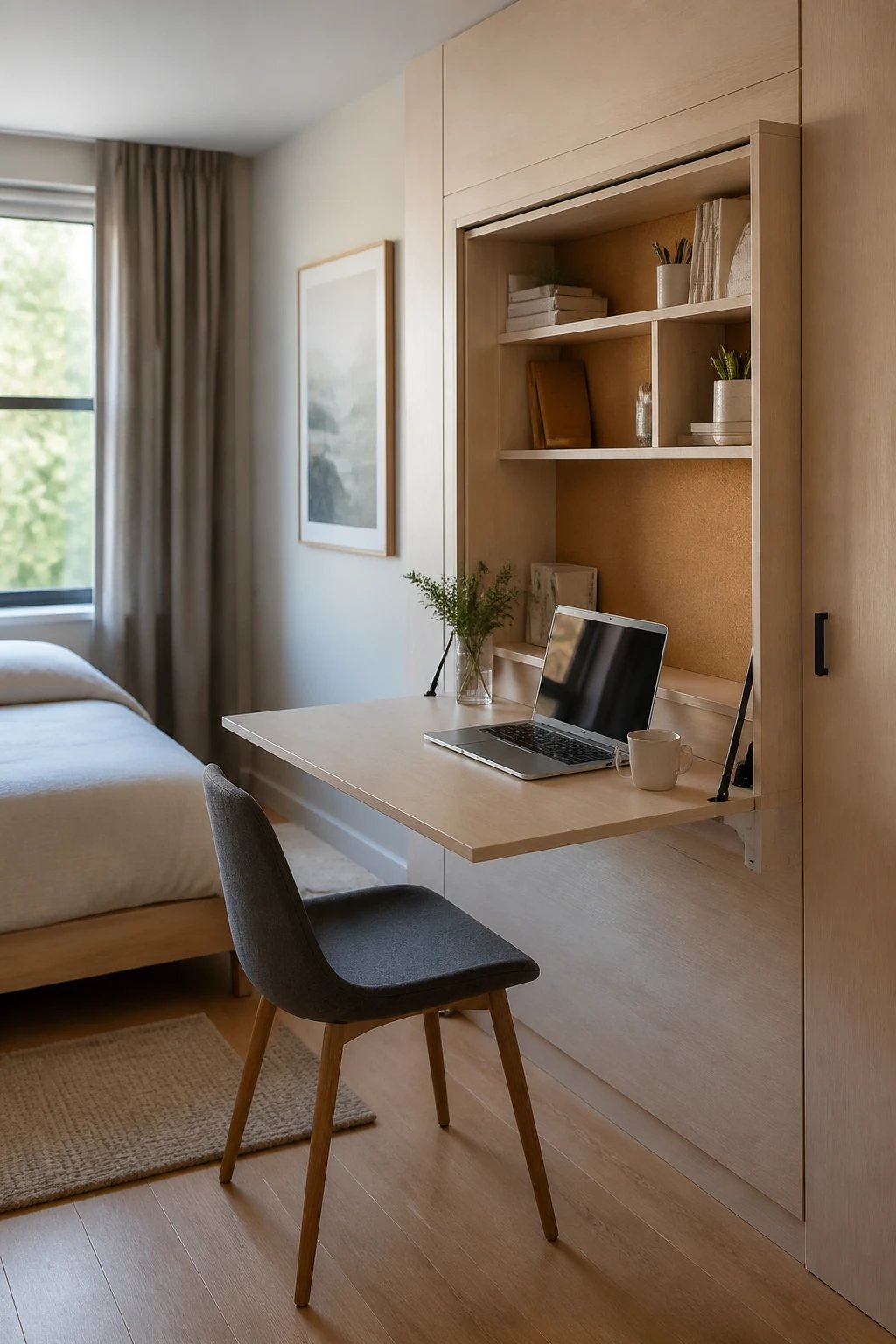
Ready for the most dramatic solution? A wall-mounted Murphy desk that folds up completely when you’re not using it. It’s like your office just vanishes into thin air.
These desks attach to your wall and fold down when you need to work, then fold right back up when you’re done. Some even come with built-in storage, cork boards, and organizational features that fold away with the desk.
Murphy Desk Considerations:
- Installation requires solid wall anchoring (not ideal for renters)
- Prices range from budget DIY options to fancy pre-made units
- You’ll need to clear the desk surface before folding it up
- Available in sizes from compact (30 inches) to spacious (60 inches)
The biggest advantage here is complete visual separation. When work time is over, you literally close up shop and your bedroom looks like a bedroom again. No desk staring at you while you’re trying to sleep, no papers reminding you of tomorrow’s deadlines.
IMO, this is the best option if you’re really serious about keeping work and sleep spaces completely separate but don’t have the square footage for both. The mental boundary it creates is worth the installation effort and investment.
You can buy pre-made Murphy desks from furniture stores, or if you’re handy, build your own with piano hinges and a solid desktop. Just make sure you mount it properly – you don’t want your entire office setup crashing down mid-workday.
So there you have it – six totally doable ways to squeeze a functional office into your bedroom without turning your sleeping space into a cluttered mess. Pick the one that fits your space, your work style, and your tolerance for furniture assembly. Your productive WFH setup is closer than you think, and you don’t need to sacrifice an entire room to make it happen.
0 Comments