Your home office doesn’t have to look like a sad cubicle or a Pinterest board gone wrong. These seven ideas will help you create a workspace that actually makes you want to show up—one that balances professionalism with personality in the best way possible.
1. Create a Gallery Wall That Means Something
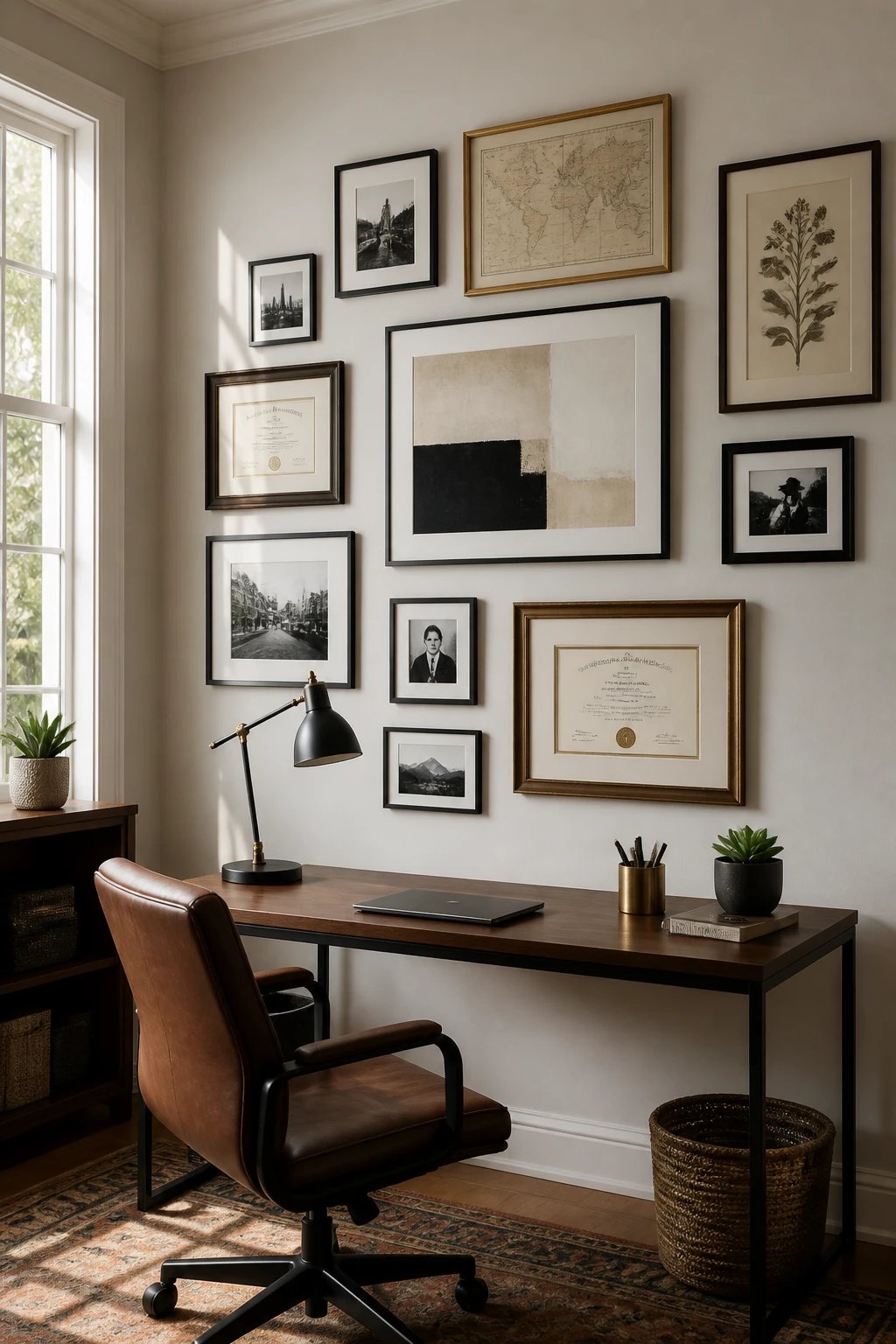
Forget those generic motivational posters that scream “I bought this at a chain store.” A thoughtfully curated gallery wall tells your story while keeping your space looking intentional and put-together.
The secret? Mix personal photos with art prints, credentials, and maybe even a vintage map or botanical illustration. This isn’t about filling every inch of wall space—it’s about creating visual interest that reflects who you actually are.
What to Include:
- Framed certifications or degrees (yes, you earned them, show them off)
- Art prints in complementary colors that match your office palette
- Personal photos in matching frames for cohesion
- One or two unexpected pieces like vintage postcards or pressed botanicals
Start by laying everything out on the floor before you commit to hammering nails into your wall. Seriously, this step saves so much frustration. Aim for frames that share at least one element—maybe they’re all black, all wood, or all the same style.
The best part? A gallery wall instantly elevates your video call background from “working from my spare bedroom” to “I have my life together.” Your coworkers don’t need to know it only took you an afternoon to pull together.
2. Invest in One Statement Furniture Piece
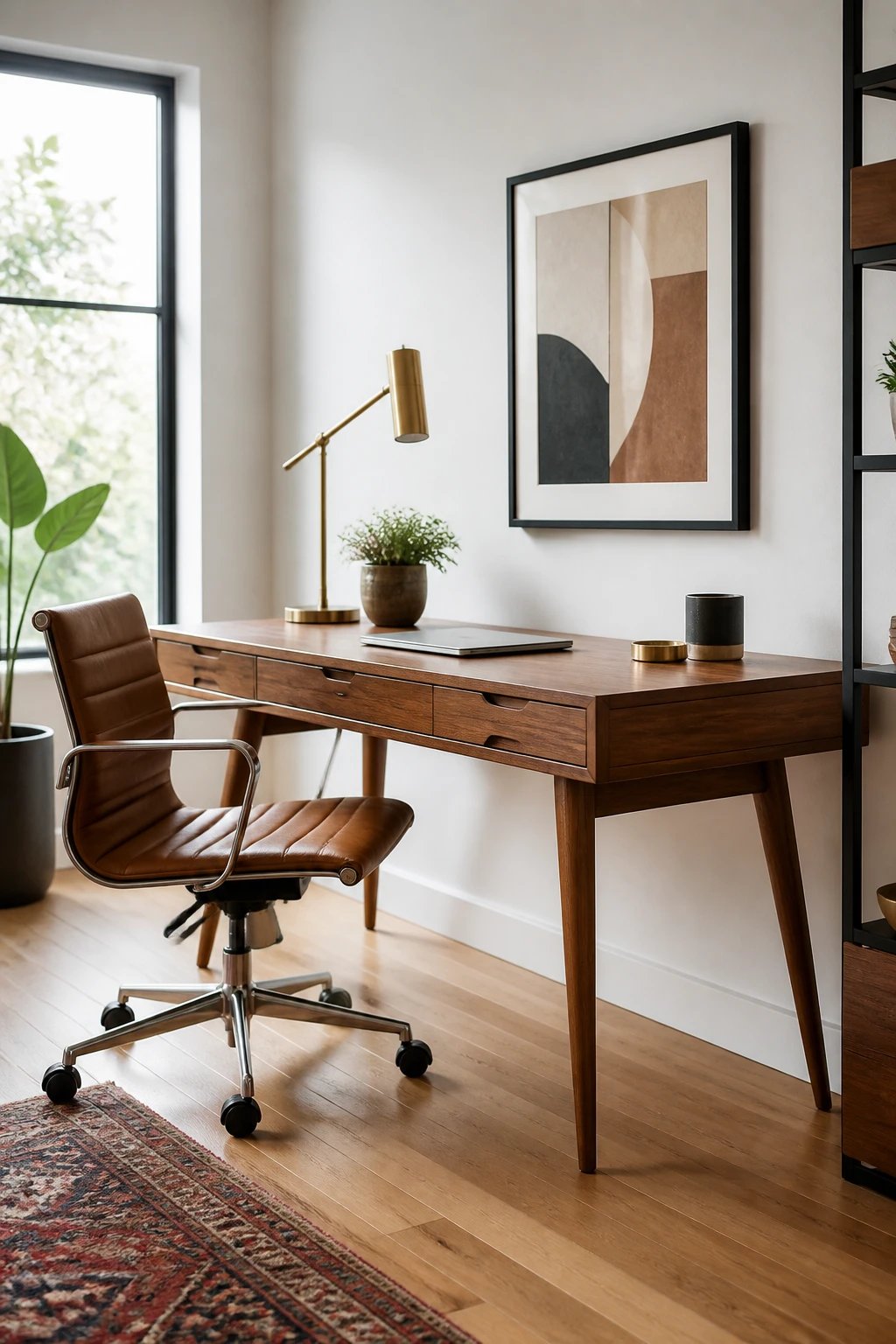
You know what makes a small office feel intentional instead of thrown together? One piece of furniture that makes people stop and say “where did you get that?”
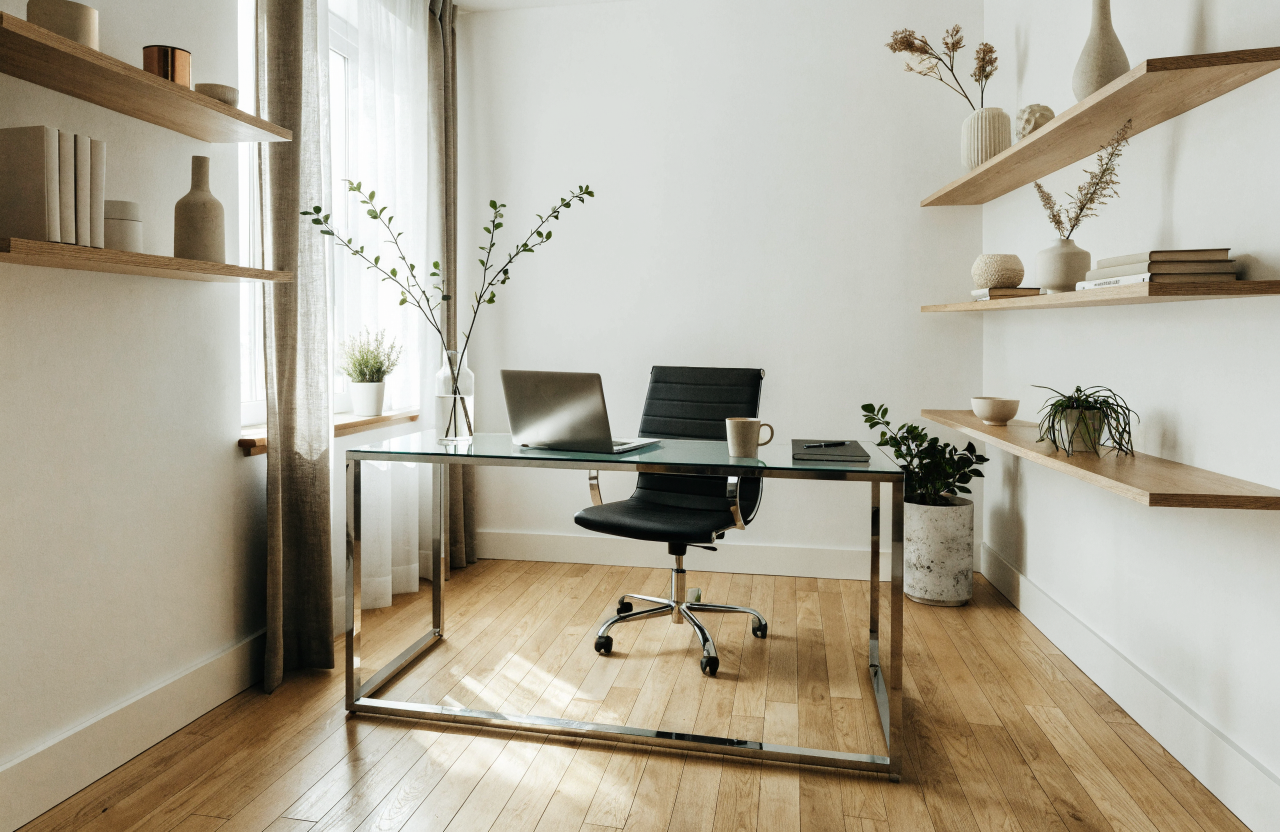
This could be a vintage desk you refinished, a modern credenza in an unexpected color, or an absolutely gorgeous office chair that doesn’t look like it belongs in a 1990s IT department. The key is choosing something that anchors the entire room and sets the tone for everything else.
Smart Statement Pieces:
- A mid-century modern desk with tapered legs
- An antique writing table (bonus points if it has a story)
- A bookshelf in an architectural shape or bold color
- A genuinely comfortable chair in velvet or leather
Here’s the thing about statement pieces—they give you permission to keep everything else simple. When your desk is doing all the talking, you don’t need to stress about every other detail in the room.
Budget-conscious? Check estate sales, Facebook Marketplace, or that one furniture consignment store in your area. Some of the best statement pieces come with a pre-loved patina that new furniture just can’t replicate.
3. Layer Your Lighting Like a Design Pro
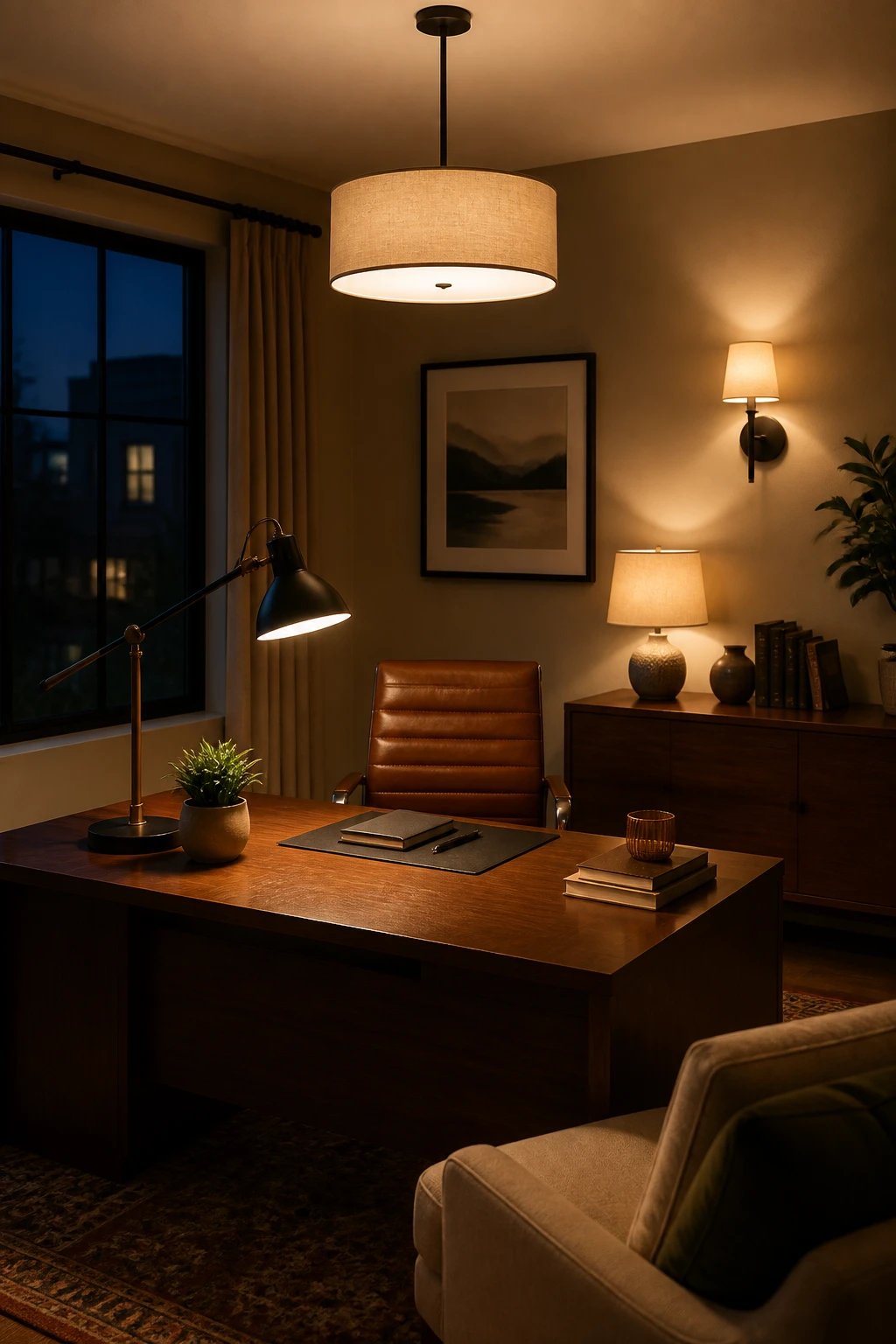
Overhead lighting alone is the fastest way to make your office feel like a dentist’s waiting room. Nobody wants that energy when they’re trying to be productive.
The magic happens when you layer different light sources at different heights. Think of it like seasoning food—one element isn’t enough, but the right combination creates something special.
The Three-Layer Approach:
- Ambient lighting: Your overhead fixture or ceiling light
- Task lighting: A desk lamp where you actually work
- Accent lighting: A floor lamp in the corner or picture lights on your gallery wall
Want to know a secret? Warm-toned bulbs (around 2700K) make everything look better, including you on video calls. Cool-toned lights might seem more “office-like,” but they’re harsh and unflattering.
Position your desk lamp so it illuminates your work surface without creating screen glare. A swing-arm lamp gives you flexibility, while a sculptural table lamp adds personality. IMO, the desk lamp is where you can get really playful with design since it’s such a focal point.
Don’t forget about natural light control! A stylish desk lamp paired with adjustable window treatments means you can work comfortably at any time of day without squinting at your screen.
4. Bring In Plants (But Make It Strategic)
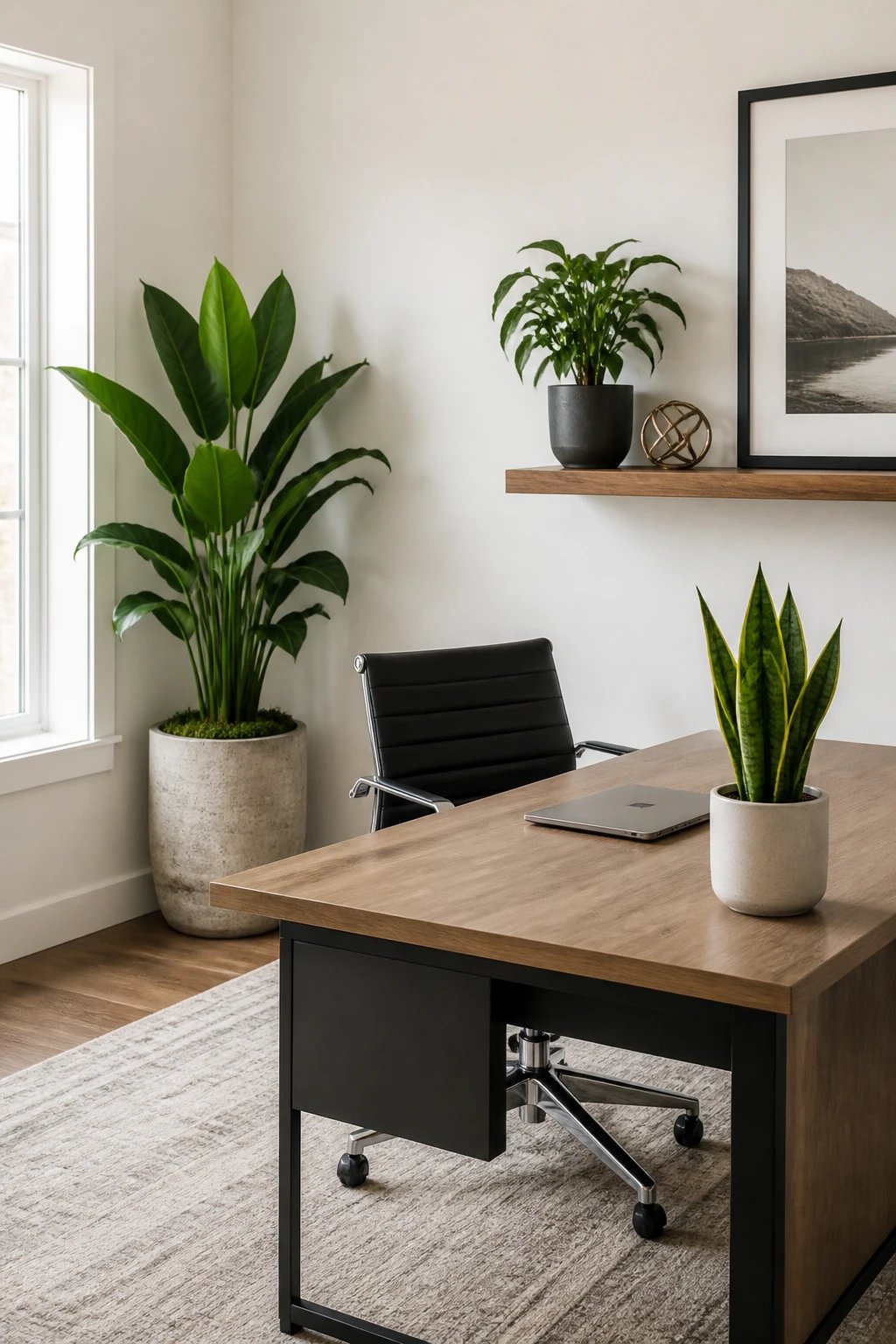
Plants instantly make any space feel more alive and less sterile. But here’s where people mess up—they either go overboard and create a jungle, or they buy one sad succulent and call it a day.
The strategic approach means choosing plants that actually thrive in your office conditions and arranging them with intention. Consider your light situation, your ability to remember watering, and the overall vibe you’re creating.
Office-Friendly Plant Options:
- Snake plants for low-light corners (basically indestructible)
- Pothos on a bookshelf for cascading greenery
- A small fiddle leaf fig if you have bright, indirect light
- ZZ plants for that sculptural, modern look
Group plants in odd numbers—three small plants look more intentional than two. Vary the heights by using plant stands or stacking books under pots. And please, invest in containers that match your office aesthetic instead of keeping plants in their plastic nursery pots.
Can’t keep plants alive? Honestly, high-quality faux plants have come a long way. Just dust them regularly so they don’t look obviously fake. The psychological benefits of greenery are real, even if the plants aren’t.
Plants also serve a practical purpose beyond looking pretty—they soften hard edges and add organic shapes to a room full of rectangular furniture and screens.
5. Style Your Shelves With the Rule of Three
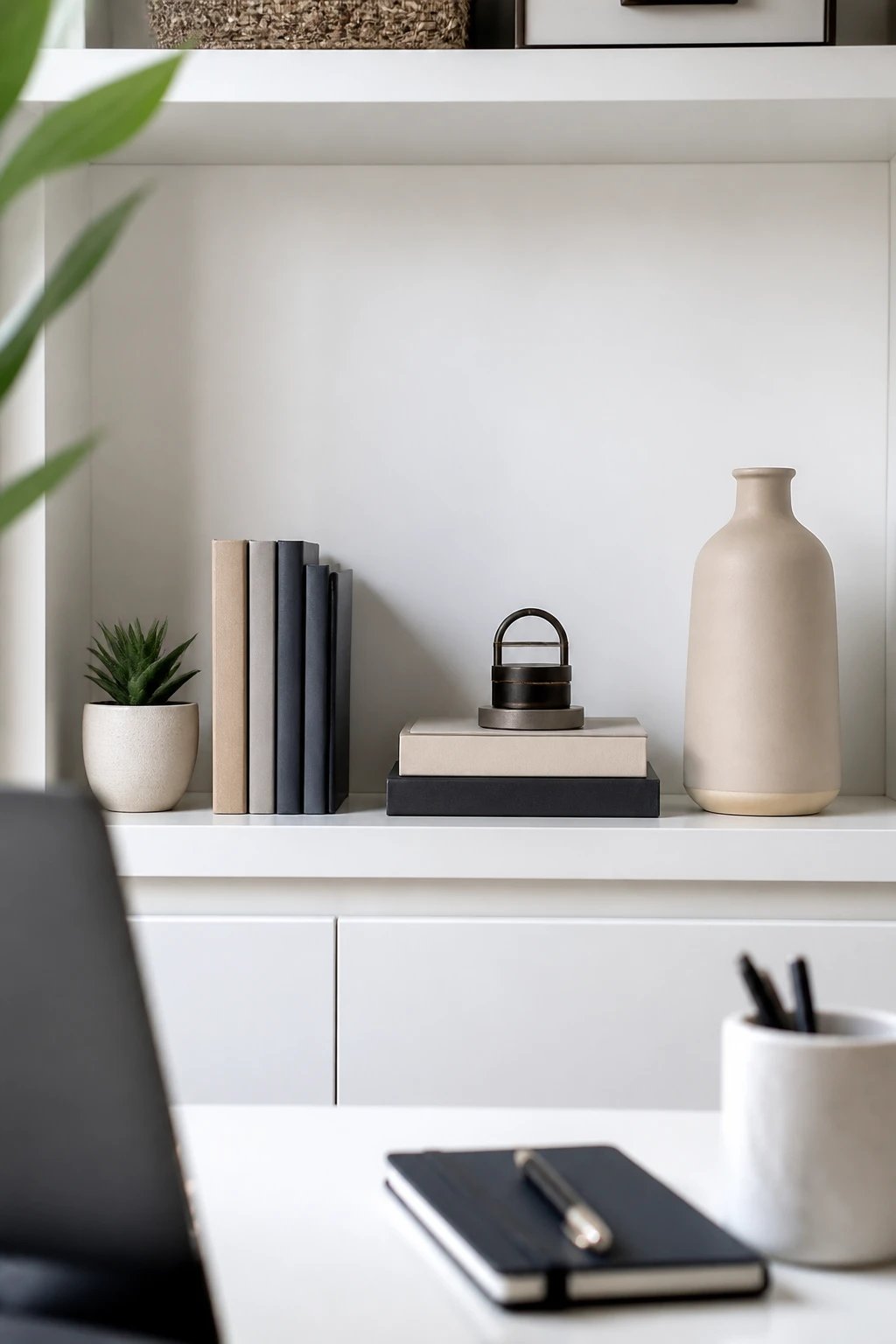
Open shelving can either look incredibly polished or like you just moved in and haven’t unpacked yet. The difference comes down to styling, and trust me, there’s a formula.
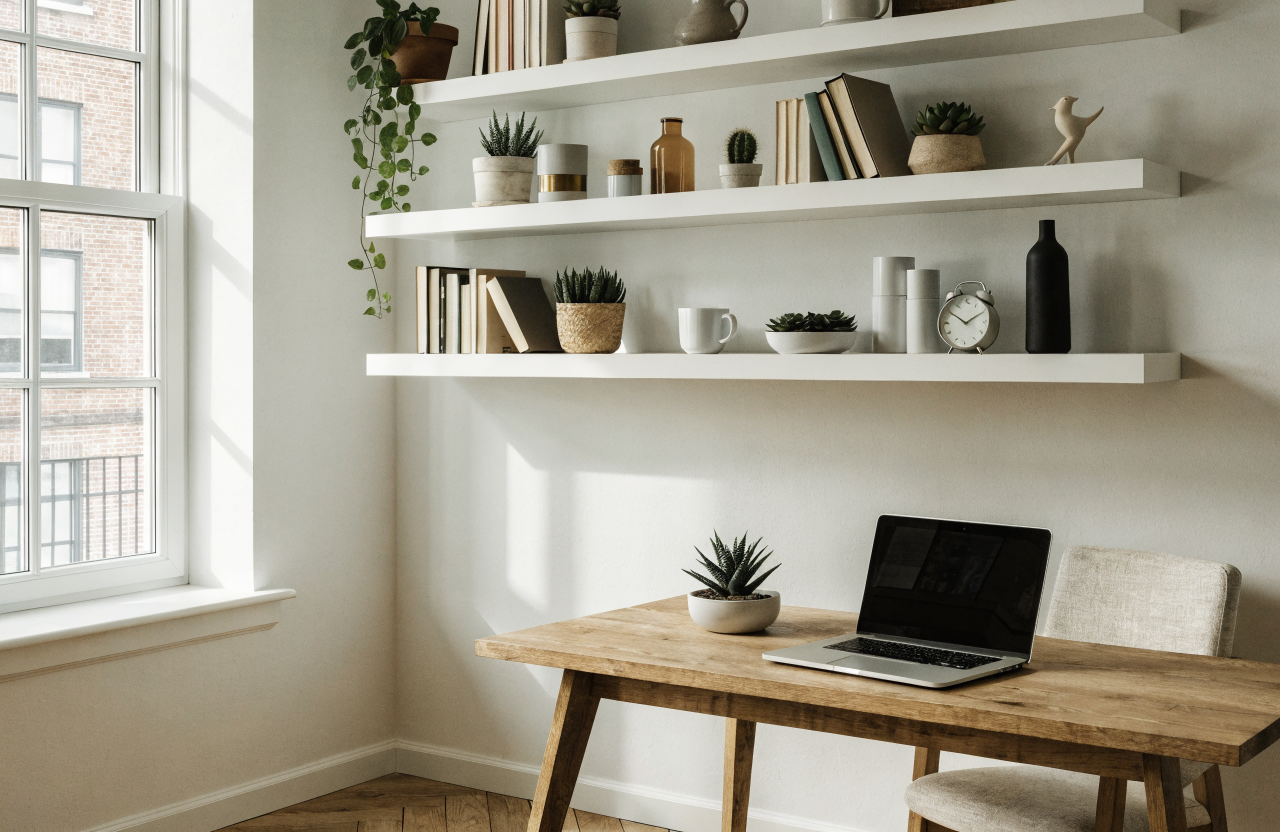
The Rule of Three is your best friend here. Group items in threes, vary heights within each grouping, and leave some breathing room. Not every inch needs to be filled—negative space is what makes styled shelves look intentional instead of cluttered.
Essential Shelf Styling Elements:
- Books (arranged both vertically and horizontally)
- Decorative objects in varying heights
- A small plant or vase with greenery
- Personal items like a favorite photo or meaningful trinket
- Storage boxes or baskets that hide the less-pretty stuff
Here’s the pattern that works every time: stack two or three books horizontally, place a small object on top, then add a vertical row of books next to that grouping. Repeat with variations across your shelf.
Color-coordinate your book spines if you want that ultra-polished look, or mix it up for a more eclectic vibe. Both work, as long as you’re consistent about which approach you choose.
FYI, this is also where you can inject serious personality into your office. That weird vintage camera you inherited? The trophy from your bowling league? The handmade pottery from your favorite local artist? These items make your space yours.
6. Add Texture Through Textiles
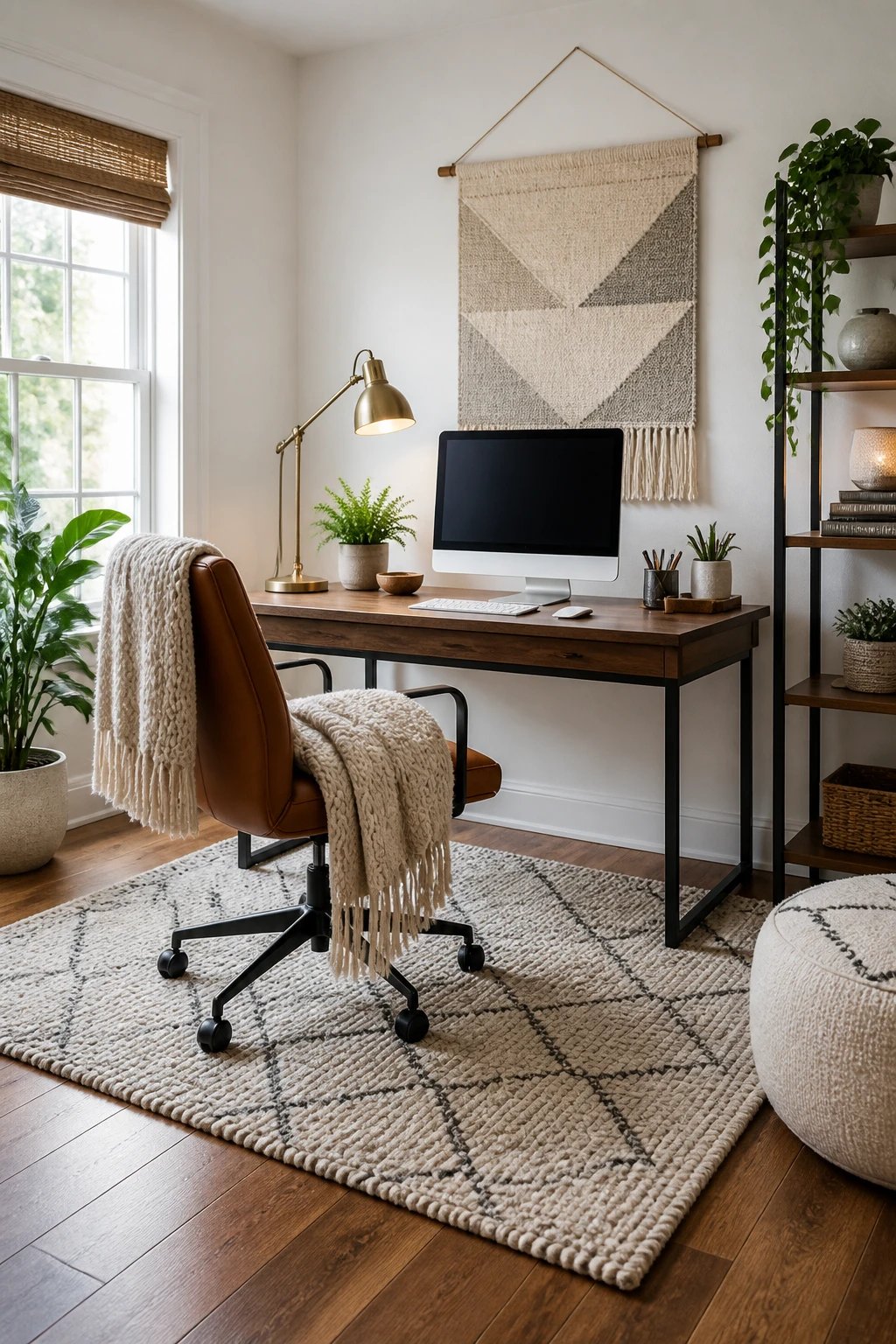
Small offices can feel cold and echo-y, especially if you’re working with hard surfaces like wood floors and painted walls. Textiles absorb sound, add warmth, and create that polished-but-lived-in feeling.
You don’t need much—a small area rug, a throw draped over your chair, or even fabric wall hangings can completely transform the energy of your space. Think of textiles as the difference between a showroom and an actual room where someone works.
Textile Additions to Consider:
- A washable area rug to define your workspace zone
- Linen or cotton curtains for softness at the windows
- A cozy throw blanket for your chair (practical for chilly mornings)
- Fabric bulletin board or tapestry as wall art
Stick to a cohesive color palette when choosing textiles. If your office is mostly neutrals, this is where you can introduce pattern—maybe a geometric rug or striped curtains. If you’ve already got color happening, keep textiles in complementary neutrals.
A rug also serves the very practical purpose of protecting your floors from your desk chair wheels while making the space feel more grounded. Win-win.
Bonus: Textiles are one of the easiest things to swap out seasonally. A lightweight linen throw for summer, a chunky knit blanket for winter—instant refresh without a major overhaul.
7. Curate a Signature Scent and Sound
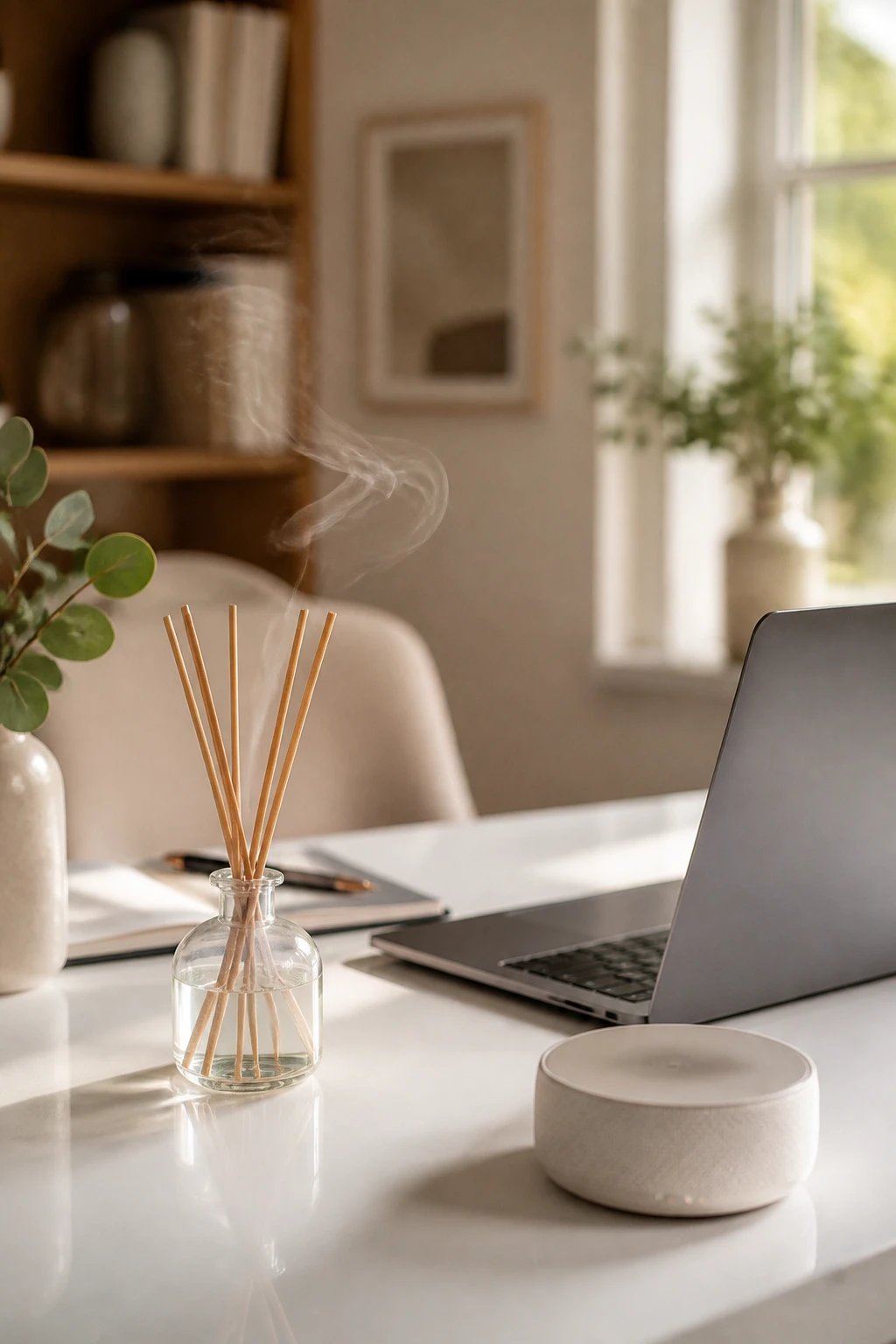
This one might surprise you, but the most polished offices engage more than just your eyes. Creating a consistent sensory experience makes your workspace feel like an intentional retreat rather than just a corner with a desk.
Choose a signature candle or diffuser scent that you only use in your office. Your brain will start associating that scent with productivity and focus. Same goes for sound—whether it’s a specific playlist, a white noise machine, or even the sound of a small fountain.
Sensory Elements to Incorporate:
- A high-quality candle in a reusable container (becomes decor when not lit)
- Essential oil diffuser with your go-to scent
- Small desktop fountain for gentle water sounds
- A dedicated speaker for your focus playlist
Scent recommendations? Citrus for energy and focus, lavender for calm, eucalyptus for clarity. Avoid anything too heavy or sweet—you don’t want to give yourself a headache three hours into your workday.
The sound element is equally important. If you live somewhere noisy, a white noise machine or small fountain can mask distracting sounds while adding to the ambiance. Plus, a sculptural fountain doubles as a design object.
Here’s why this matters: when your office appeals to multiple senses, you create a complete environment that signals to your brain “this is my focused, professional space.” It’s like giving yourself a mental boundary between work mode and home mode, even when they share the same square footage.
These seven ideas prove that small offices can feel every bit as polished and personal as large ones—sometimes even more so, since every choice matters. Pick two or three to start with, and watch how quickly your workspace goes from “meh” to “I actually love working here.” You’ve got this!
0 Comments