Your baby deserves the cutest nursery ever, but your spare bedroom is basically a closet. Don’t panic! These genius space-saving ideas will help you create a dreamy nursery that’s both functional and Instagram-worthy, even when you’re working with square footage that makes a shoebox look spacious.
1. Embrace the Vertical Storage Revolution
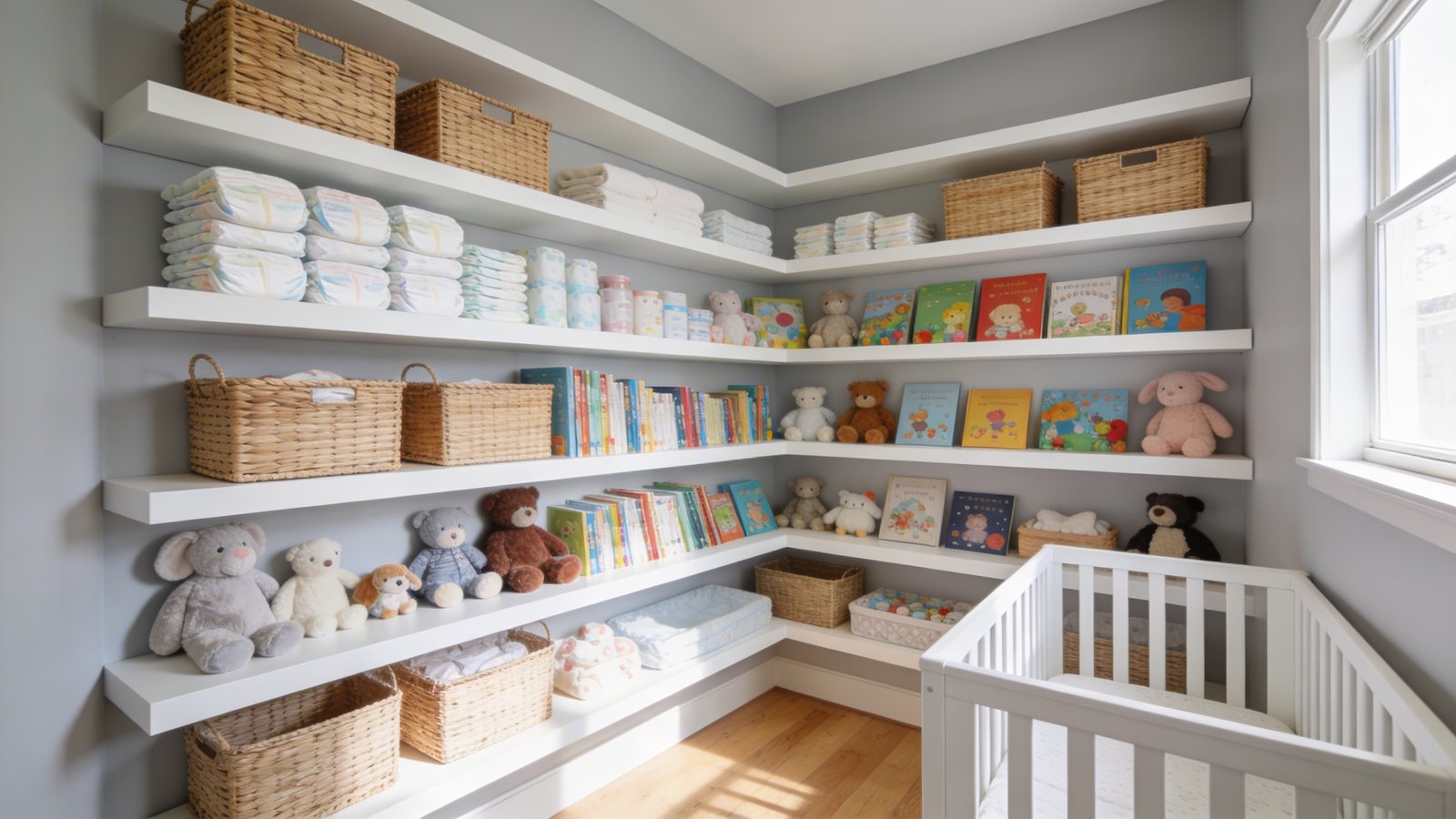
When floor space is practically nonexistent, your walls become your best friend. Seriously, those vertical inches are pure gold when you’re dealing with a tiny nursery.
Install floating shelves from floor to ceiling to store everything from diapers to those adorable stuffed animals that people keep gifting you. Wall-mounted storage keeps essentials within arm’s reach while freeing up precious floor space for actually moving around.
Smart Vertical Storage Options:
- Floating shelves in ascending sizes
- Wall-mounted fabric bins
- Pegboard organizers for changing supplies
- Hanging baskets for toys and books
The beauty of going vertical? You can customize the height as your baby grows, moving items up and down as needed. Plus, it’s way easier to clean the floor when nothing’s cluttering it.
2. Choose a Convertible Crib That Grows Up
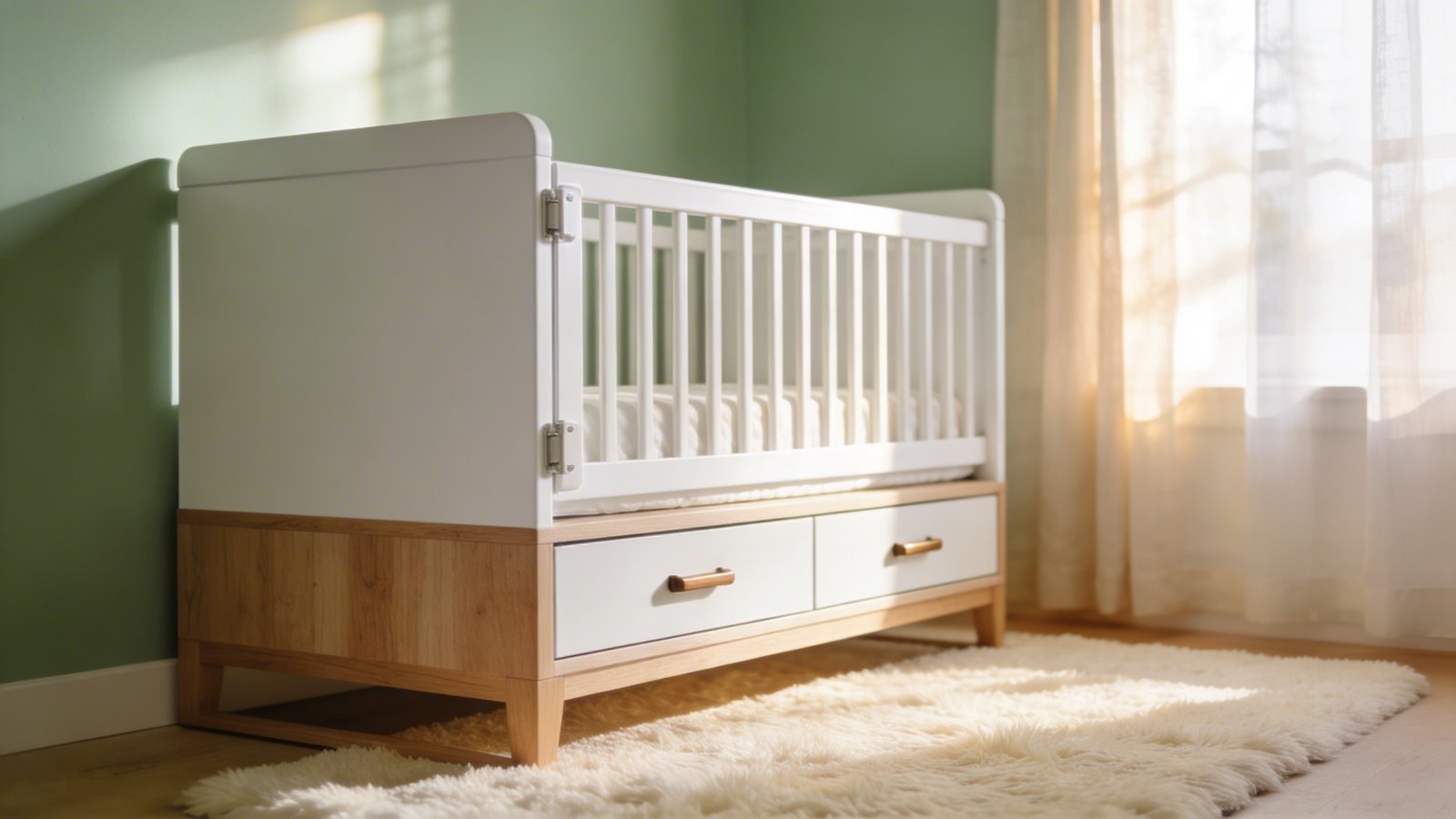
Buying furniture that only works for two years is basically setting money on fire. Convertible cribs transform from baby bed to toddler bed to full-size bed, giving you serious bang for your buck.
These multi-tasking marvels save space because you’re not storing multiple bed frames as your child grows. Many models include built-in drawers underneath, which is clutch when you’re desperate for storage.
Look for models with clean lines and neutral colors that won’t clash with future room redesigns. Your teenager will thank you for not making them sleep in something covered in cartoon animals.
3. Swap the Traditional Dresser for a Changing Table Combo
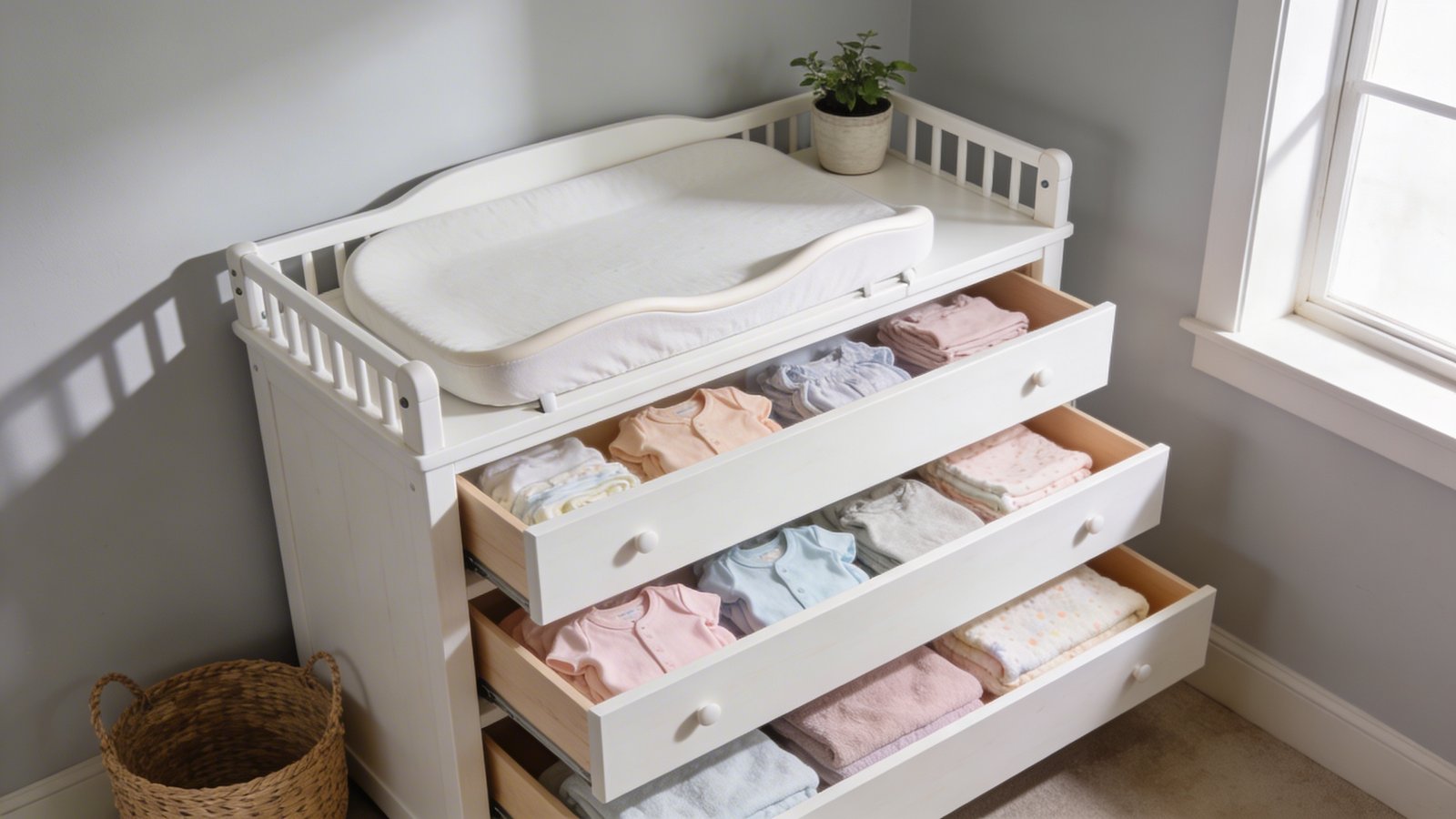
Why waste space on two separate pieces of furniture when one can do both jobs? A dresser-changing table hybrid is the ultimate space-saving hack for small nurseries.
The top surface handles diaper duty (complete with a changing pad), while the drawers below store clothes, blankets, and approximately seven thousand onesies. Once your diaper-changing days are over, remove the pad and boom—you’ve got a regular dresser.
Features to Look For:
- Safety rails on the changing surface
- Deep drawers for maximum storage
- Removable changing topper
- Sturdy construction that’ll last years
Position this next to the crib, and you’ve created an efficient little changing station without sacrificing half your room.
4. Install a Corner Reading Nook
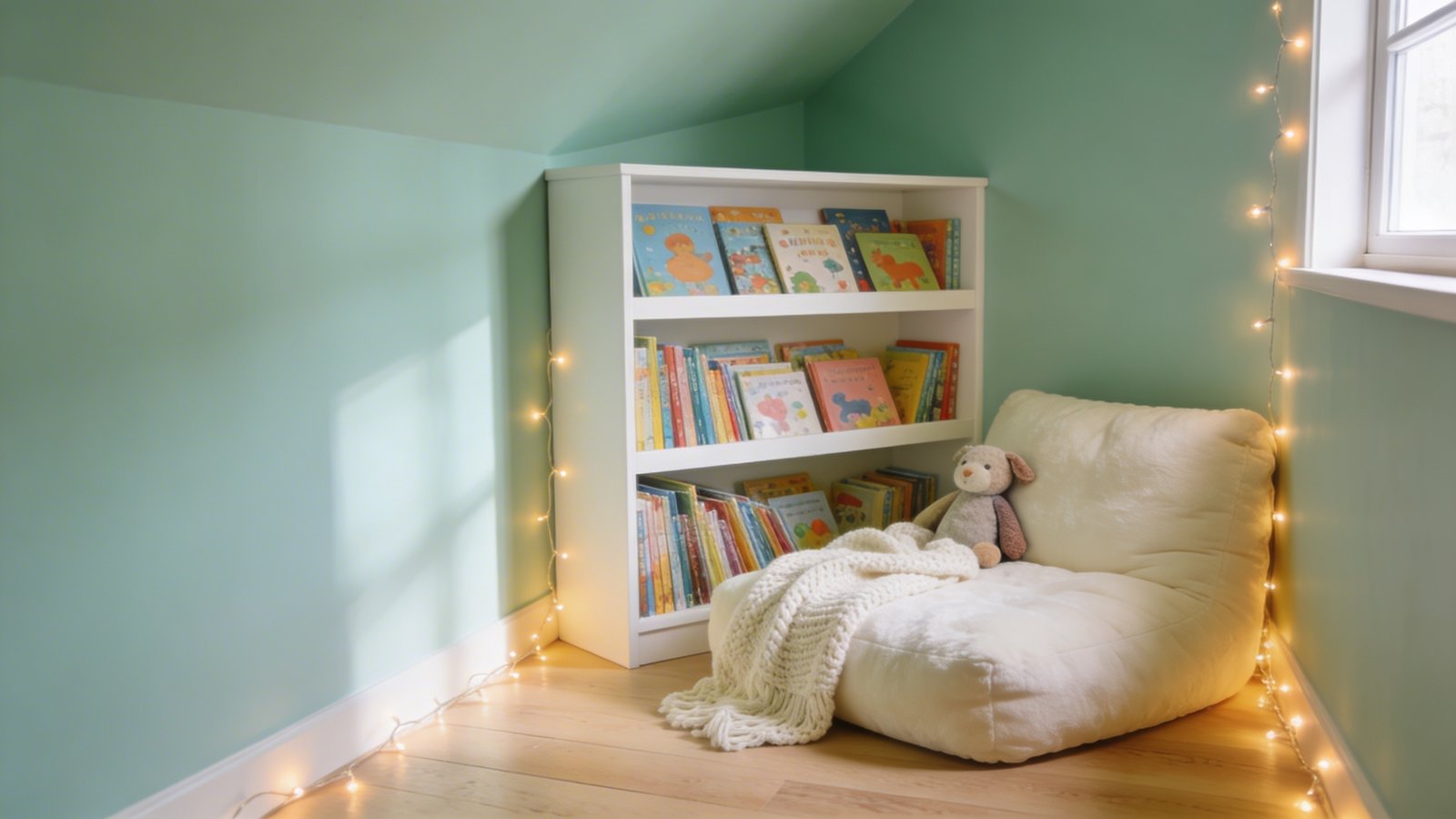
That awkward corner everyone ignores? It’s about to become the coziest spot in the nursery. Corner nooks maximize dead space while creating a sweet spot for bedtime stories.
Add a small corner shelf unit, throw down a cushy floor cushion, and suddenly you’ve got a dedicated reading area. Bonus points if you add some string lights or a small lamp for ambiance.
This setup takes up minimal floor space but creates a purposeful zone that’ll get used daily. As your kiddo grows, it transforms into their personal reading hideaway.
5. Hang a Fold-Down Changing Station
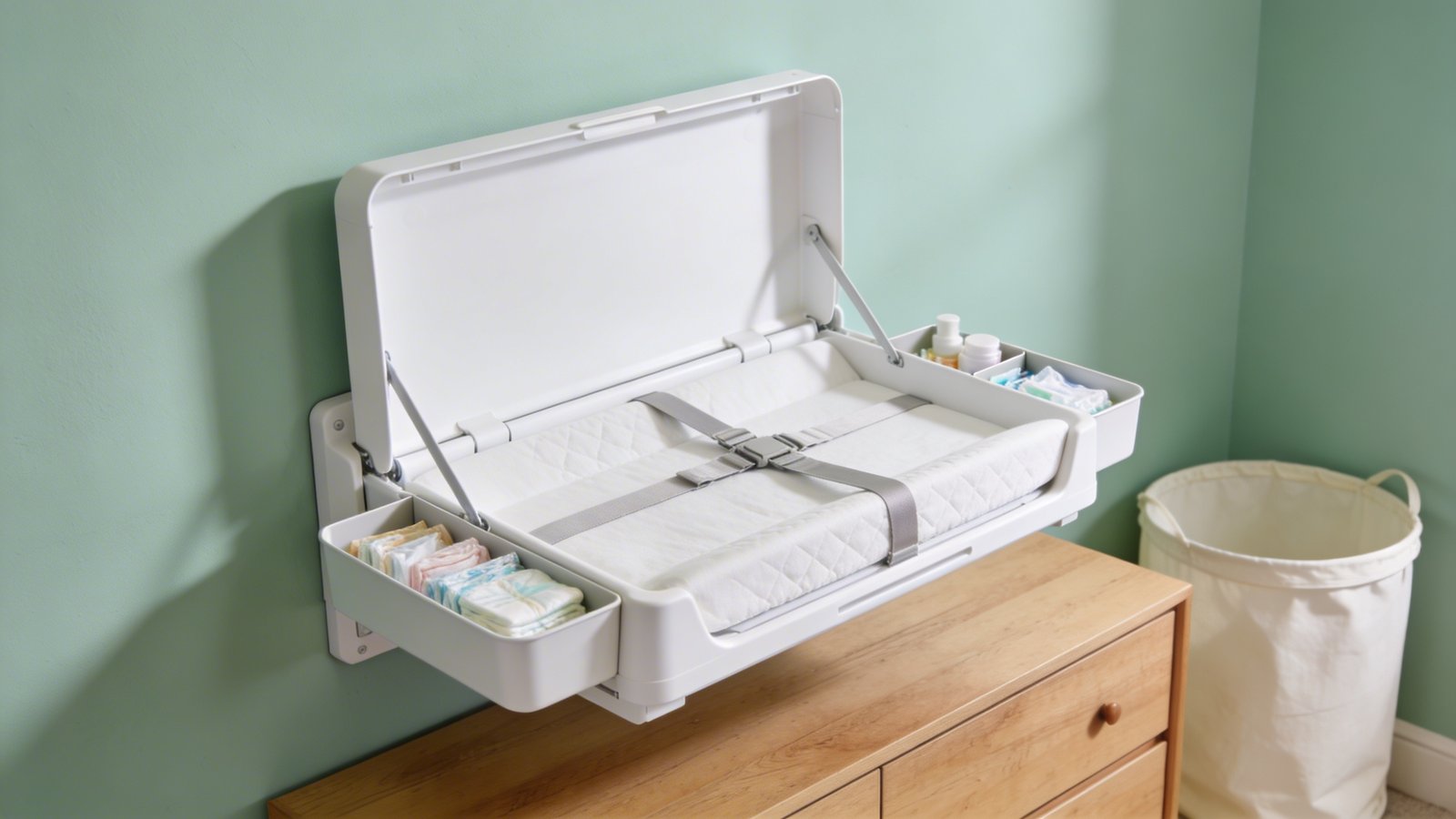
Wall-mounted fold-down changing tables are like Murphy beds for diaper duty. When you need them, they’re there. When you don’t, they disappear completely.
These genius contraptions fold flat against the wall when not in use, giving you back valuable square footage. Most include safety straps and built-in storage for wipes and diapers.
Install one above a low dresser or hamper, and you’ve created a changing station that literally vanishes when the job’s done. It’s basically magic for small spaces.
6. Use Under-Crib Storage Like a Boss
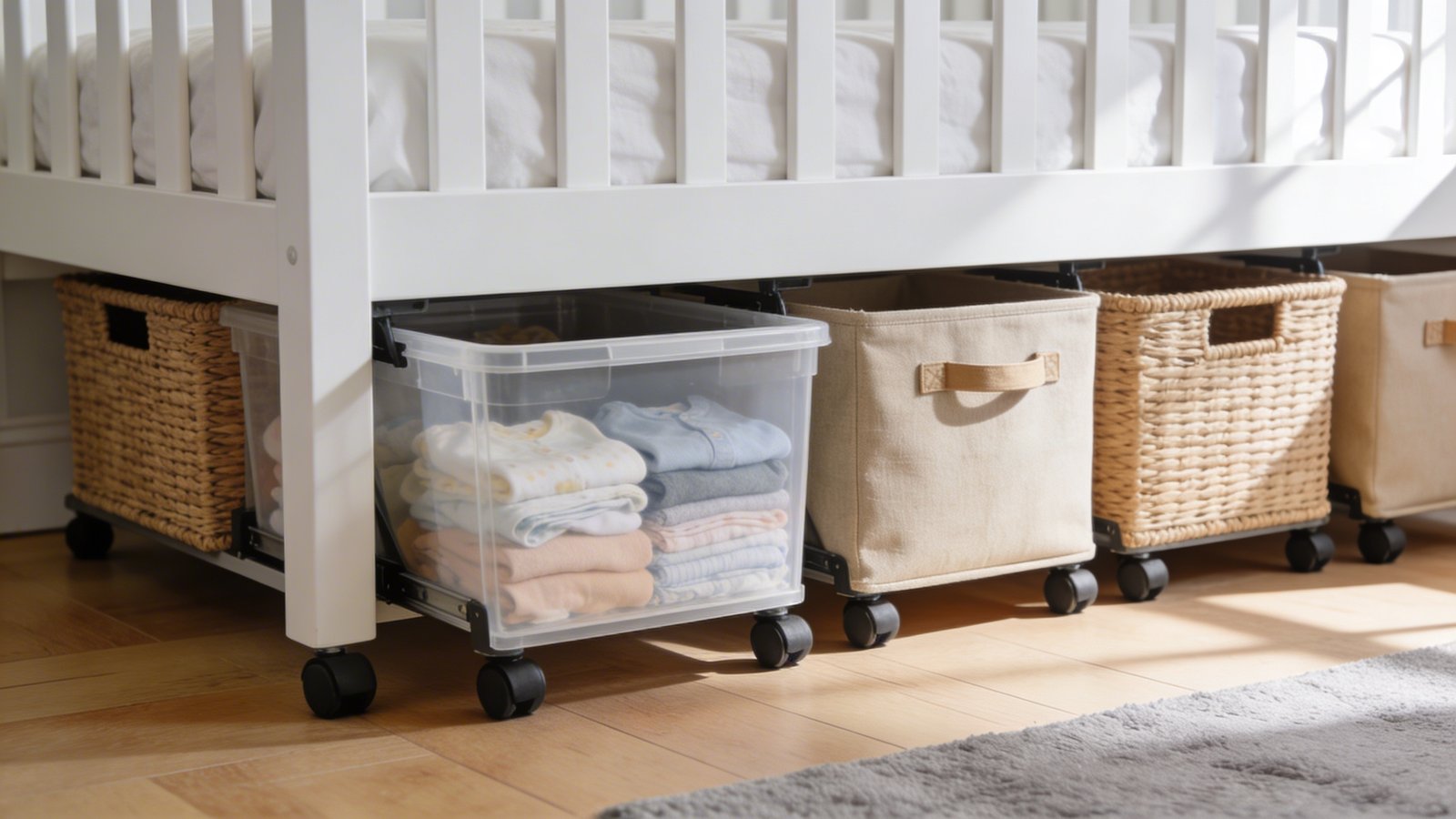
That empty space under the crib is prime real estate you’re probably ignoring. Under-crib storage keeps seasonal clothes, extra bedding, and backup supplies organized and out of sight.
Rolling storage bins work perfectly here—they slide in and out easily, and you can grab what you need without contorting yourself. Choose clear containers so you can actually see what’s inside without playing guessing games at 2 AM.
What to Store Under the Crib:
- Off-season clothing
- Extra sheets and blankets
- Backup diaper stash
- Toys in rotation
Just make sure whatever you store down there is dust-free and organized. Future you will appreciate the accessibility.
7. Mount the Diaper Pail on the Wall
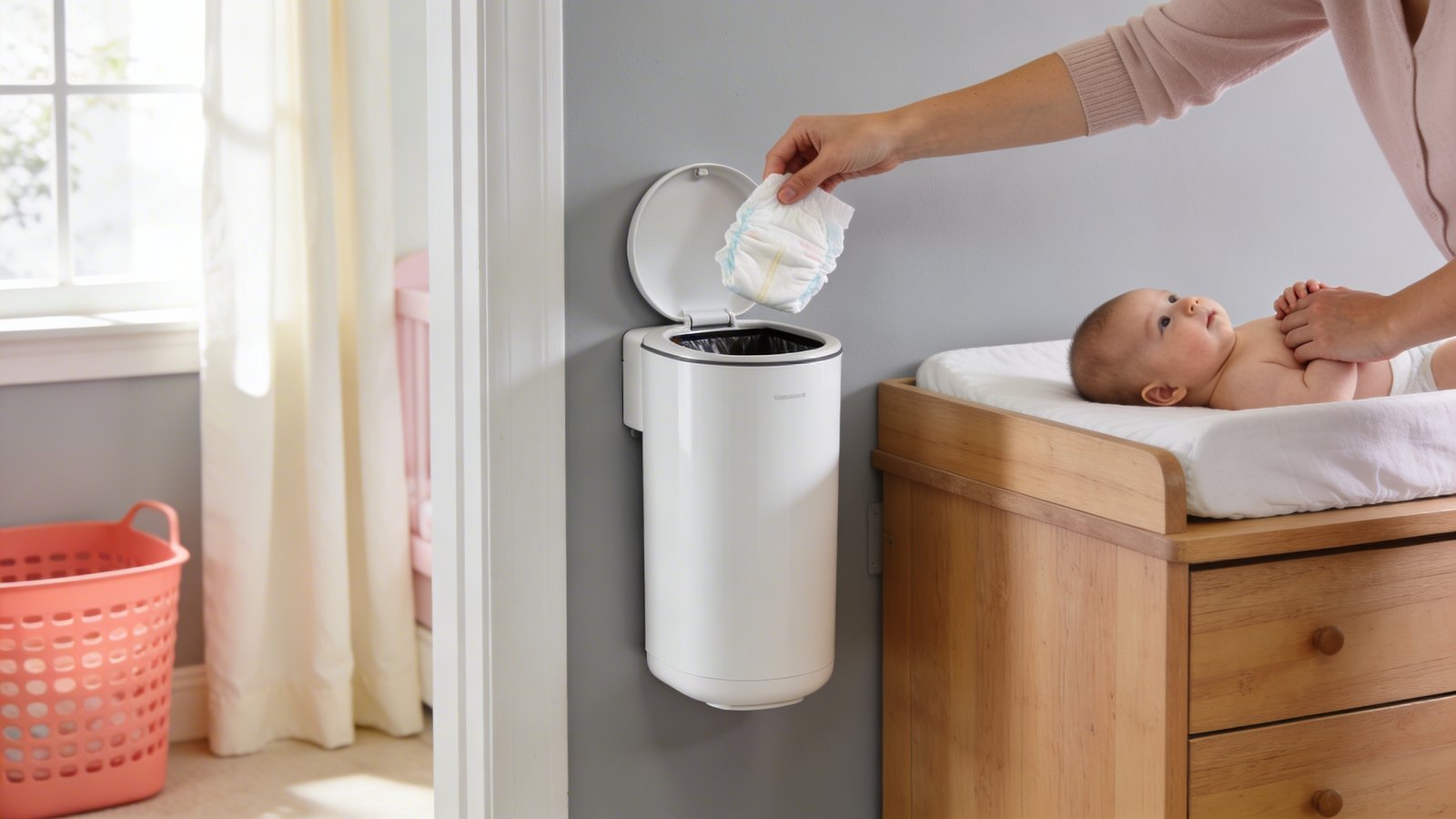
Floor space is sacred, so why waste it on a diaper pail? Wall-mounted diaper disposal systems keep stinky diapers contained without hogging valuable real estate.
These compact units attach directly to the wall near your changing station, making diaper disposal a one-handed operation. They hold way more than you’d expect for their size, and they keep odors locked down tight.
Position it within arm’s reach of where you change diapers, and you’ll never have to take those awkward steps with a dirty diaper in hand again.
8. Create a Capsule Wardrobe System
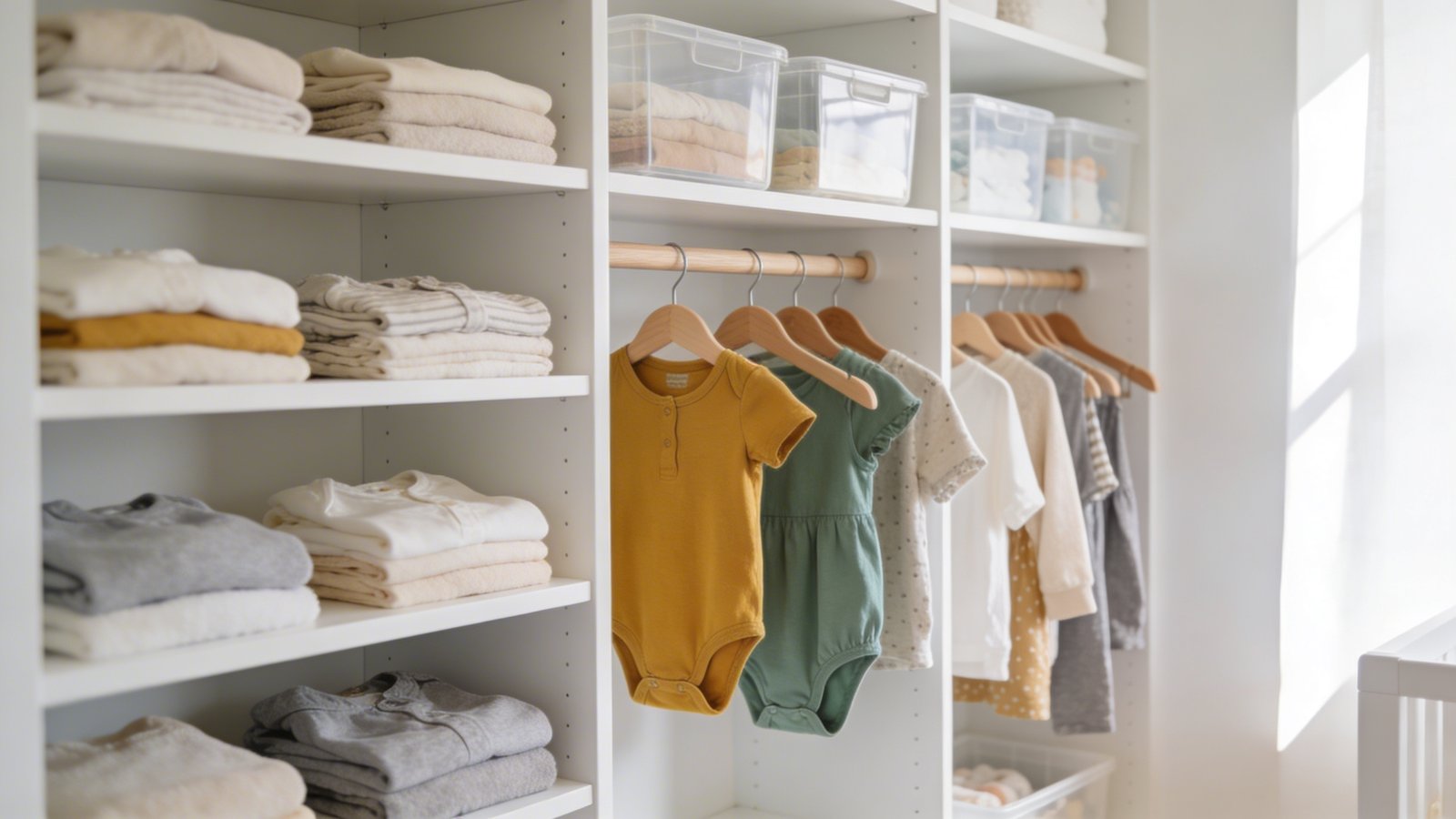
Babies don’t need seventeen pairs of jeans. Trust me on this. A capsule wardrobe approach reduces clutter and makes getting your baby dressed infinitely easier.
Stick to mix-and-match basics in neutral colors with a few statement pieces. This strategy cuts your storage needs in half while ensuring everything coordinates.
Organize by size rather than type, and when your baby outgrows something, immediately remove it. Keeping clothes that don’t fit is just wasting space you don’t have.
9. Install a Door-Mounted Organizer
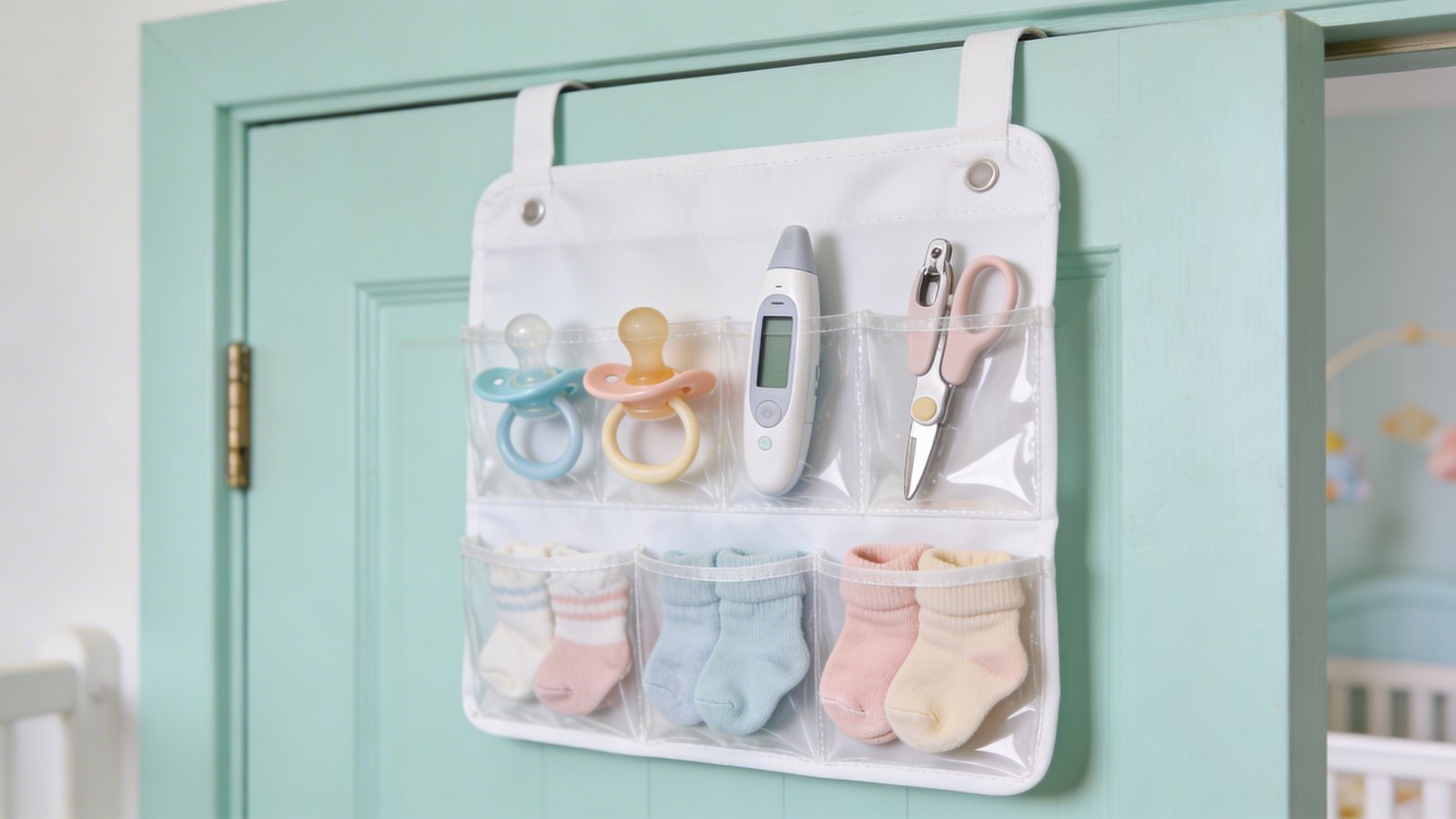
The back of your nursery door is untapped organizational gold. Over-the-door organizers create instant storage without requiring tools or wall damage.
Use clear pockets for small items like pacifiers, nail clippers, thermometers, and all those tiny essentials that somehow disappear into the void. You can also hang shoe organizers for storing rolled washcloths, socks, and accessories.
Perfect Items for Door Storage:
- Baby care essentials (thermometer, nail clippers)
- Socks and mittens
- Hair accessories and bibs
- Small toys and teethers
The best part? It’s completely removable when you move or repurpose the room, leaving zero damage behind.
10. Choose a Rocking Chair with Built-In Storage
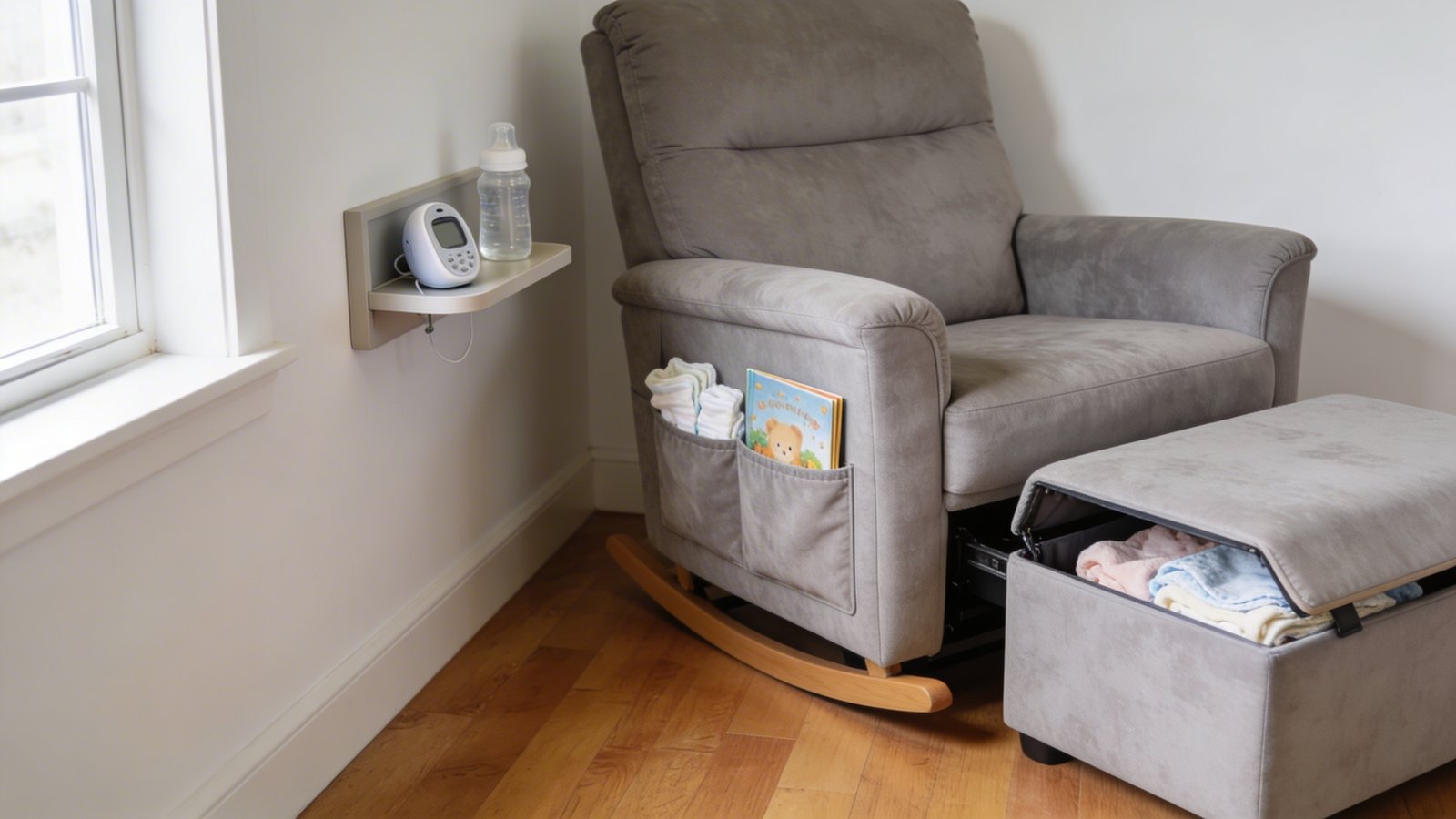
Rocking chairs are nursery essentials, but they take up considerable space. Gliders with built-in storage pull double duty without doubling your footprint.
Look for models with side pockets for books, burp cloths, and your phone (because let’s be real, you’ll be scrolling during those 3 AM feeding sessions). Some even include ottoman storage compartments.
Position your chair in a corner to maximize the remaining floor space. Add a small side table or wall-mounted shelf within reach, and you’ve created a fully functional feeding station.
11. Maximize Closet Space with Custom Solutions
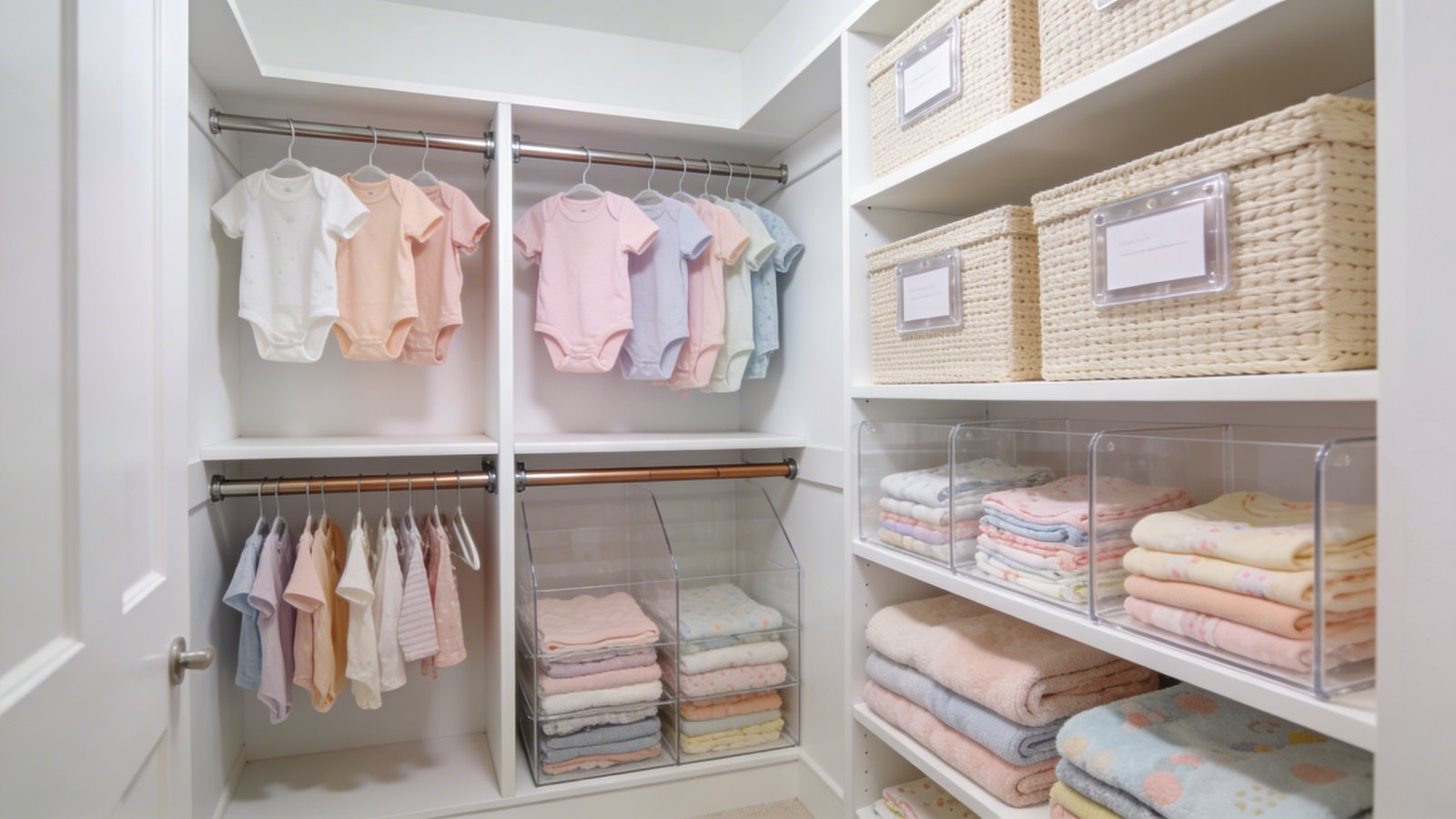
That tiny closet can work way harder than it currently is. Customized closet systems transform wasted vertical space into organized storage heaven.
Add a second hanging rod at a lower height for baby clothes—they’re small anyway, so you can easily fit two rows. Install shelf dividers to keep folded items from toppling into chaotic piles.
Use matching bins on upper shelves for items you don’t need daily. Clear labels make everything easy to find, even when you’re operating on two hours of sleep.
12. Opt for a Mini Crib Instead
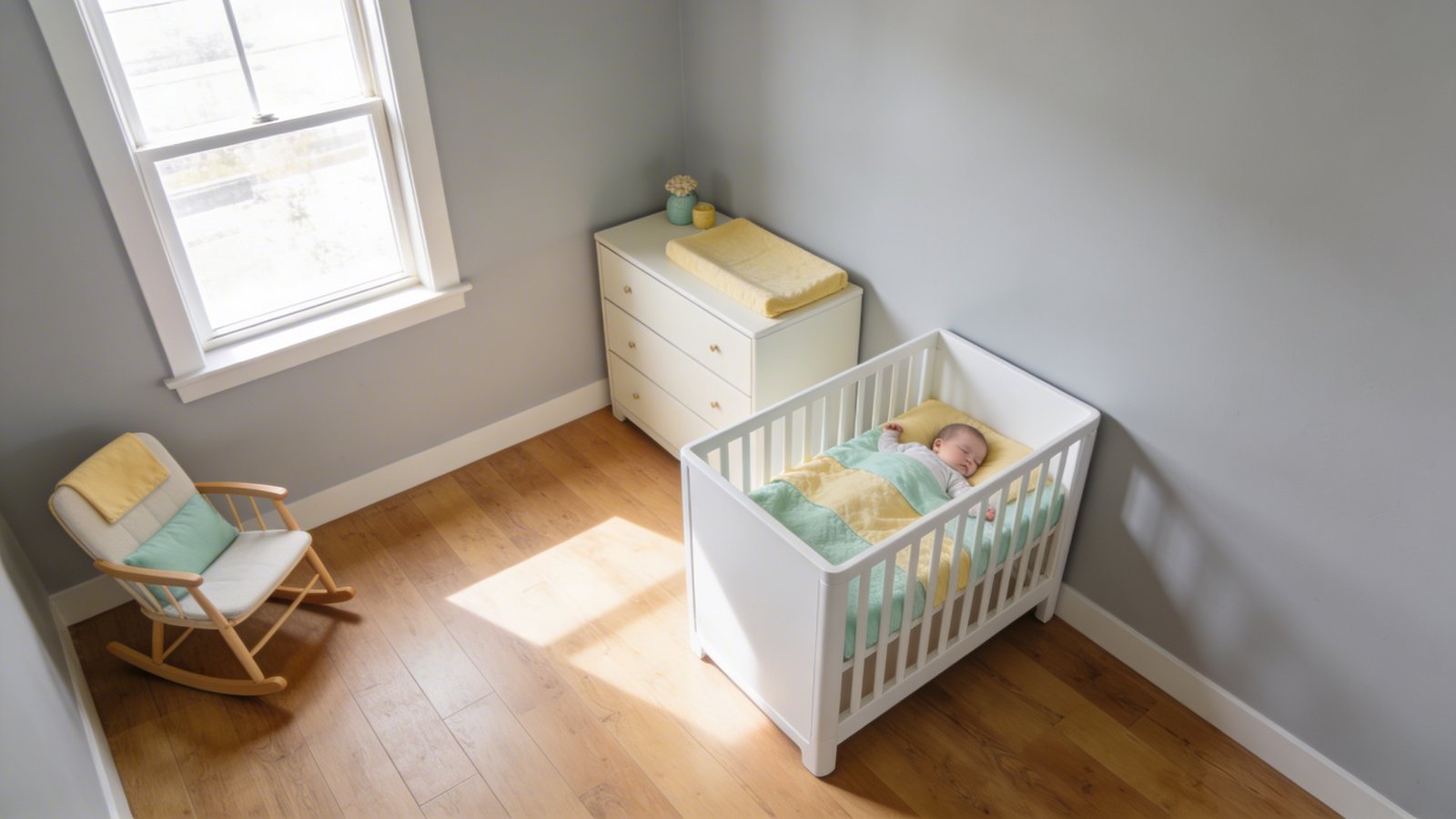
Standard cribs are space hogs, but mini cribs deliver the same safety and comfort in a footprint that’s about 24 inches shorter. That’s two whole feet you get back!
These compact cribs work perfectly until your baby’s around 18 months, and many convert to toddler beds. They’re also portable, so you can move them between rooms without recruiting a moving crew.
The smaller size means you can fit other essential furniture in the room without playing Tetris every time you need to walk through. Some models even have wheels for easy repositioning.
13. Use Ceiling-Mounted Storage for Bulky Items
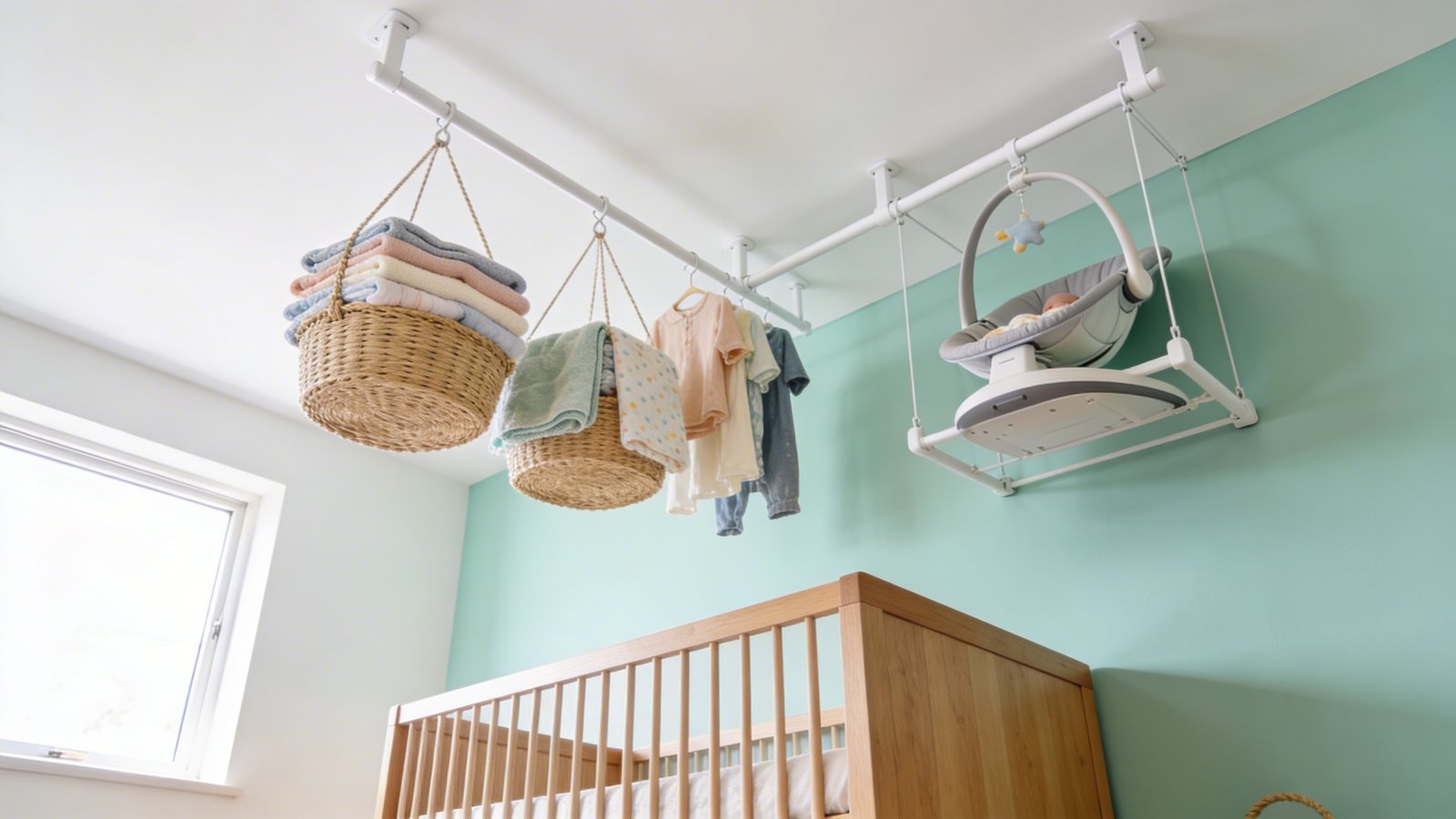
Look up—there’s storage potential you’re completely ignoring. Ceiling-mounted solutions keep bulky, rarely-used items accessible but out of the way.
Install overhead racks or hanging baskets for seasonal clothing, extra bedding, or that baby swing you’ll only use for a few months. Make sure everything is securely mounted and not hanging over the crib.
This approach works especially well for items you need to keep but don’t access frequently. Just remember what you put up there, or you’ll end up buying duplicates.
14. Choose Mounted Lighting Over Floor Lamps
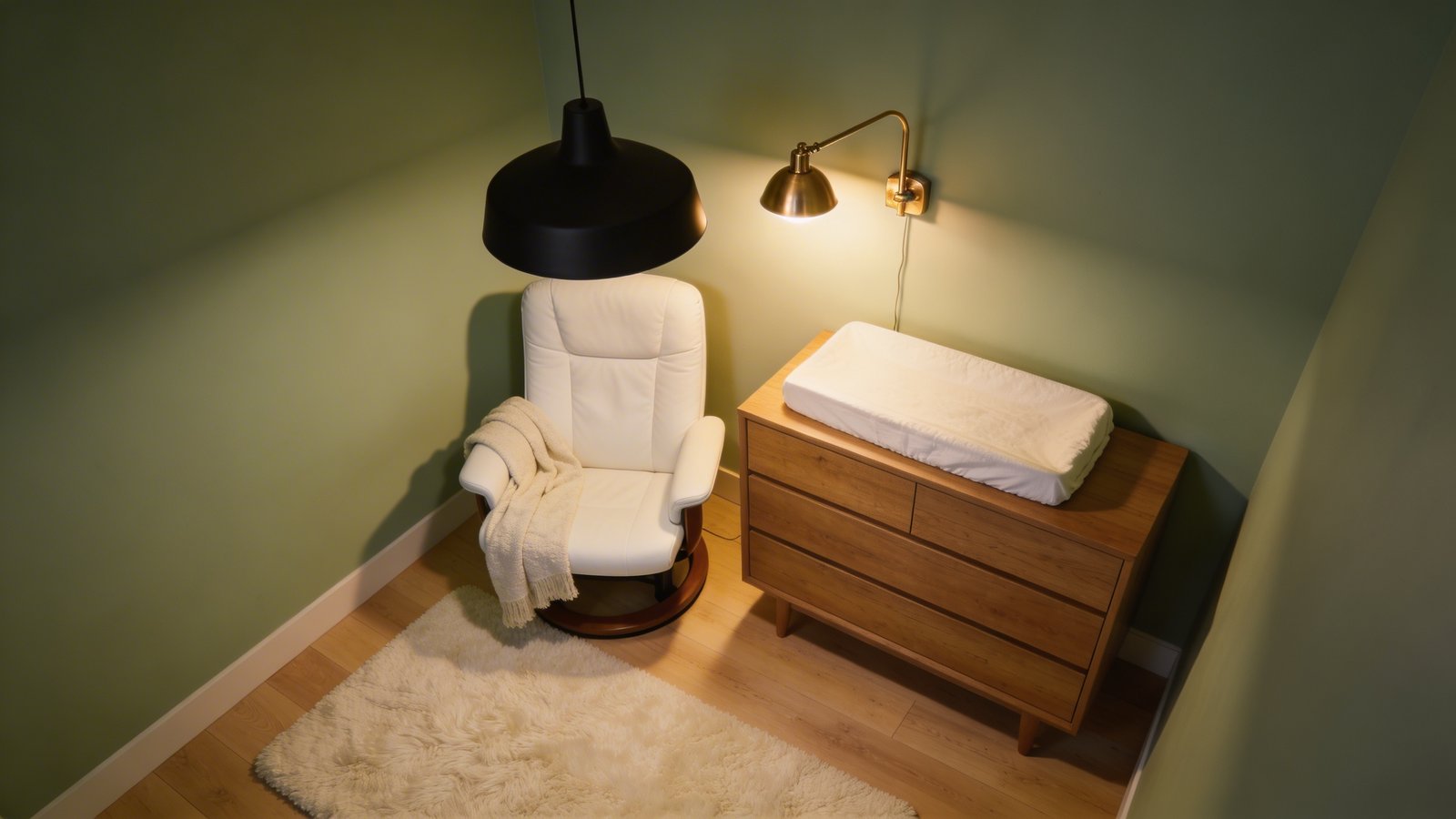
Floor lamps eat up space and create tipping hazards once your baby becomes mobile. Wall-mounted sconces and pendant lights provide illumination without the footprint.
Install dimmable fixtures so you can adjust brightness for nighttime feedings without blinding yourself. Position them strategically over the changing table and reading nook for task lighting.
Lighting Options That Save Space:
- Swing-arm wall sconces
- Pendant lights with adjustable cords
- LED strip lighting under shelves
- Plug-in wall sconces (no electrician needed)
Bonus: mounted lighting creates a cleaner, more streamlined look that makes your small nursery feel less cluttered.
15. Incorporate Multi-Functional Furniture Pieces
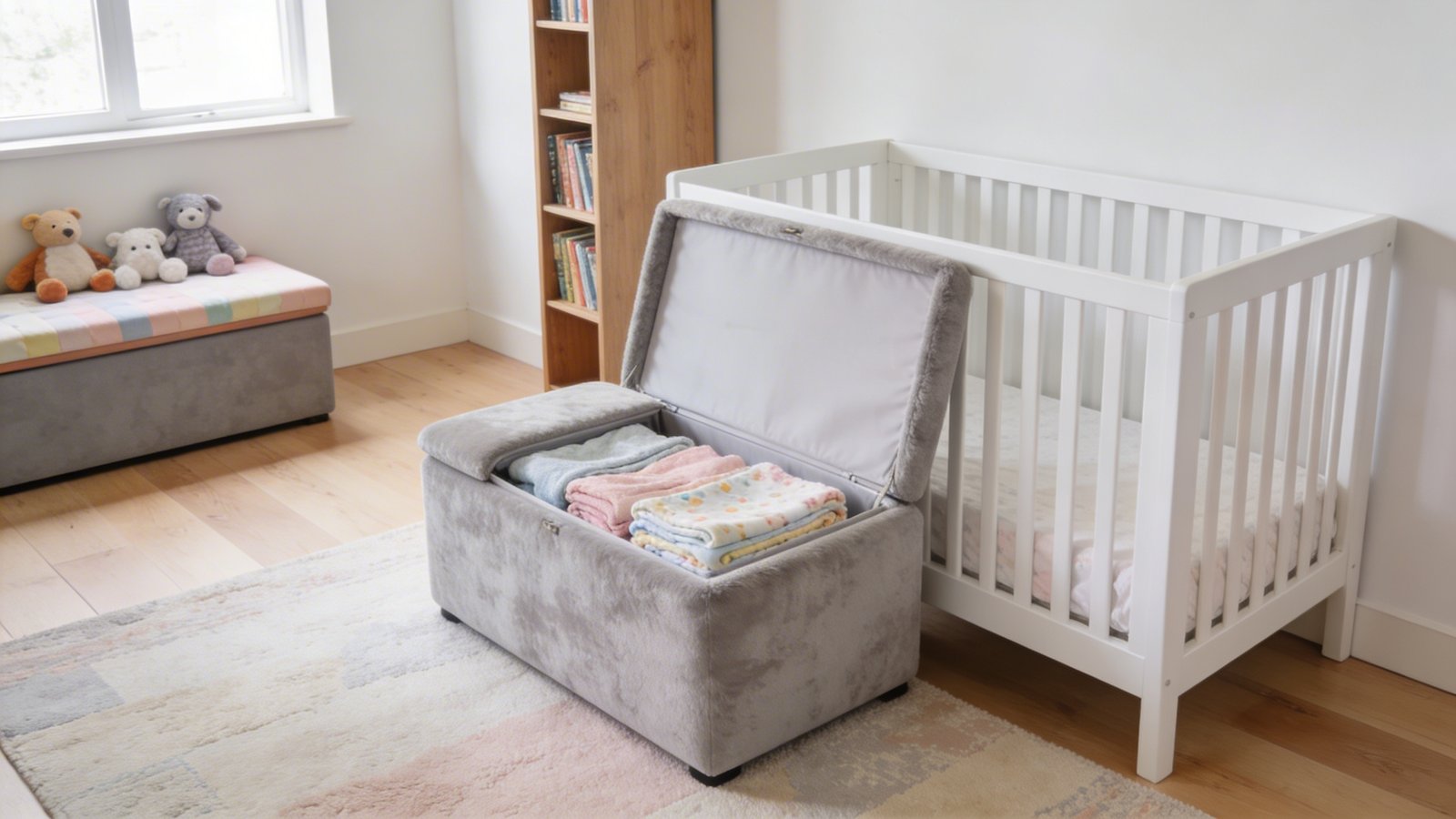
Every piece of furniture in a small nursery needs to earn its keep. Multi-functional furniture serves multiple purposes without requiring multiple pieces.
Consider a storage ottoman that provides seating, a footrest, and hidden storage. A bookshelf that doubles as a room divider creates zones without walls. A toy chest that works as a bench gives you seating and storage simultaneously.
Before buying anything, ask yourself: “Can this do more than one job?” If the answer’s no, keep shopping. Your square footage is too valuable for single-purpose furniture.
16. Create Zones with Area Rugs
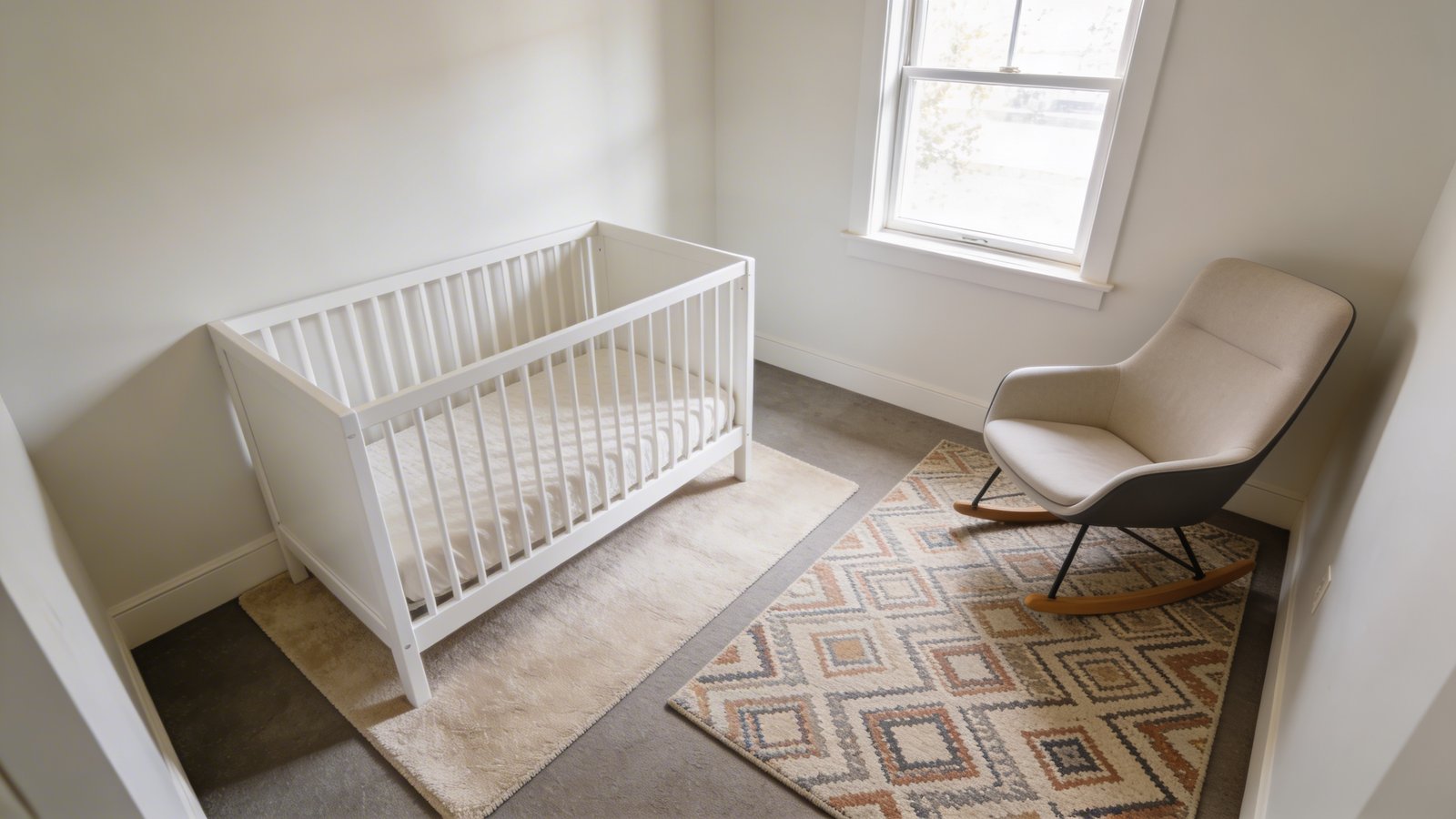
Even tiny nurseries benefit from defined zones, and area rugs create visual boundaries without physical barriers. They make the space feel organized and intentional.
Place a small rug under the crib to define the sleeping area, and another under your rocking chair for the feeding zone. This visual separation makes the room feel larger and more purposeful.
Choose rugs that are easy to clean because, let’s face it, babies are messy. Machine-washable options are your friend here. Skip thick, plush rugs that make walking with a baby difficult—go for low-pile instead.
17. Use Transparent Furniture to Create Openness
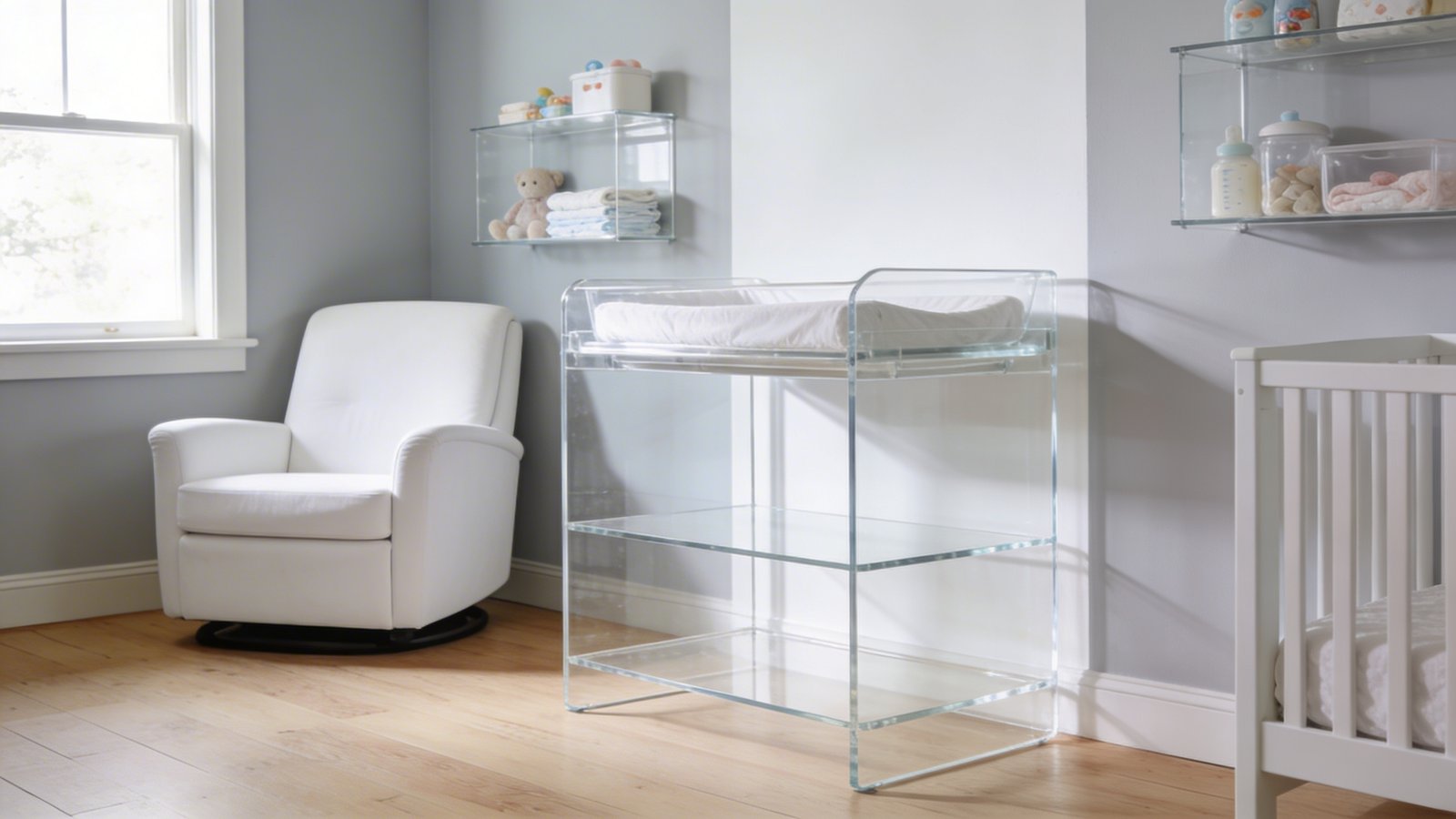
Here’s a designer secret: transparent acrylic furniture provides function without visual weight. Your eye sees right through it, making the room feel more spacious.
An acrylic changing table or shelving unit gives you the storage you need without the heavy, bulky appearance of wood furniture. The see-through quality creates an airy, open feeling even in cramped quarters.
This works especially well if you’re going for a modern aesthetic. Pair clear pieces with one or two solid furniture items to avoid the room feeling too sparse or cold.
There you have it—17 brilliant ways to maximize every precious inch of your small nursery. Mix and match these ideas based on your specific space and needs, and remember: a smaller nursery just means less to clean when you’re running on fumes. Now go create that dreamy nursery your baby deserves!
–
0 Comments